Get Full Government Meeting Transcripts, Videos, & Alerts Forever!
Get email alerts on the Affordable Housing topic
No spam. Unsubscribe anytime.
Home Leasing offers $70,000 for Geneva’s Foundry site; councilors raise concerns about height, parking and neighborhood impact
Summary
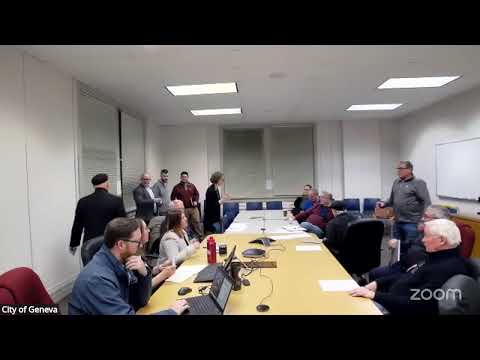
Home Leasing has submitted a $70,000 offer to purchase the Foundry site on Jackson Street in Geneva and is proposing roughly 60 affordable rental units, company representatives told the City Council at a public presentation.
Home Leasing has submitted a $70,000 offer to purchase the Foundry site on Jackson Street in Geneva and is proposing roughly 60 affordable rental units, company representatives told the City Council at a public presentation. The council placed consideration of the sale on its March 5 agenda.
The developer said the project is in an early stage and would pursue New York State funding through Homes and Community Renewal (HCR), including low‑income housing tax credits, and other philanthropic and local sources. Lindsay, a development manager at Home Leasing, said “site control is the first thing that we try and do before we spend too much time,” and that the company would not close on the parcel until financing and local approvals were secured.
Home Leasing presented a conceptual plan that it said could accommodate about 60 units in a four‑story building with an L‑shaped footprint, parking to the rear and green space and a playground facing Jackson Street. The firm said an initial program would be roughly 36 one‑bedroom and 24 two‑bedroom units (the presenter said that mix may be reversed and that exact counts will be set by a market analysis). Typical unit sizes were described as about 750 square feet for a one‑bedroom and about 900 square feet for a two‑bedroom.
Joe, an architect with SWBR on the project team, said the building design would be adapted to the neighborhood and noted that, because of the state funding the project would pursue, “We are required to be 100% electric through New York state funding,” adding that the developer is exploring solar and geothermal as possible energy offsets.
Company representatives said the financing model for this type of development generally requires a minimum of about 55 units and tends to become economically difficult above about 70 units. They also said the regulatory agreement tied to state subsidy typically imposes long‑term affordability requirements — Home Leasing referred to 50‑year regulatory agreements used in comparable projects.
On operations, Home Leasing said it would own and manage the building long‑term. The firm said a 60‑unit community would typically have a full‑time leasing agent, a permanent maintenance superintendent and regional administrative support. The developer also said it accepts residents with housing choice vouchers and that voucher holders are not legally admissible for exclusion.
City staff outlined process and constraints. City staff member David told the council that the body’s role was to decide whether to sell the parcel; any subsequent development would be subject to planning‑board development review, site plan approval, any zoning variances and the IDA’s pilot (payment in lieu of taxes) process. David said the developer has requested two years of due diligence: Home Leasing would provide nonrefundable deposits in two installments (one at the end of the first year and another at the end of the second year) that would be credited toward the purchase price but forfeited if the developer backed out.
Councilors and residents raised several substantive concerns. A Ward 5 council member said, “I did not visualize a 4 story high rise,” and pressed the developer for data showing whether comparable projects had improved neighborhood economic conditions. Other speakers questioned whether Jackson Street could absorb project traffic, whether the street frontage should be green space rather than parking, and whether a lower‑scale “plan B” should be considered.
Home Leasing told the council it has conducted preliminary zoning checks and expects a special use permit and site plan review would be required. The developer identified environmental constraints at the Foundry site and said that part of its early work is to assess monitoring obligations and remediation requirements; it acknowledged the site has contamination history and that outside scrutiny will be part of the feasibility work. Company representatives also noted that disturbing more than an acre will require stormwater controls and a State/municipal stormwater prevention plan.
On municipal revenue, the developer proposed a pilot structured as a per‑unit payment to the city. Home Leasing estimated a pilot at about $500 per unit per year, which the presenters said would produce roughly $25,000–$30,000 in annual payments to the city under that structure (the presenters noted pilot payments typically do not go to school or county taxes unless structured otherwise and that the IDA sets pilot terms).
Officials and the developer agreed on next steps: council consideration of the sale on March 5; further information from Home Leasing, including market‑analysis data and examples from comparable projects; neighborhood outreach during planning and development review; and regulatory and financing steps if the sale moves forward. No formal sale or zoning approvals were completed at the meeting.