Get Full Government Meeting Transcripts, Videos, & Alerts Forever!
Get email alerts on the E Verify Construction Sb183 topic
No spam. Unsubscribe anytime.
Senate committee hears sponsor testimony on SB 183 to require E-Verify for nonresidential construction
Summary
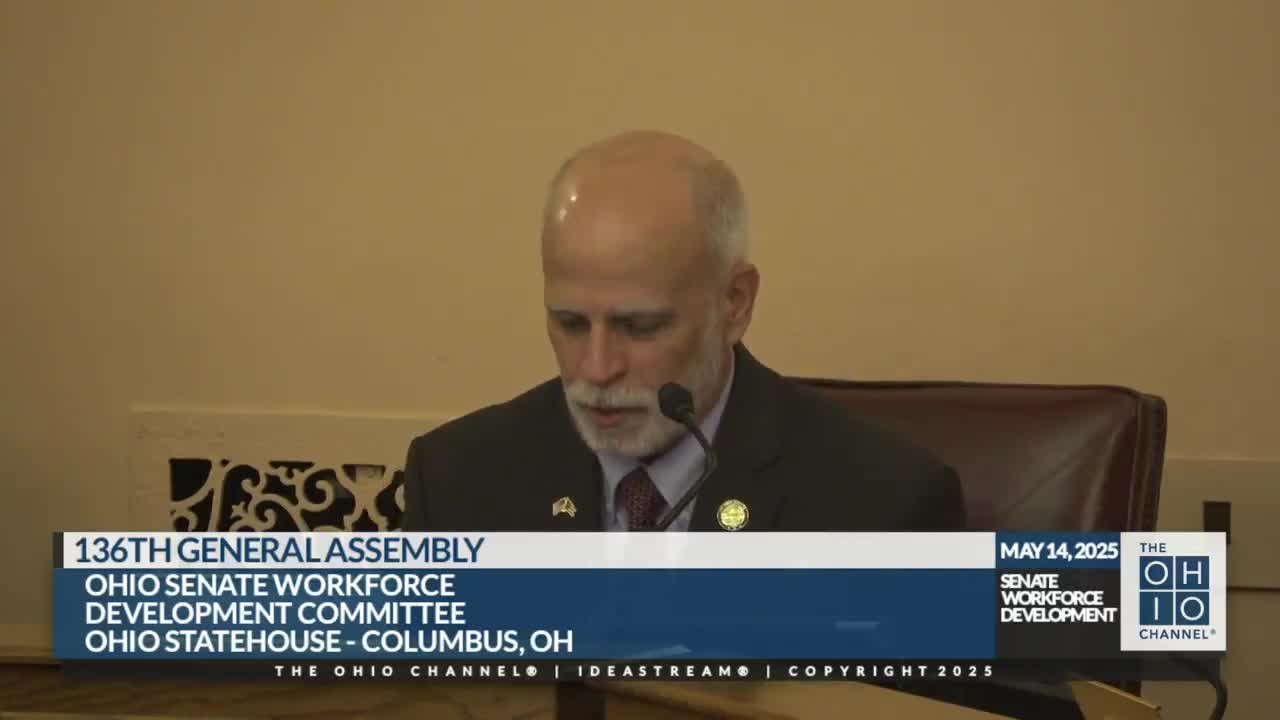
The Senate Workforce Development Committee heard sponsor testimony on Senate Bill 183 at a committee hearing, which would require nonresidential construction contractors, subcontractors and labor brokers to verify employees’ eligibility using the federal E‑Verify system.
The Senate Workforce Development Committee heard sponsor testimony on Senate Bill 183 at a committee hearing, which would require nonresidential construction contractors, subcontractors and labor brokers to verify employees’ eligibility using the federal E‑Verify system.
Sponsor testimony outlined how the federal E‑Verify system works and why the bill targets the commercial construction sector. “E Verify electronically confirms within 3 to 5 seconds of submission an employee's eligibility to work in The United States,” Senator Sereno told the committee, noting that E‑Verify uses the same Form I‑9 employers already complete.
The bill’s sponsors said SB 183 would require covered employers to retain verification records ‘‘for 3 years after hire or 1 year after employment termination’’ and prohibit continued employment of individuals who receive a final nonconfirmation notice through E‑Verify. “This bill will represent a huge step forward in combating undocumented worker abuse and human trafficking, in Ohio,” Senator Reynolds said during her remarks.
Sponsors described a graduated penalty structure for violations, enforcement through the Office of the Attorney General and court system, and a requirement that state agencies and political subdivisions include E‑Verify compliance language in construction contracts. They said the proposal focuses on nonresidential commercial work and excludes small-scale residential construction.
Committee members pressed sponsors on operational and legal concerns. Ranking Member Senator Ingram asked whether all hires are required to complete a Form I‑9; a sponsor replied, “Yes.” Senators also asked how timing would work on multiemployer projects. A sponsor clarified the requirement applies to the hiring of an individual, not to a specific project: employers must verify new hires before they start work, and previously verified employees may move between projects without new verification.
Senator Lang asked what happens if E‑Verify initially returns a confirmation and that determination is later reversed. Lang said he wanted “to make sure that should an individual, gain the system and steal an ID ... and find out, 6 months later, hey, they got the wrong guy, that there would be no punitive damage to the employer.” A sponsor answered that, while an employer would terminate a worker if federal authorities later show the worker provided fraudulent information, “I don't believe there's any provision in in this bill that would that would hold, the employer responsible.”
Members also discussed subcontractor and labor‑broker responsibilities. Sponsors said subcontractors are independent employers and would be directly responsible for verifying their own employees; general contractors would generally rely on subcontractor assurances and could include verification requirements in contracts. Sponsors said labor brokers—entities that deliver workers to construction companies—are included because brokers have often operated outside the intent of the law and are part of the recruiting and hiring process.
Committee members raised due‑process and administrative questions that sponsors said would be addressed in subsequent hearings and stakeholder conversations. Sponsors told the committee that a broader version of similar legislation passed the House last year by a vote of 85‑6 and that they were working with opponents on penalty and due‑process concerns.
The committee did not vote on the bill; senators concluded the hearing after questions. Sponsors and committee members said additional testimony and follow‑up would be scheduled to address operational details and legal issues before any final action.