Get Full Government Meeting Transcripts, Videos, & Alerts Forever!
Senate hearing on earned-wage access highlights risks of fee-driven advances; advocates seek fee caps and default-zero tips
Summary
Multiple witnesses told the Senate Financial Institutions, Insurance and Technology Committee that earned‑wage access products can lead vulnerable workers into repeated small advances with high cumulative cost and urged the committee to impose fee and tip limits and stronger consumer protections.
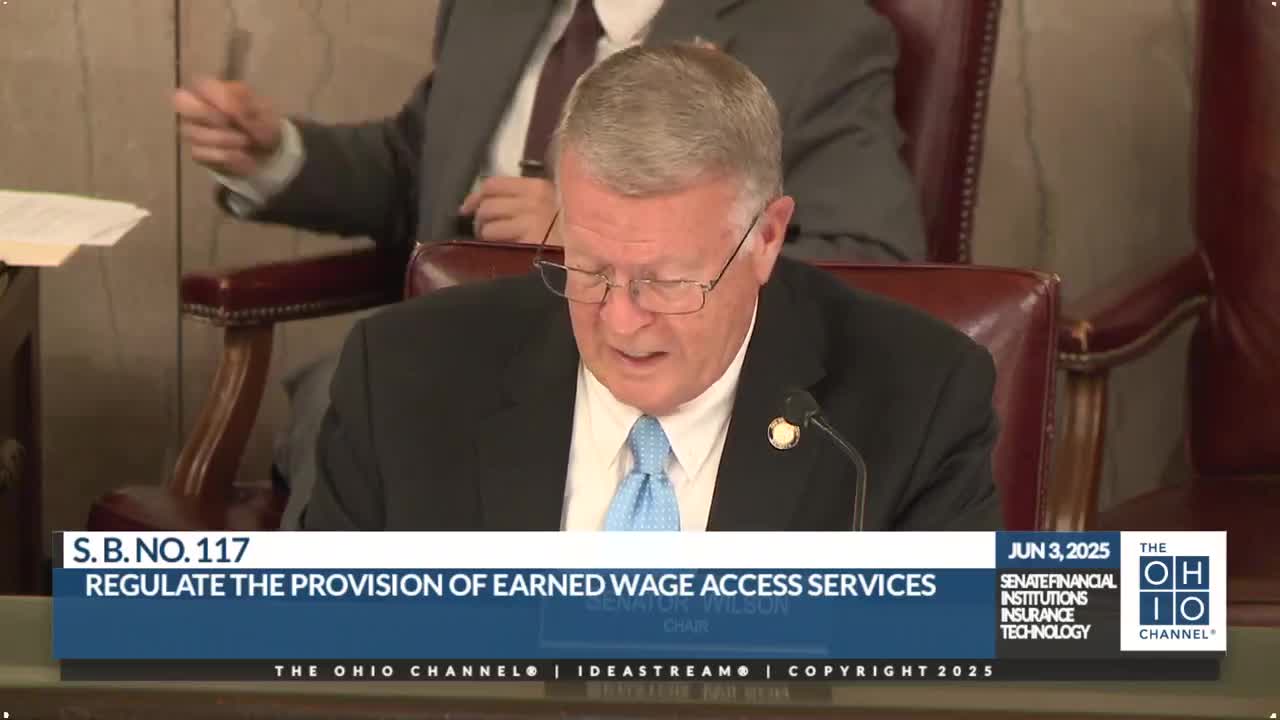
The Senate Financial Institutions, Insurance and Technology Committee heard hours of testimony on Senate Bill 117, which would create a regulatory framework for earned-wage access (EWA) services in Ohio. Witnesses included consumer advocates who oppose the bill in its current form and industry-related experts who said regulation is needed but described technological solutions to prevent overextension.
Monica Burks, policy counsel for the Center for Responsible Lending, told the committee that EWA and similar ‘‘paycheck advance’’ products frequently put low- and moderate-income workers into cycles of repeat usage and high fees. Citing a research dataset of about 214,000 transactions, Burks said almost half of consumers in that dataset were ‘‘stacking’’ advances across multiple apps, and that a small share of users account for a large share of revenue. ‘‘We found that about 40% of the people in our dataset are responsible for 86% of the advances taken,’’ she said, and added that many consumers use advances for recurring needs such as food and transportation rather than one-time emergencies.
B…
Already have an account? Log in
Subscribe to keep reading
Unlock the rest of this article — and every article on Citizen Portal.
- Unlimited articles
- AI-powered breakdowns of topics, speakers, decisions, and budgets
- Instant alerts when your location has a new meeting
- Follow topics and more locations
- 1,000 AI Insights / month, plus AI Chat