Get Full Government Meeting Transcripts, Videos, & Alerts Forever!
Get email alerts on the Special Needs Registry topic
No spam. Unsubscribe anytime.
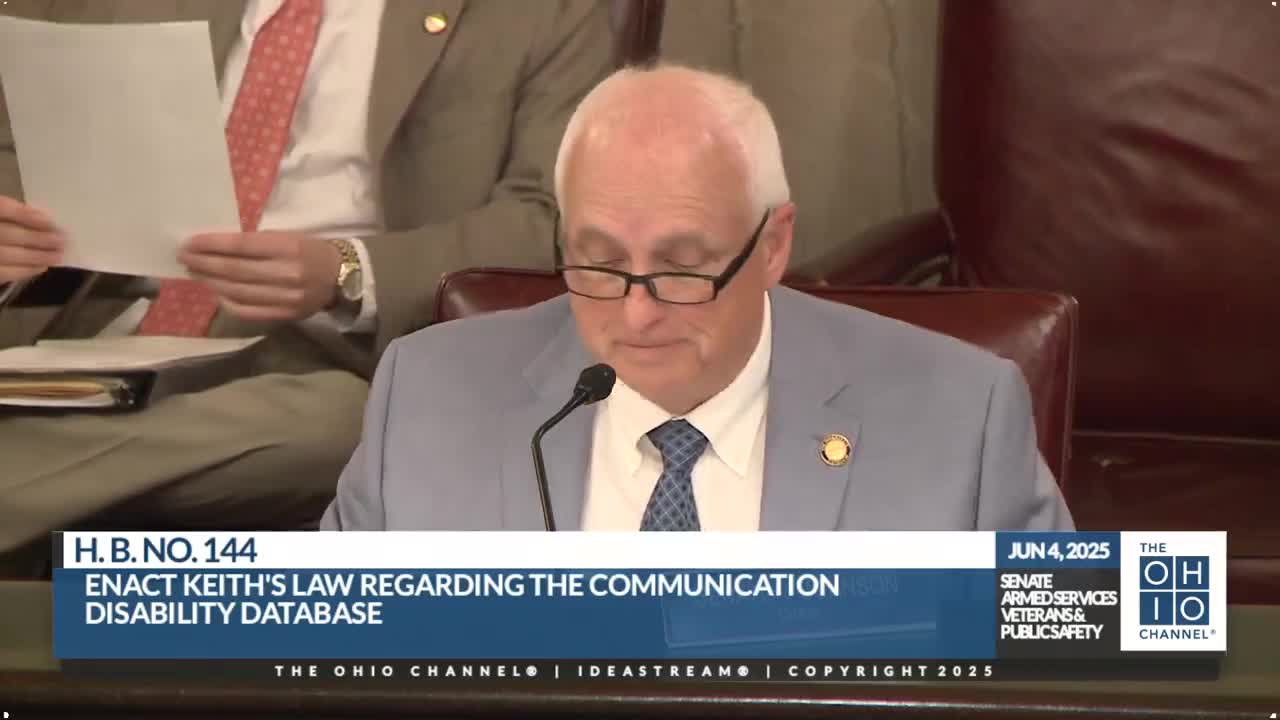
Sponsors pitch voluntary statewide registry to flag disabilities for first responders under House Bill 144
Summary
Representatives urged support for House Bill 144, a voluntary special‑needs registry to give first responders advance information (available to 911 and on driver records or vehicles), and said the Legislative Service Commission found de minimis costs; committee members asked about scope and training.
Representatives Klick and Lorenz appeared for sponsor testimony on House Bill 144, which would create a voluntary statewide database to record when an individual has a disability or condition that first responders should know about, and would make that information available to 911 dispatch and responding police, fire and EMS personnel.
Representative Klick said the idea grew from conversations with a constituent who has special needs and with local departments that have run local registries. Klick said the database would be voluntary, set up through the Department of Public Safety working with disability advocates, and could be flagged on a person’s driver record or vehicle so that when responders arrive they have pertinent information. He described the proposal as intended to reduce dangerous misunderstandings during traffic stops and other emergency responses.
Representative Lorenz described personal experience with his son on the autism spectrum and said local registries in some counties (including Delaware and Sandusky counties, sponsors said) have helped officers who know a driver or resident avoid misinterpreting symptoms as intoxication. Lorenz said the bill would be permissive and carry no mandate for enrollment.
Senator Wilson asked about cost; sponsors said the Legislative Service Commission (LSC) estimated the fiscal impact as de minimis because existing personnel would handle the work. Senator Schaeffer recounted a past case involving a person with a medical emergency to underscore the need; sponsors and committee members discussed training and noted that crisis‑intervention training (CIT) is available from NAMI but not mandatory statewide.
Sponsors said the bill previously received broad support in the House and that amendments proposed in committee were left for further vetting with implementing agencies to avoid delaying the measure. The committee did not take a final vote at this hearing.