Get Full Government Meeting Transcripts, Videos, & Alerts Forever!
Get email alerts on the Law Enforcement Hiring Training topic
No spam. Unsubscribe anytime.
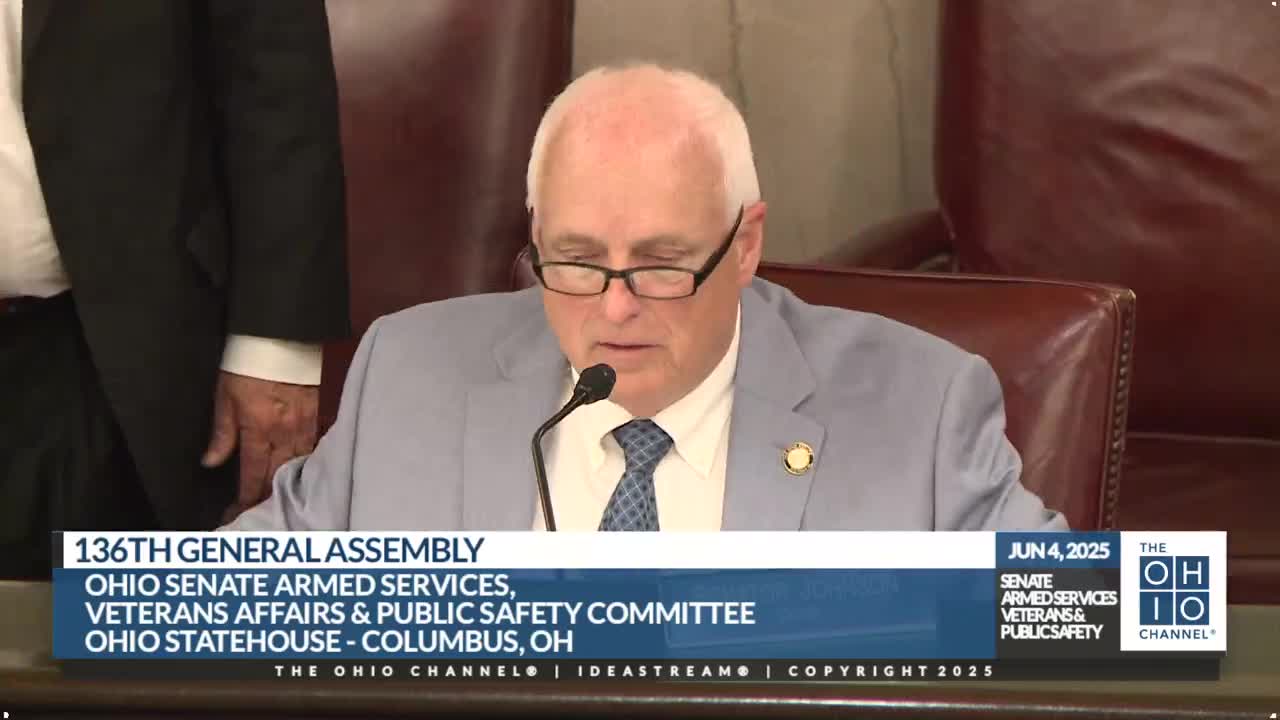
Sponsors tell Ohio committee bill would let police departments hire laterals without civil‑service exam and run local cadet training
Summary
House Bill 44 would let municipal police departments bypass competitive civil‑service exams for certain lateral hires and allow chiefs to run cadet training aligned with state standards; sponsors and law‑enforcement groups said amendments addressed earlier concerns.
House Bill 44 would allow municipal police departments to fill certain vacant civil‑service positions without a competitive exam when the department presents evidence the competitive component is unnecessary and the applicant has “exceptional qualifications,” sponsors told the Senate Local Government, Public Safety and Veterans Affairs Committee.
Sponsors told the committee the bill also would permit municipal police chiefs to operate training schools for prospective officers that align with Ohio Peace Officer Training Academy standards and cadet qualifications, and would modify the state’s new‑chief training requirement to permit regional offerings and an 8‑hour exemption for chiefs who submit evidence of prior qualifying training.
Sponsors said the measure is intended to align statutory cities with charter cities, enabling statutory‑city departments to hire experienced lateral officers more quickly. “Filling positions with veteran officers avoids excess time and money and allows for trained officers to immediately make an impact,” a House sponsor said in testimony.
Sponsors told senators they view the civil‑service process as useful to prevent nepotism but impractical for lateral transfers because of delays from posting positions and scheduling tests. They said the bill uses permissive language for local training schools—graduates “may be hired directly” if they satisfy original‑appointment requirements.
Committee members asked about labor and implementation concerns. Sponsors said representatives of the Fraternal Order of Police and sheriffs’ groups raised concerns that the change be limited to lateral transfers and not be used to circumvent supervisory or promotional testing; sponsors said the language was amended to address that point and that state law‑enforcement organizations have indicated support. Sponsors also said the attorney general’s office has expressed support.
Sponsors reported the bill received prior support in the House, including committee and floor action, and said they do not oppose additional, vetted amendments from the Senate committee.
No formal committee vote on House Bill 44 was recorded in the transcript of this meeting.
Ending: Sponsors said they are available for additional questions and expressed appreciation to the committee for the hearing.