Get Full Government Meeting Transcripts, Videos, & Alerts Forever!
Get email alerts on the Public Comment Community Events Flooding topic
No spam. Unsubscribe anytime.
Residents urge continued buyout communication and promote Juneteenth festival during public comment
Summary
Speakers thanked staff for tree removal, promoted a Juneteenth Caribbean Heritage Festival and urged sustained communication for FEMA buyout homeowners experiencing trauma.
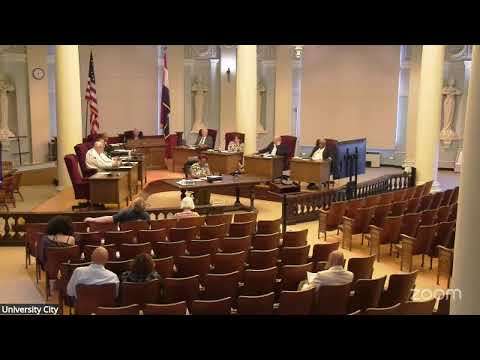
During the public‑comment portion of the University City City Council meeting on April 28, three residents addressed the council.
Diane Jackson, of 6836 Crest, thanked council members and staff—singling out Council Member Smotherson, Jacob Kaiser and Darren Gertler—for removing two trees she had reported as dead.
James Tucker, president of Art 2063 and a retired veteran, described plans for a Juneteenth Caribbean Heritage Festival to be held in the parking lot next to the Tivoli. Tucker said the event’s theme is “keeping our history alive,” that the West Loop business district has approved the event and that the Missouri History Museum will participate with displays. He said the festival will include speakers, music, a children’s village, vendors and a food court and asked for the city’s support.
Resident Liam Bridal described the ongoing effects of repeated flooding and the FEMA buyout process on his household and other affected families. Bridal, a special‑education teacher, said repeated flood events since July 22, 2022, have caused complex trauma, sleep disruption and work impacts. He urged the council to continue clear, concrete and consistent communication with homeowners taking part in the buyout process and asked for continued council support to help affected families move forward.
No council action was taken during the public‑comment period; each speaker’s remarks were recorded for the public record.