Get Full Government Meeting Transcripts, Videos, & Alerts Forever!
Get email alerts on the Public Safety Rights Of Way topic
No spam. Unsubscribe anytime.
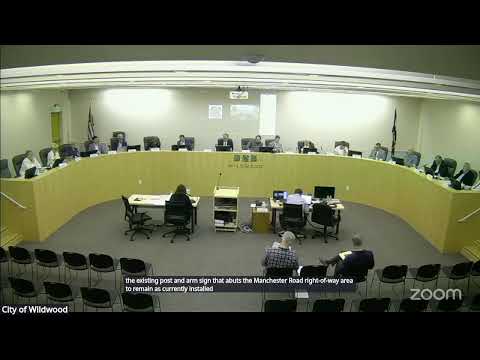
Wildwood council adopts framework to evaluate street obstructions, rejects permanent gate at Turnberry Place
Summary
Council approved a framework to score and address obstructions in public rights-of-way and later voted to reject contractor bids for a permanent gate at Turnberry Place after public-safety concerns from fire and police partners.
The Wildwood City Council voted May 12 to advance a policy framework for evaluating and managing obstructions in public rights-of-way and later voted to reject contractor bids for a permanent gate at Turnberry Place.
The framework, developed after meetings of the Board of Public Safety and the Administration & Public Works Committee, creates a standardized scoring system to evaluate existing obstructions on public land and a process for deciding whether removal or other action is required. Mayor Pro Tem Joe Farmer said the framework would be drafted into legislation and later returned to council for final approval. "This policy is more of a framework. It would still need to be drafted into legislation," a staff presenter said during discussion.
The framework was approved to move forward after a motion from Council member Marshall, seconded by Council member Dodwell, with council voting by voice: the motion passed with one abstention (Council member Lauren Edens).
Separately, council considered bids to install a permanent, solar-powered gate over the southbound approach of Turnberry Place Drive near Strecker Road. Staff described a long history at the location, including flexible delineator posts installed in the 1990s and a site configuration that complicates fire-department access. The Board of Public Safety and city fire and police officials had expressed concerns that a permanent gate could slow emergency access. The administration and public works committee did not support the gate.
Council first voted to postpone consideration of the gate to allow more resident input. After further discussion and a roll-call on the matter, council then voted on whether to accept the installation bids. A motion to reject the bids and not install the gate passed; one council member abstained. The city will continue to score sites under the newly-approved framework and may revisit actions on specific locations after the scoring process.
The council cautioned that the framework is not intended to spark immediate removals; instead, it creates a predictable process for deciding future actions and for clearly prohibiting obstructive devices in new development proposals so planning staff can resolve such requests up front.
Council members raised related questions about private roads and emergency service access. Staff said the framework applies to public rights-of-way; private streets raise different legal and practical issues and may be the subject of later conversation.
The council recorded several concerns from residents and members of the council about pedestrian access, failing temporary fences at Strecker Road, and whether emergency-only access devices (such as collapsible bollards that fire apparatus can overrun) should be allowed. Those concerns will inform the staff drafting of the formal ordinance to implement the framework.