
Supervisors deny proposed zoning text amendment for training facilities and social halls after public opposition
Get AI-powered insights, summaries, and transcripts
Sign Up Free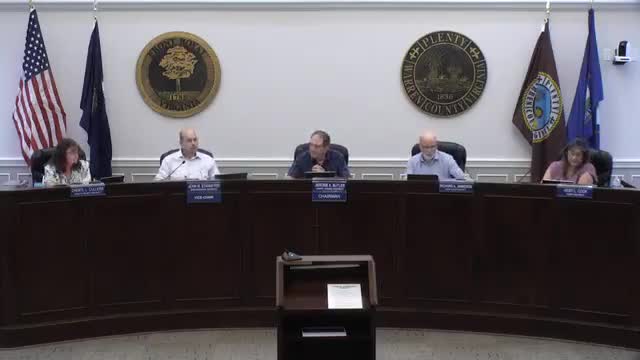
Summary
The Board of Supervisors voted to deny a countywide zoning text amendment that would have allowed 'training facility' and 'social hall' uses in the agricultural district; planning staff had recommended denial and multiple residents and civic groups objected.
Planning staff presented a draft ordinance to add definitions for "training facility" and "social hall" and to allow those uses in the agricultural zoning district by conditional use permit. The amendment had come to the board after a planning commission recommendation; the original applicant later withdrew his request for the text amendment but staff noted the board could still act on the county‑wide change.
Planning staff and several supervisors described the proposed definition for "training facility" as too vague and said it could create enforcement challenges and could duplicate existing land‑use categories such as community centers and rural event facilities. Staff recommended denial of the draft amendment in its current form and offered to draft a narrower text amendment if the board desired.
Members of the public urged denial. Chris Anderson of the Alliance for the Shenandoah Valley said the county already allows many conditional uses in the agricultural district and warned against further eroding rural character. Melanie Salem and several Fork District residents said the proposal would place event and training uses on small, two‑acre properties and could affect thousands of property owners; one speaker said the amendment as drafted would put some 4,534 parcels between two and 20 acres at risk of new event uses. Planning commissioner Hugh Henry said text amendments are typically written broadly and tailored by conditions in individual CUPs, and he disputed assertions that the change would immediately convert properties to by‑right event uses.
After public comment and discussion, a supervisor moved to deny the text amendment, and the board carried the denial by roll call. The board's motion concluded the proposed zoning ordinance amendment was "not appropriate for public necessity, convenience, or general welfare" and "not good zoning practice."