Get Full Government Meeting Transcripts, Videos, & Alerts Forever!
Get email alerts on the Education Budget topic
No spam. Unsubscribe anytime.
Stafford schools ask supervisors for up to $23.3 million as enrollment, health and capital costs climb
Summary
Stafford County Public Schools presented a FY26 funding request that includes new staff, pay-scale steps and capital maintenance as enrollment grows by an estimated 6,200 students over the next decade. The division said it relies on roughly $33.3 million in federal funds and warned officials to plan for contingencies if federal support changes.
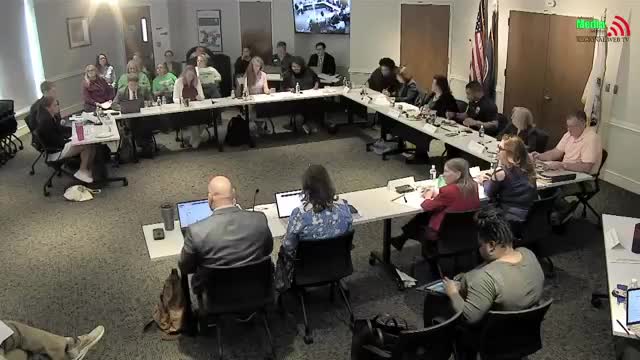
Stafford County Public Schools on Tuesday asked the Board of Supervisors for additional local funding to cover staffing, compensation and building needs as enrollment surges and benefit costs spike.
In a joint presentation, school leaders said their FY26 request would fund mandatory state staffing ratios, phase in teacher and service pay-scale steps and support capital needs for new and aging facilities. The division asked supervisors to provide at least $23.3 million to meet basic needs and identified an additional figure of $18.3 million as the amount needed to balance the year against the county administrator’s proposal.
The request arrives as the division projects roughly 6,200 more students over the next decade and says its 32,000 students already represent about one in five county residents. “We have an internal work group that’s looking at this. We’re trying to build out as many scenarios as we can,” said Dr. Smith, Stafford County Public Schools superintendent, referring to contingency planning if federal funding changes.
Why it matters: School operations in Stafford are highly dependent on a mix of local, state and federal dollars. The schools told supervisors they currently rely on about $33.3 million in federal funding for Title I, Head Start, nutrition and other programs and said sudden reductions would be difficult to replace locally.
What the schools requested and why
- Staffing and state mandates: The division said it needs to add staff to meet the Virginia Standards of Quality as interpreted by the Virginia Department of Education. To hit state minimums the schools identified needs of about 36.5 additional English-language-learner teachers, seven reading specialists and one gifted teacher.
- Compensation: School officials asked the county to fully fund phase 4 of the instructional (teacher) scale and phases 2–3 of the service (support) scale. Staff compensation and benefits account for roughly 85.6% of the division’s expenditures, the presenters said.
- Health insurance: The division reported health-claim increases of more than 15% this year with projections that could exceed 20% by year-end; school leaders said those trends add roughly $1,500 per full-time equivalent employee compared with last year.
- Capital and maintenance: The schools listed capital projects across the system including initial staffing for High School 6 and Elementary Schools 18 and 19, ongoing 3R (repair, replacement, renewal) work and technology replacement cycles such as Chromebooks and bus purchases.
Budget mechanics and reserves
School staff said FY24 carryover stood at about $6 million and described a longstanding salary-lapse (vacancy savings) line that has declined in recent years; the current budgeted salary lapse is $1.75 million. Officials said they have cut more than $5 million from base budgets over five years and highlighted $20 million in capital savings previously achieved.
Federal funding risk and contingency planning
Presenters warned that about $33.3 million in federal funds supports services such as Title I, Head Start and school nutrition. While the nutrition program is administered through the U.S. Department of Agriculture and would not be directly affected by changes to the U.S. Department of Education, presenters cautioned that Title I and some other streams would be difficult or impossible to replace if they were redirected or reduced. “Some of the programs will likely be picked up by other departments,” said Mr. Fulmer, who spoke about grants and federal reimbursements, and added that the division is monitoring potential changes closely.
Programmatic and student impacts
School leaders emphasized that unfunded needs include cyclical replacements for Chromebooks (roughly a five-year life), textbook adoptions, bus replacements, building safety work and differentiated staffing to meet diverse student needs. A student representative, Irish, told the boards: “The hinges are inspired. These are the things I really need replaced,” describing deteriorating Chromebook hardware in daily use.
Procurement, contracts and staffing models
Supervisors pressed staff about outsourcing custodial services, asking whether the contract produced savings and whether local bidders were considered. School staff said custodial work was placed under a multi-year contract that included minimum pay requirements for custodial employees and that a small number of custodians were grandfathered from the prior staffing model.
Legislative priorities and county asks
School and county officials asked supervisors to coordinate legislative advocacy at the state level. Supervisors and school-board members discussed a long-sought increase in the state cost-of-competing adjustment and noted revenue losses tied to local tax relief measures such as the veterans exemption. Several supervisors urged coordinated outreach to state delegates and senators to press for relief and for restoration of state-level funding tools.
Next steps
The school board and the supervisors agreed to continue discussions during the county budget process. School officials said they will provide requested follow-up data, including longer-term SOL (Standards of Learning) performance timelines and counts for impact-aid forms tied to federally connected families. The supervisors noted the need to prioritize limited local dollars and to craft joint state advocacy on mandates and funding.
Ending note
School leaders reiterated that local dollars are the only flexible funding the division can use for Stafford-specific priorities and urged the Board of Supervisors to consider the request within the county’s broader revenue constraints.