Get Full Government Meeting Transcripts, Videos, & Alerts Forever!
Get email alerts on the Nonprofit Funding topic
No spam. Unsubscribe anytime.
Legal Aid Works and other local nonprofits urge Stafford supervisors to restore or maintain funding
Summary
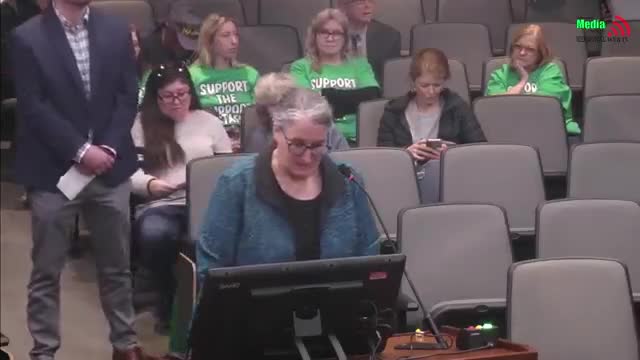
Several local nonprofit leaders used the budget public hearing to urge the Board of Supervisors to restore or maintain modest county funding that they say supports vulnerable residents.
Several local nonprofit leaders used the budget public hearing to urge the Board of Supervisors to restore or maintain modest county funding that they say supports vulnerable residents.
Anne Kloeckner, executive director of Legal Aid Works, said the county’s proposed FY2026 budget “zeroes out all funding for our work in your community.” She told the board staff had provided a reason that money was scarce and that application scores were low; she said the scoring group included people “who clearly knew little about who we are and what we do” and that the result was the county “eliminating all support for the work we do.” Kloeckner urged the board to consider proportional cuts across programs rather than zeroing out individual providers.
Joel Young, chair of Legal Aid Works’ board, asked the supervisors to restore the county’s prior grant and specifically requested reinstatement of $22,257. “I respectfully request that Stafford reinstate the funding of 22,257 dollars,” Young said, citing the organization’s role providing free civil legal services for low-income residents who need protective orders, custody help and other civil legal assistance.
Other nonprofits that spoke described services they say reduce county costs or serve vulnerable populations and asked for continued or restored support: Shannon Fingerholtz, a board member for Big Brothers Big Sisters of Greater Fredericksburg, asked the board to restore her group’s usual funding (the organization said county support has approximated $6,000 in prior years and the FY2026 proposed budget lists the organization at $2,980; the group requested $5,960). Melanie Johnson asked the board to consider a modest county investment in a Fredericksburg SPCA pilot program that diverted 200 cats from municipal shelters last year; staff said the program’s county-equivalent cost would be about $7,000 and that the effort reduced shelter intakes and euthanasias.
Bill Brooks of Virginia Community Food Connections (VCFC) described the SNAP/Virginia Fresh Match program that pairs EBT purchases at farmers markets with matching dollars; VCFC requested level funding of $6,000 and said its programs produced local economic activity and made produce affordable for low-income families. Seth Whitten, deputy director of the Disability Resource Center, described the center’s durable-medical-equipment distribution and a recently awarded $1.2 million HUD grant for home modifications; he said county investments act as “force multipliers” that help attract outside grants and extend services to more residents.
Speakers repeatedly stressed the services’ role in preventing higher-cost outcomes. Kloeckner said zeroing out civil legal aid would leave survivors of domestic violence without access to legal help that can prevent hospitalizations or further harm. Other presenters framed modest county grants as cost-effective: reducing shelter intake, preventing falls and institutional placements, and supporting SNAP purchases that generate local economic activity.
Board members did not vote on individual grants during the hearing. Several presenters asked the supervisors to reconsider application scoring and funding allocations as the county moves from the proposed to the adopted budget.