Get Full Government Meeting Transcripts, Videos, & Alerts Forever!
Get email alerts on the Public Safety topic
No spam. Unsubscribe anytime.
Stafford County public‑safety requests include 19 fire positions and calls to convert part‑time school officers to full time; CAD prioritized over new financial
Summary
Fire and rescue requested 19 positions including a 12‑member crew for Potomac Hills; the sheriff’s office asked to convert part‑time school protection officers to full‑time SROs. County staff prioritized funding a new CAD system this budget year and deferred a full financial‑system replacement.
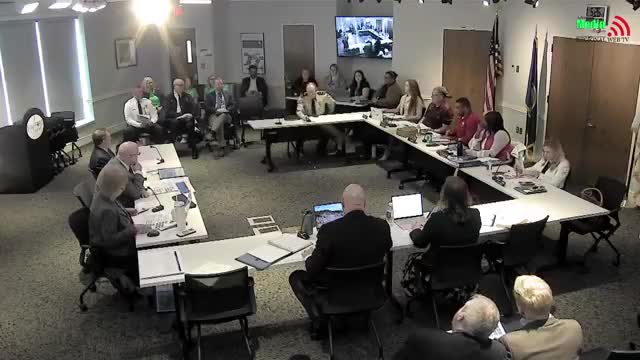
County staff and public‑safety leaders described a set of unfunded staffing requests and two technology projects during the budget work session, and said they prioritized replacement of the computer‑aided dispatch (CAD) system over a full financial‑system upgrade in the current proposal.
Staff said fire and rescue submitted unfunded employee requests that include 19 positions: deputy fire marshals, shift safety lieutenants, a 12‑member engine crew for Potomac Hills and three firefighters to address leave and vacancy coverage. The presentation said a market adjustment and a 1% scale adjustment for public safety would add roughly $1.3 million for fire and rescue.
Sheriff Jason Dombowski told supervisors his office is having trouble filling part‑time school protection positions and said the agency requested converting some part‑time posts to full‑time school resource officers to build a stable applicant pool. Dombowski said part‑time hires have been concentrated among retired officers because the Virginia Retirement System rules limit full‑time employment for some retirees; full‑time postings would attract active officers and transfers. "In order for us to fill these positions, the easiest thing we can do is convert them to full time," Dombowski said.
Staff and the county’s leadership team said information technology choices factored into affordability decisions. Presentation slides and staff remarks described a proposed CAD package with $3.4 million of one‑time funding and an estimated $153,000 annual increase; staff proposed moving forward with CAD now and returning to a financial‑systems replacement in a later budget because doing both at once would strain implementation resources. A county staff member summarized the rationale: implementing both projects simultaneously would compete for the same technical resources and increase risk.
Why it matters: staffing shortages and slower emergency responses are recurring public‑safety concerns; supervisors asked for follow‑up information, including a budget‑neutral conversion option that would convert some vacant part‑time slots to full time and an incident‑response breakdown for areas targeted for new fire staffing.
Board direction included requests for follow‑up figures on vacancy lapses (positions left open and the resulting salary lapses), data on call volumes in affected fire districts and a budget‑neutral plan from the sheriff for conversions that would not increase overall headcount without board approval.