Get Full Government Meeting Transcripts, Videos, & Alerts Forever!
Get email alerts on the Education Funding topic
No spam. Unsubscribe anytime.
Residents divided at Stafford budget hearing over whether to raise taxes to fund schools
Summary
At a March special-called budget public hearing, many speakers urged the Board of Supervisors to increase school funding and accept a higher tax rate; others, including seniors and some residents, opposed a tax increase and urged cost-cutting or alternative revenue measures.
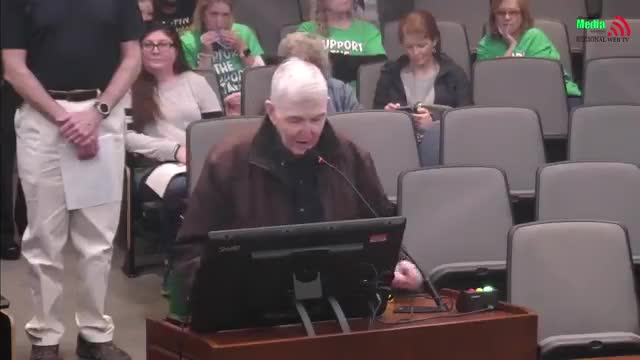
At a March special-called meeting to hear the proposed FY2026 budget, dozens of Stafford County residents addressed the Board of Supervisors during the required public hearing and presented sharply different views about whether the county should raise property taxes to close school funding gaps.
Don Gray, a George Washington District resident, told the board he had no family ties to the school system but wanted “students in the Stafford County School System [to] receive a quality education,” and said he was “willing to pay a little bit more extra in taxes to see this happen.”
Several other speakers urged the board to increase school investment to attract and retain teachers, preserve school facilities and avoid modular classrooms. Clifford Heinzer, who presented slides comparing Stafford to other Virginia jurisdictions, said the county may be facing “a potential funding gap, perhaps above $14,000,000,” and urged action to close the shortfall. Dr. Alicia Hunter, chair of the Citizens Budget Advisory Committee for Stafford County Public Schools, told the board rising costs have left “nothing left to trim” in the schools’ budget and urged full funding to maintain service levels.
Residents and school staff emphasized pay and staffing concerns. A full-time school employee who identified herself as Morgan said service staff faced only a small proposed raise—“a 1.5% raise, which is $720 before taxes”—and said low pay risks losing long-serving employees. Shannon Fingerholtz, speaking on behalf of Big Brothers Big Sisters’ local board, urged continued county support for youth mentoring and requested an increase to $5,960 from a proposed $2,980.
Opponents of a tax increase also spoke. A Falmouth District resident identified only as Mary said she and her elderly parents opposed any tax increase, citing fixed incomes and rising household costs. Jenny Salt, Rock Hill District, told the board raising real estate taxes “isn’t the answer” and urged the county to look for administrative efficiencies and revenue-generation plans before asking homeowners for more. Michelle Wickman, an educator and resident, asked supervisors to set the advertised tax rate and warned that repeated shortfalls create an annual conflict between the board and the schools.
Speakers weighed in on revenue alternatives and fairness. Several residents asked why commercial revenues do not shoulder more of the tax burden; Todd Hansen and others listed recent commercial growth and asked the board to explain low commercial tax receipts. Supervisor questions to staff focused on clarifying how much of the all-funds total is controllable county government spending versus restricted funds and school allocations; Chief Financial Officer Andrea Light agreed to provide more detailed breakdowns and calculations of required local effort for schools ahead of the scheduled joint meeting with the school board.
No budget vote occurred at the hearing. The board will consider the proposed budget and related tax-rate decisions at upcoming meetings; staff flagged an April 22 return for a one-time school funding request and indicated a joint meeting with the school division will include detailed required-local-effort calculations.
Speakers at the hearing represented a mix of parents, nonprofit leaders, school employees and senior residents. The wide range of views signaled a continuing county debate over whether to increase taxes, change revenue sources, or cut programs to meet school and county needs.