Get Full Government Meeting Transcripts, Videos, & Alerts Forever!
Get email alerts on the School Budget topic
No spam. Unsubscribe anytime.
Stafford schools warn state uncertainty could produce $18M–$33M shortfall; ask supervisors to fund $503.1M FY‑26 budget
Summary
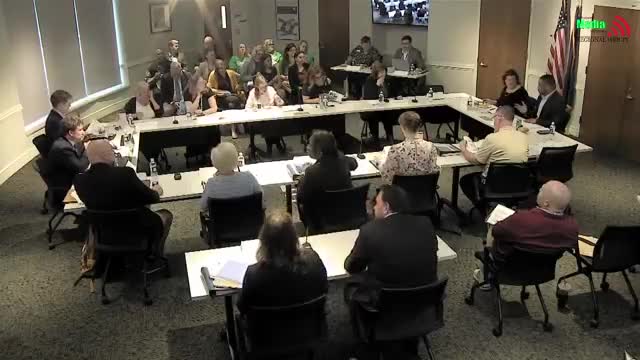
At a joint work session, Stafford County Schools presented a $503.1 million FY‑26 budget and said state budget uncertainty and unfunded mandates could force deep cuts to staff and programs unless supervisors increase local funding.
Stafford County Schools Superintendent Dr. Smith told the Board of Supervisors at a joint work session that the school division’s approved FY 2026 budget totals $503,100,000 and that state budget uncertainty could produce a large funding gap, forcing cuts to staffing, compensation and classroom services.
“The current fiscal forecast really may force us to make decisions that have some very devastating consequences on our school operations, academics, and staffing,” Dr. Smith said, summarizing the division’s case for additional local support. She said the school board’s FY‑26 request seeks an increase in local funds of $23,300,000 over the FY‑25 base.
The superintendent urged supervisors to consider how state budget actions could change school revenues. Stafford’s local composite index, she said, is 0.3312 — “which means just about every state dollar, Stafford is expected to contribute 33¢ and the state would contribute about 67¢.” That formula, combined with rapid local enrollment growth, she said, makes the division particularly sensitive to changes in state funding.
Why it matters: Stafford is growing by hundreds of students a year and the division faces new or expanded state mandates — including expanded literacy training, a new statewide literacy screener, higher counselor and English‑learner staffing ratios, and expanded data‑reporting requirements — that Dr. Smith described as underfunded. She warned that a rollback to a biennium state budget or the governor’s vetoes could raise the division’s shortfall dramatically: in the superintendent’s presentation the gap ranged from about $18.3 million in a best‑case scenario to about $33.1 million in a worst‑case scenario.
Details from the presentation and discussion
- Budget totals and request: Dr. Smith said the school board approved a FY‑26 budget of $503,100,000 and requested $23,300,000 in additional local funding over the FY‑25 base.
- State dependence and risk: The division receives roughly 60% of operating funds from federal and state sources, with the county providing about 35%. Dr. Smith said the governor’s amendment and subsequent General Assembly action created uncertainty that could change Stafford’s state share; she noted a preliminary estimate of a $4.2 million hit linked to recent budget amendments and said a governor veto could magnify cuts by another $12.7 million.
- Unfunded and underfunded mandates: Dr. Smith listed specific requirements that drive local costs, including implementation of new Standards of Learning materials, requirements of the Virginia Literacy Act (up to 40 hours of state‑developed training for K‑5 teachers and added requirements for grades 6–8), a new literacy screener that increases staffing and remediation time, and higher staffing standards for English learner teachers and counselors tied to the Standards of Quality in the Code of Virginia.
- Mandated positions and student needs: To meet state ratios the division said it must add 36.5 full‑time English‑learner positions, seven elementary reading specialists and one gifted teacher. The division reported about 2,210 students with Section 504 accommodation plans and projected roughly 500 additional students next year, increasing required staffing and operational costs.
- Compensation and benefits: Dr. Smith said personnel account for about 85% of the schools’ operating budget. The presentation described a scenario in which a $5,000,000 local increase would permit only a 1.5% salary increase for school employees and would not keep pace with cost pressures including projected health‑insurance premium increases. The division requested an additional $4,000,000 to sustain employee health coverage and said failing to implement a 1.5% locally funded raise could forfeit about $5,400,000 in state‑allocated revenue tied to the biennium budget.
- Capital and openings: The superintendent thanked the board for proposed CIP support for three new schools and cited emergency county funding for selected projects (canopies, arts wing, bleachers). She warned that capital and technology projects will likely be deferred if operating shortfalls deepen.
Board and supervisor reactions
Supervisors asked staff and school leaders for additional data and options. Vice Chair Allen asked whether the mandated positions are optional; Dr. Smith said compliance with the Code of Virginia’s Standards of Quality is required and that failing to make a “good‑faith attempt” to fill mandated positions risks further state funding penalties. Several supervisors requested comparative revenue analyses with neighboring jurisdictions and asked staff to produce scenarios, including revenue‑sharing models and alternative budget timetables.
Supervisor Bamke said she would support a full 2.5% increase for staff even though the advertised county rate and remaining uncertainties make that difficult. Supervisor English and others pressed for clearer breakdowns of recurring versus one‑time expenditures and asked whether one‑time funds could temporarily close gaps — a response school staff cautioned only postpones recurring costs.
Next steps and staff tasks
County and school staff agreed to continue technical work outside the meeting: county staff will model multiple scenarios (including revenue‑sharing variants) and provide historical revenue and expenditure comparisons; the school division will clarify recurring versus one‑time needs and supply detailed line‑item breakdowns on the increases presented. No formal vote or budget adoption occurred at the work session.
What was not decided
No formal budget votes or final allocations were made during the meeting. Supervisors did not adopt a new tax rate. The work session produced commitments to further analysis and follow‑up meetings rather than final actions.
Ending
Supervisors and school board members closed the session with repeated appeals to work collaboratively as “one Stafford,” and with officials saying they will return with more detailed scenarios for the board’s deliberations as the state budget picture becomes clearer.