Get Full Government Meeting Transcripts, Videos, & Alerts Forever!
Get email alerts on the Capital Improvement Plan topic
No spam. Unsubscribe anytime.
Stafford supervisors debate timing and site swaps for new schools as CIP balances costly projects
Summary
At a Stafford County work session, supervisors and school and county staff debated whether to advance a Hartwood Elementary replacement or prioritize an Embry Mill-area elementary, weighing design timelines, developer infrastructure, debt timing and projected enrollment as the county finalizes the capital improvement plan (CIP).
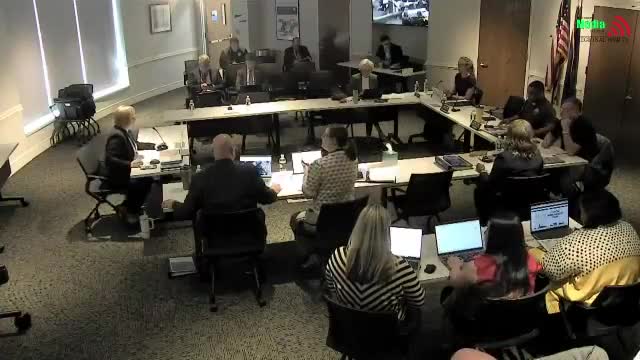
Stafford County supervisors spent the bulk of a work session reviewing the county’s 10-year capital improvement program and debating whether to change the order and timing of planned school projects — most notably a proposed replacement for Hartwood Elementary and construction tied to the Embry Mill development.
Andrea Light, Stafford County chief financial officer, told the board the materials before them include the 10-year CIP and the county’s repair/replace/rehabilitation (3R) list and that staff wanted to focus on projects that begin in fiscal 2026. “What you have in front of you is the 10‑year CIP,” Light said.
The debate centered on whether the board should swap the planned Hartwood Elementary replacement (design funding programmed at roughly $3,000,000) with an Embry Mill-area elementary that some supervisors and residents say has clearer near-term enrollment needs. Supervisor Young said she would not support proceeding with only one school from the four‑school prototype contract, adding, “I am not gonna vote on just 1 school.” Other supervisors pressed for the enrollment data and capacity projections that would justify any change to the schools’ schedule.
Why it matters: several supervisors framed the discussion in fiscal and service terms. The county will issue bonds in 2026 for projects that affect debt service and the tax rate in 2027; moving a project earlier or later can shift when debt service hits taxpayers. Interim County Administrator Craig Meadows reminded the board the county’s adopted fiscal 2025 budget topped $1 billion — $1,080,225,355 — and that the CIP choices tie directly to future tax and debt decisions.
Most important facts and figures - Hartwood Elementary: staff identified $3,000,000 in fiscal 2026 for design to deliver a replacement in 2028 if design starts immediately. That design funding is to support a build on land proffered by the Westlake development, which developers have said will provide roads, water and sewer to the site. - Embry Mill area: supervisors and staff discussed prior analyses showing substantial projected student growth near Embry Mill and Westgate; some supervisors argued enrollment numbers support prioritizing an Embry Mill-area elementary instead of Hartwood. - Bonding and timing: staff said bonds for these projects would likely be issued in 2026 with debt service affecting the tax rate in 2027. The board was told that accelerating Hartwood to open in 2027 is not feasible because the design and delivery timeline is too tight.
Discussion highlights and staff responses - Capacity and design: Light and school division staff said the division has contracted third‑party project management (McDonald Villarr Dupack) to augment internal capacity and that a prototype contract covering four elementary builds yields design and construction efficiencies. - Site and utilities: supervisors asked whether the Hartwood replacement would be built on the existing site or the Westlake proffered property; staff confirmed the Westlake site is intended as the replacement location and that Westlake is expected to provide roads and utilities to the site in time for design and construction. - Short‑term maintenance vs. new build: staff outlined recent investments at the existing Hartwood building (kitchen AC work of about $120,000 in 2020; prior wastewater and water system work in earlier years) and said more substantial interim repairs could cost in the range of several hundred thousand to a few million dollars depending on scope.
Other CIP topics covered - Schools: supervisors also questioned the timing of other school projects on the CIP including elementary schools ES18 and ES19 (already under way), a fine‑arts wing at North Stafford High School, and plans for the county’s Day School and Rising Star programs. - Public safety: the county’s request includes multiple fire/rescue stations (notably an Embry Mill station, station 15) and vehicle replacements. Fire staff told the board that Embry Mill’s projected call volume (roughly 1,000–1,200 calls per year) and drive‑time standards drove the station submission; staff said several fire projects were pushed later in the CIP because the county delayed a proposed fire levy increase in this budget cycle. - Transportation: supervisors reviewed transportation projects and contingency funding. Staff noted many projects are tied to state funding streams (VDOT, SmartScale, revenue sharing) and that moving projects can be complex. County staff said the Morris/Protect grant project for a flood-prone road is roughly 60% through design and that a final decision from federal partners is expected next spring. - Parks and facilities: board members discussed Pratt Park paving and Embry Mill turf/maintenance projects. Parks staff said some paving and maintenance work could be deferred a year but warned deferred repairs often cost more later; staff also noted turf fields can generate revenue from tournaments that offset some costs.
Board direction and next steps The board did not take any formal votes on project swaps during the work session. Supervisors debated whether to revisit the order of school projects and several asked staff for enrollment and redistricting data before any change. Light and school staff said the school board’s adopted project order is the starting point for staff planning but that the Board of Supervisors could ask to flip projects; several supervisors suggested the board revisit these decisions in October when the school division next presents its CIP.
Ending note Staff told supervisors they will return with more detailed data — enrollment forecasts, redistricting impacts, debt‑service timing and updated proffer receipts — to support any decision about flipping projects. “I believe that covers all of our CIP items today,” a staff member said as the session ended.