Get Full Government Meeting Transcripts, Videos, & Alerts Forever!
Get email alerts on the County Budget And Taxes topic
No spam. Unsubscribe anytime.
Stafford board adopts FY2026 budget, sets real‑estate rate at 0.9236 and authorizes meals and hotel tax hearings
Summary
After hours of debate and a heavy public turnout pressing for school funding, the Board of Supervisors set the 2025 real‑estate tax rate at $0.9236 per $100 of assessed value, adopted the FY2026 budget and approved public hearings on a 1% meals tax and a 2% transient‑occupancy (hotel) tax to help fund schools and capital needs.
The Stafford County Board of Supervisors voted late on April 15 to adopt the county’s fiscal year 2026 budget and set a calendar‑year 2025 real‑estate tax rate of $0.9236 per $100 of assessed value.
The Board’s vote on the tax rate was 4–3 in favor of the 0.9236 figure. The FY2026 budget adoption (proposed resolution R25‑27) and the appropriation (R25‑28) passed later in the evening by 5–2 votes.
Board members said the adopted budget reflects a balance of competing priorities after several work sessions and public comment. County Chief Financial Officer Andrea Light told the board that the advertised tax change would translate for the “average household” to roughly $19 per month in additional cost, a figure the county used when describing the budget impact to residents.
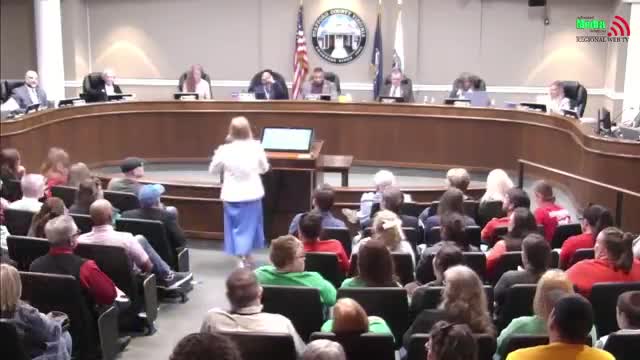
Public testimony during the hearing was dominated by school staff, parents and residents urging the board to fully fund Stafford County Public Schools. Several teachers and paraprofessionals who live in the county spoke in favor of the advertised increases, saying understaffing and low pay have led to turnover and difficulty recruiting. “Please choose to invest in our children … with full, fair funding,” teacher Tori Nichols told the board during public comment.
Because the Board also wanted to consider revenue options that target visitors and restaurant users rather than only property owners, supervisors voted 5–2 to authorize public hearings on two separate measures: a 1% meals tax and a 2% increase in the county’s transient occupancy (hotel) tax. The County will advertise and hold those public hearings on May 20; any final adoption of those taxes would require additional board action following the hearings.
Budget highlights and next steps - The FY2026 plan includes the county operating budget and a 10‑year capital improvement program. The Board also approved the county’s plan to use up to $180 million in school borrowing (VPSA) as needed; the VPSA public hearing does not itself bind the Board to issue the full amount. - To reach a compromise on the real‑estate rate, the board incorporated reductions identified in work sessions and asked staff to identify a remaining funding gap of roughly $345,000 to balance the final appropriation; the Board directed the county administrator to find that amount in other budget lines.
Votes at a glance - Real‑estate tax rate (0.9236 per $100): 4–3 in favor - R25‑27 (adopt FY2026 budget): 5–2 in favor - R25‑28 (appropriate FY2026 budget): 5–2 in favor - Motion to advertise public hearing for 1% meals tax: 5–2 in favor - Motion to advertise public hearing for 2% transient‑occupancy tax: 5–2 in favor
Why it matters: The board’s actions set spending and revenue priorities for the next fiscal year and keep open targeted revenue tools (meals tax, hotel tax) intended to shift some costs from homeowners to visitors and diners. The budget and tax choices also respond to strong public pressure over school funding and rising costs in county operations.
Ending: County staff said they will publish the hearing notices and return for formal votes after the May 20 public hearings; staff will also track any state budget changes that could affect the local school allocation.