Get Full Government Meeting Transcripts, Videos, & Alerts Forever!
Get email alerts on the Land Use And Zoning topic
No spam. Unsubscribe anytime.
Spotsylvania supervisors split on requiring special-use permits for data centers; direct staff to draft standards
Summary
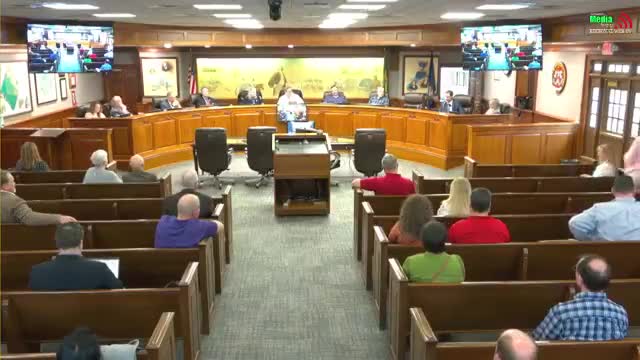
Spotsylvania County’s Board of Supervisors heard more than two hours of public comment and engaged in an extended debate March 25 before rejecting a proposal to require special‑use permits for data centers in all office, commercial and industrial zoning districts.
Spotsylvania County’s Board of Supervisors heard more than two hours of public comment and engaged in an extended debate March 25 before rejecting a proposal to require special‑use permits for data centers in all office, commercial and industrial zoning districts.
The proposal before the board would have removed data centers from the county’s office use definition, created a separate data‑center definition, and required an approved special‑use permit (SUP) in O‑1, O‑2, C‑1, C‑2, C‑3, RC/V, I‑1 and I‑2 zoning districts. Planning staff said the change was intended to give officials and neighbors review authority and the ability to attach site‑specific conditions.
Supporters of SUPs and residents who spoke at the public hearing cited concerns about water use, noise from cooling and backup generators, visibility of large buildings from neighborhoods, and long‑term environmental and public‑health effects. “A special use permit would not ban data centers,” said David Guzman of the Berkeley District. “It would simply ensure that they are placed thoughtfully with proper oversight and public input.”
Friends of the Rappahannock, represented by executive director Daria Christian, recommended the board add a data‑center SUP to protect water resources around the Rappahannock River. “These projects require more oversight and should not be considered by right,” Christian said.
Several residents pressed for large setbacks from homes and stronger screening. “A data center next door could change that [fresh air for children] permanently,” said Prescott Castles, who cited studies showing large water and energy use at major facilities.
Developers’ representatives urged caution about adding a blanket SUP in industrial areas. Attorney Charlie Payne, who said he represents data‑center projects, told the board that sites suitable for large data campuses are limited and that most of the projects that have come before Spotsylvania already went through rezoning. “There’s very few places that sort of magic combination happens in Spotsylvania County,” Payne said, arguing that the county already uses proffers and site plan review to manage impacts.
Board members debated tradeoffs between protecting neighbors and maintaining sites attractive for investment. Several supervisors said they wanted firm standards in place (setbacks, screening, noise limits, architectural and view‑shed requirements, generator enclosures, and limitations on potable groundwater for cooling) before deciding whether to allow by‑right development in industrial districts.
On a roll call, a motion to adopt the ordinance as presented—making data centers a special‑use permit in all the districts that currently allow them by right—failed on a 3‑3 tie (3 yes, 3 no). After extended discussion, the board voted 6‑0 to direct staff to draft a formal data‑center definition and a package of development standards (buffers, screening, noise limits, view‑shed analysis, architectural guidelines and generator/location requirements) and return the draft to the Planning Commission for recommendation and later board action.
The board’s directive establishes a process and a set of staff tasks rather than immediate zoning changes. Planning staff said doing the work first—producing a clear definition and site standards—would allow a more predictable review process and reduce case‑by‑case uncertainty.
The county also recorded a separate planning commission recommendation opposing blanket SUPs in industrial districts; the commission recommended by‑right use in I‑1 and I‑2 with development standards and SUPs in office and commercial districts. The board’s direction to staff sends standards back for public review rather than adopting either of those positions immediately.
What’s next: staff will prepare a draft definition and a menu of possible development standards and return the materials to the Planning Commission and the board; any ordinance change would follow the standard public‑hearing process.