Get Full Government Meeting Transcripts, Videos, & Alerts Forever!
Get email alerts on the State Legislation Energy Data Centers Local Authority topic
No spam. Unsubscribe anytime.
State senator tells Powhatan supervisors he will defend local authority, flags power grid and data-center pressures
Summary
Senator Cypress met with Powhatan supervisors on April 28 to hear local priorities and said he will defend local control over land use while raising alarms about the state’s electricity roadmap and the impact of data centers on rates and transmission needs.
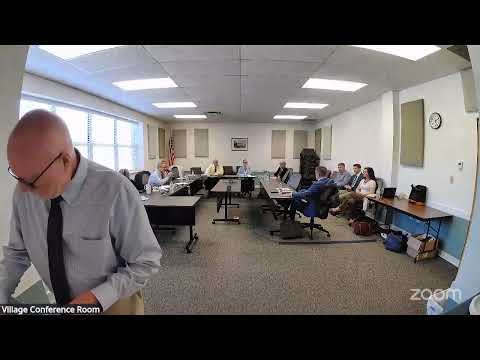
Senator Cypress, newly sworn-in to the Virginia Senate earlier this year, met with the Powhatan County Board of Supervisors on April 28 to solicit local priorities and pledged to “represent them and take their needs and priorities to Richmond.” He told the supervisors he will prioritize preserving local authority over land-use decisions and will push colleagues to address immediate power-generation and transmission shortfalls driven by rapid growth in electricity demand, notably from data centers.
Cypress said his office is in an “ideation” phase: collecting ideas this spring and summer, narrowing them into proposed bills in July–August, and then vetting drafts through a Tenth District review before filing. “I don’t think anybody elected me to take my ideas to Richmond,” he said. “They elected me because they trusted me to represent them.” He urged local officials to continue regular, direct contact with his office and offered his cell number for follow-up discussions.
Why it matters: Cypress framed two linked concerns for Powhatan: (1) state-level bills that can override local land-use decisions — he said there were attempts this session to curtail local permitting authority for projects such as utility-scale solar — and (2) a mismatch between the Commonwealth’s clean-energy timeline and the region’s near-term need for stable generation and transmission capacity as data-center load grows.
On local authority and solar: Cypress acknowledged he initially supported a committee motion allowing state approval in lieu of local permitting for some solar siting, but later reversed his support after concluding “this is not how our government works.” He said he will “be absolutely voting to defend all local authority” going forward. He told the supervisors the bill that would have allowed state approval “didn’t make it,” and that in his view the Republican caucus has generally opposed measures that would erode locality powers.
On electricity, data centers and the Clean Economy Act: The senator described discussions with electric cooperatives and generation companies that convinced him Virginia’s current Clean Economy Act goals create near-term investment uncertainty for firms that build gas or other dispatchable generation. He said the Commonwealth will need new conventional generation and substantial transmission investment to meet projected demand, citing a co-op estimate that service capacity in one area could rise from roughly 1,200 megawatts to 20,000 megawatts with approved data centers. He urged a middle path on the Clean Economy Act requirements or temporary extensions to enable new, longer-lived conventional generation to attract investment.
Cypress added that some data centers receive wholesale rates for large loads and that the structure of who pays for long transmission builds — the developer, the utility, or ratepayers — is not always clear. He said his office will meet regularly with local electric cooperatives and utility representatives and that he plans to research the issue before proposing legislation.
On schools and local funding: Supervisors raised school facilities and funding, including the recent bonus funding arrangement that shifted a portion of a teacher bonus cost to localities. Cypress said he supports dialogue and local experimentation, including case-by-case flexibility for measures such as a local 1% sales-tax referendum for schools; he voted against a blanket statewide authorization for the 1% sales tax because he worried funds would disproportionately benefit retail centers where people shop outside smaller, rural localities.
Next steps: Cypress asked the board to help identify priorities to feed into his district review and said his office will provide bill lists to themed mailing lists for local feedback once proposals are drafted. He also said he will bring key bills to the Tenth District committee for local vetting before advancing them to General Assembly committees.
Speakers quoted or referenced in this report are listed below. No formal votes or ordinances resulted directly from this portion of the meeting.