Get Full Government Meeting Transcripts, Videos, & Alerts Forever!
Get email alerts on the Housing topic
No spam. Unsubscribe anytime.
Powhatan housing workgroup weighs ADU size, conservation subdivisions and utility capacity
Summary
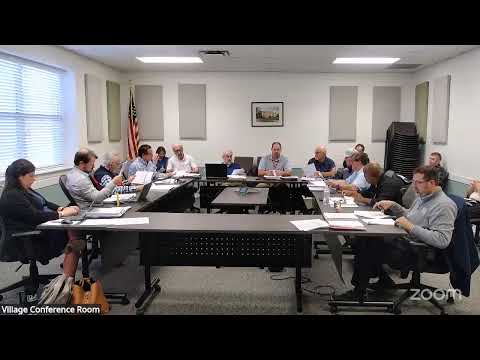
At a March 18 Powhatan County housing workgroup meeting members reviewed housing stock and population projections, debated changing accessory-dwelling-unit rules, family-division limits and conservation subdivision incentives, and directed staff to map priority areas tied to existing water/sewer capacity.
Powhatan County’s housing workgroup spent its March 18 meeting reviewing county housing and population trends and debating specific tools to expand housing options, including adjusting accessory dwelling unit (ADU) limits, refining family-subdivision rules, and targeting development to utility-served areas such as the Village/Flat Rock and Route 60 corridors.
The discussion began with a staff packet and presentation on housing stock and demographics that noted more than 90% of Powhatan’s housing is single-family and owner-occupied and that recent projections for longer-term population growth contain a wide margin of error. The packet also included an inventory of parcels: 11,414 county parcels with a dwelling unit, and an analysis showing a local “per-house” fiscal gap of roughly $2,381 when counting only locally funded services (the presentation excluded state and federal aid and business personal property from that calculation).
Why it matters: workgroup members tied housing availability to economic development and schools. Several members said employers considering site locations look at nearby housing options for workers; members also noted local school funding is sensitive to enrollment, and that state “composite index” calculations influence how much state education funding Powhatan receives.
What members debated
- ADU rules: Members discussed raising the allowable ADU size where the code now lists 35% (R-5, R-2, R-U) to 50% of the primary unit in some zones, and flagged two concerns: ADUs becoming rental-only investments and use as short-term rentals. The group expressed support for prohibiting short-term rentals in ADUs and for keeping an owner-occupancy requirement for one of the units.
- Family subdivisions and ownership conditions: Members reviewed family-subdivision rules and the five-year hold period tied to some lots. They said family subdivisions have been both a practical tool and an occasionally abused mechanism when used to create multiple buildable lots on a shared driveway; the workgroup asked staff to examine the current rules, the definition of “family” in county code and enforcement options.
- Conservation subdivisions and density bonuses: The group discussed conservation subdivision tools intended to preserve open space while allowing clustered development. Several members argued conservation subdivisions (and potential density bonuses tied to them) should remain available as a by-right tool in appropriate areas, but that highly sensitive parcels likely need additional conditional-use review to secure buffers and protect rural character.
- Utility capacity and mapping: Staff described existing water and wastewater footprints and identified the Village/Flat Rock and Route 60/courthouse areas as the most feasible locations for denser residential development because they already have water/sewer infrastructure or options to add capacity (for example, local wastewater plants with available capacity and the potential to tie into neighboring systems or add wells). Members asked staff to map those service footprints and estimate the infrastructure investments needed to support additional housing.
- Market and finance tools: The meeting reviewed examples from other localities rather than a county program: one county used developer incentives, permit waivers and a housing trust fund seeded with proceeds from a large rezoning to subsidize development, provide down-payment assistance and secure deed restrictions to preserve affordability. Workgroup members asked staff to research land-trust, housing-trust, and employer-assisted models as tools Powhatan could adapt.
Decisions and next steps
The workgroup did not adopt formal zoning changes at the meeting. Members directed staff to: (1) produce a map identifying candidate housing-priority areas tied to existing water/sewer capacity, (2) quantify the likely housing yield from incremental ADU and family-subdivision rule changes, (3) evaluate conservation-subdivision implementation and any needed conditional-use safeguards for sensitive parcels, and (4) summarize potential funding/partnership tools (land trust, housing trust fund, employer-assisted housing) with examples and legal constraints. The group agreed to reconvene in two weeks and to form a small subgroup to draft specific map boundaries and draft ordinance changes for future review.
Votes at a glance
- Approval of March 4 meeting minutes: The workgroup approved the minutes by voice vote at the start of the meeting (motion and second recorded; approval by voice).