Get Full Government Meeting Transcripts, Videos, & Alerts Forever!
Get email alerts on the Property Taxes topic
No spam. Unsubscribe anytime.
Kennesaw staff explain new state ‘estimated rollback rate’ rule; council to place certification on consent
Summary
City staff briefed the council on a new 2025 state requirement (House Bill 581, as amended by House Bill 92) that requires cities to certify an estimated rollback rate ahead of county notices. Staff recommended certifying the current M&O millage of 7.75 and asked the council to place the certification on the consent agenda.
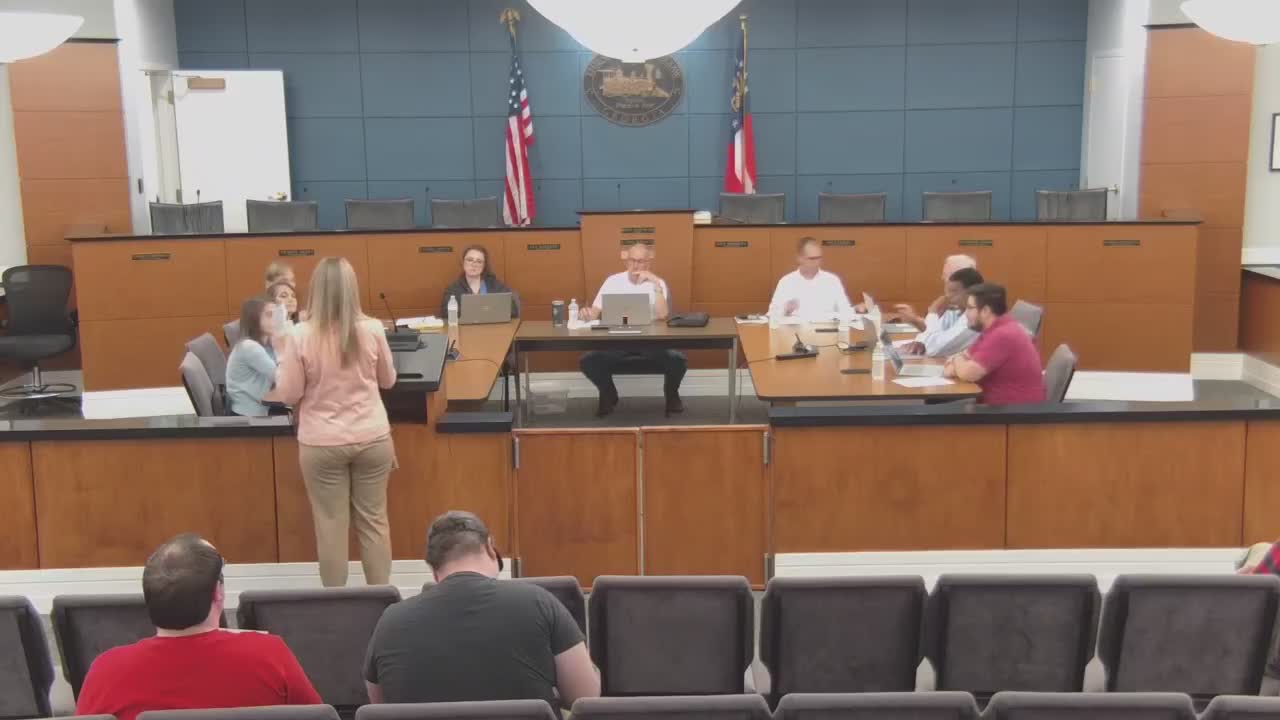
At a Kennesaw City Council work session Monday in April, city staff recommended the council certify an "estimated rollback rate" required by new state law and placed that certification on the consent agenda.
The estimated rollback rate requirement was created by House Bill 581 and clarified by House Bill 92, staff said. The rule requires cities to adopt and send an estimated rollback rate to counties 14 days before the county issues notices of assessment; the county in turn is pausing notices to let cities adopt the estimates. "The estimated rollback rate is a new concept that became law in 2025," Jennifer, a city staff member, told the council.
Why it matters: the estimated rollback rate appears on property tax assessment notices and can trigger standard public-notice language if a jurisdiction does not reduce rates to the rollback figure. City staff recommended certifying the city's current maintenance and operations (M&O) millage rate of 7.75 for the assessment notices to give taxpayers a stable number while the city finalizes its budget and awaits the county digest.
Jennifer said the Association County Commissioners of Georgia (ACCG) and the Georgia Municipal Association (GMA) advised cities to use conservative estimates because many cities have not yet completed budget work and the county digest numbers were not available in March. "We sent that in March. And the recommendation was, hey, be conservative, recommend go with the same current rate," she said. Staff also told council members the statutory adoption of the final millage rate will still occur in August when the city conducts its required hearings and final vote.
Staff reported that Cobb County, which normally issues notice of assessments in early May, is holding those notices while cities adopt estimated rollback rates. City staff said they will press the county to provide earlier digest information next year so the city can make estimates with more complete data, but stressed the process does not change the requirement for public hearings or newspaper notices associated with final millage adoption.
The council had no formal vote recorded on the matter during the work session; the mayor instructed staff to place certification of the estimated rollback rate on the consent agenda for a future meeting.