Get Full Government Meeting Transcripts, Videos, & Alerts Forever!
Get email alerts on the Land Use Adu topic
No spam. Unsubscribe anytime.
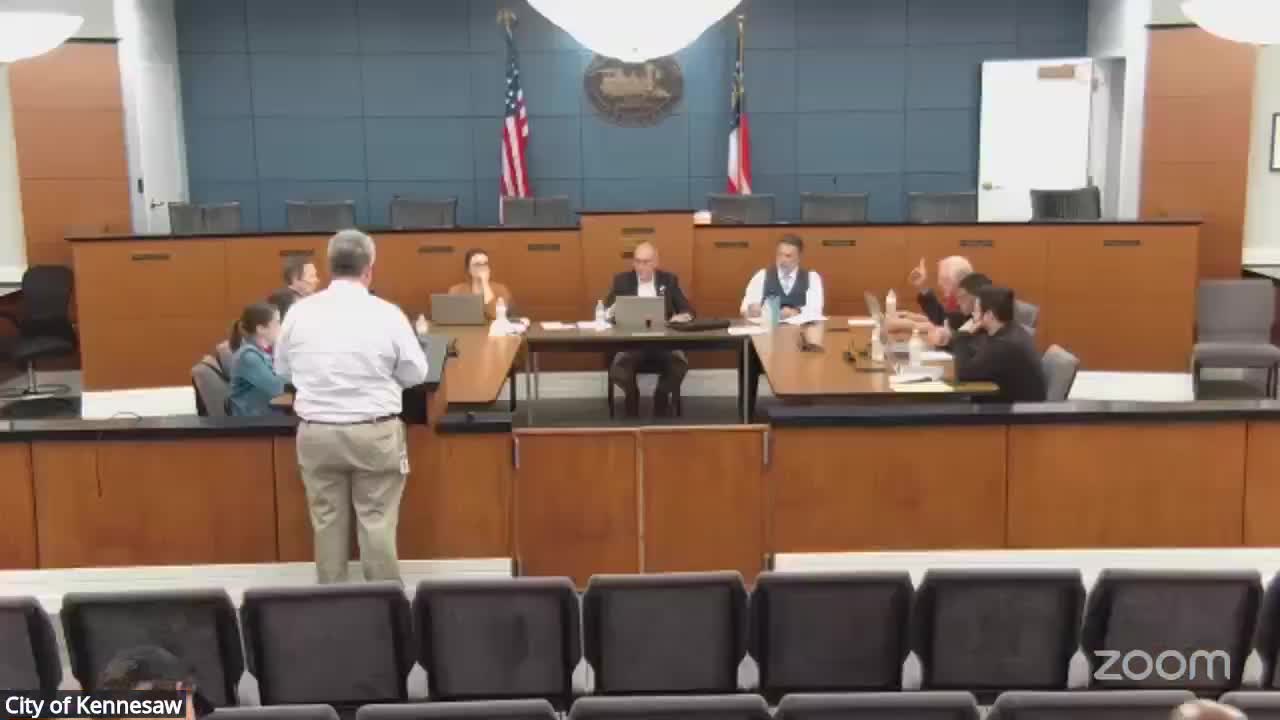
Kennesaw council hears extended discussion of accessory dwelling unit proposal; no vote taken
Summary
Kennesaw staff presented a draft accessory dwelling unit (ADU) ordinance and council directed staff to pursue public outreach and additional analysis; the item was discussion-only and no ordinance or vote occurred.
The Kennesaw Mayor and Council discussed a draft accessory dwelling unit ordinance at their work session, with staff asking the council whether to pursue additional study and public outreach before any formal vote.
The proposal would allow one ADU per lot in R15, R20, R30 and R40 zoning districts, require a minimum 10-foot side and rear setback, and one additional off-street parking space for the ADU. The ordinance as drafted would prohibit separate rentals and short-term rentals and require a land-use permit process subject to review and renewal, with inspections to enforce use restrictions.
Zoning Administrator Daryl Simmons told the council the proposal was limited "to the family member piece of it" and framed the work as staff responding to public inquiries since 2024 and to council direction to explore "alternate housing options, specifically for family members or extended family members in the same household on the property." City Planner Chanel Campbell described ADUs as "small independent residential units located on the same lot as the residential, the primary residence." Campbell said staff recommended automatic exclusion of short-term rentals "due to concerns including neighborhood impact or increased traffic, parking congestions, and disturbance or frequent guest turnover and potential enforcement challenges."
Council members and staff discussed potential buffers to limit the concentration of ADUs in small areas, utility and fire-safety impacts, and enforcement burdens. A council member suggested a tiered permit cap to allow an initial round of ADU permits followed by a pause and study. Campbell said staff can run scenario models of reduced buffers and discuss the outcomes with the fire department and utility providers. On enforcement, Campbell said a land-use permit with annual inspections would be used to ensure compliance.
Legal questions also surfaced. A legal adviser, Fred Foehrman, warned council members about a state drafting issue tied to OCGA 36-66-4 and said the legislature had moved to amend the law in House Bill 155. "It was house bill 1 55," he said, and noted the governor had not yet signed the cleanup language; staff said several jurisdictions have adopted differing ADU text amendments. Council members noted Marietta and Acworth have ADU ordinances with local tailoring.
Council consensus directed staff to continue analysis, host town-hall meetings to gather public feedback, run utility and fire-access scenarios for lower buffer options, and return with refined language for further consideration. No ordinance, motion or vote occurred; the item was explicitly designated "discussion only."