Get Full Government Meeting Transcripts, Videos, & Alerts Forever!
Get email alerts on the Housing Water Policy topic
No spam. Unsubscribe anytime.
Local working group eyes water‑adequacy ballot initiative tying development to affordable units
Summary
A grassroots group called WARD is collecting signatures for a Nov. 2025 ballot initiative to require new residential developments of three units or more to include one‑third affordable units at specified AMI thresholds as a condition of building under the city's water adequacy code.
A local group called Bozeman Water Adequacy for Residential Development (WARD) is collecting signatures to place a city ballot initiative on the November 2025 ballot that would change the city’s water adequacy code and impose affordable‑housing requirements on many new residential developments.
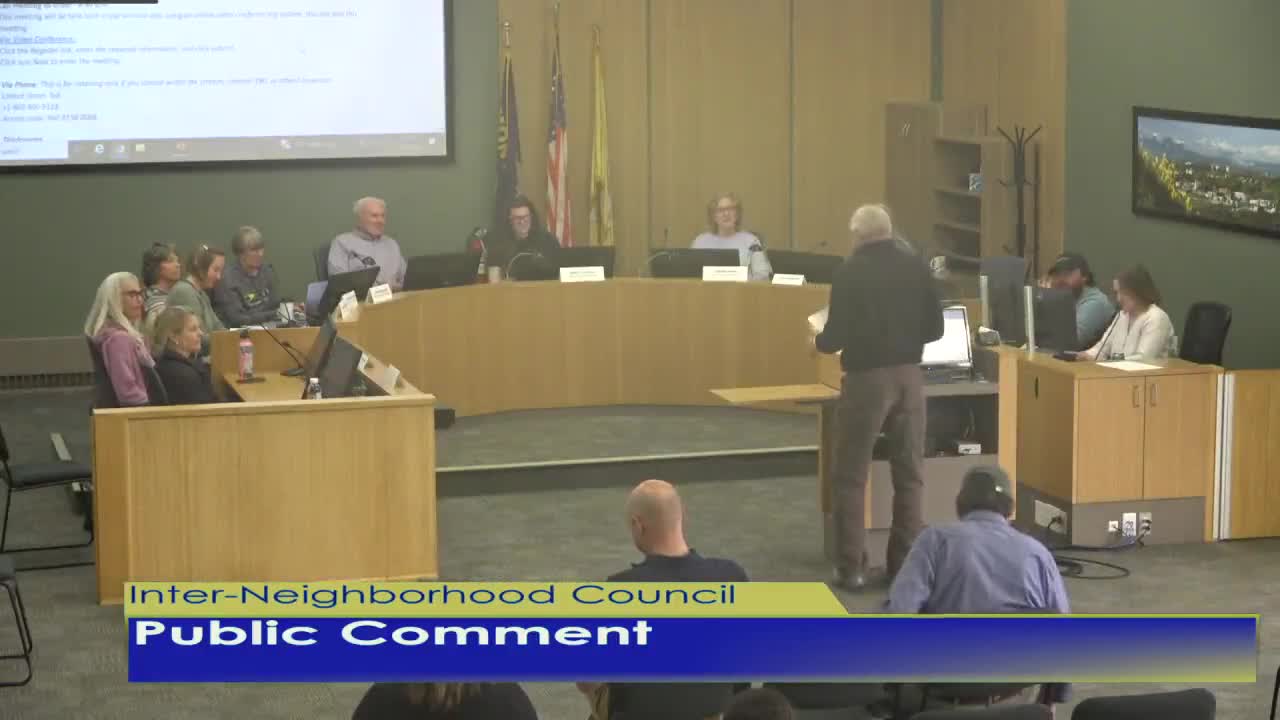
Daniel Carty, a member of the WARD working group, told the InterNeighborhood Council that the city’s recently launched integrated water resources management plan process and consultant comments — that Bozeman sits in a closed basin and that “water and affordable housing go together” — helped motivate the initiative. WARD’s proposed amendment to the city’s water adequacy code would require new residential developments of three dwelling units or more to provide one‑third of those units for rent at 60% area median income (AMI) or for sale at 120% AMI.
Nut graf: If successful, the initiative would condition approval to build new multi‑unit residential projects on a developer‑provided share of affordable units under the water adequacy rubric; the group described the measure as a regulatory “stick” to require affordable units for the privilege of new development in the city.
Carty said WARD is collecting signatures through June 23 to qualify for the November ballot and described the group as a “local grassroots multi‑generational mix of renters and homeowners who live scattered throughout the city.” He invited neighborhood associations to meet with WARD and shared a website — wardbzn.com — and an op‑ed referencing the initiative.
Ending: WARD representatives said they are available to brief neighborhood associations; the city will address the initiative as part of public processes tied to any proposed amendment to the water adequacy code and the ballot‑qualification process.