Get Full Government Meeting Transcripts, Videos, & Alerts Forever!
Get email alerts on the Functional Classification topic
No spam. Unsubscribe anytime.
MDT launches statewide functional-classification review; Gallatin Valley MPO invited to provide input
Summary
Montana Department of Transportation is updating the statewide functional classification system; Gallatin Valley MPO staff and local jurisdictions were invited to a kickoff and asked to prepare local input on classification, highway-system designation and design-standard implications.
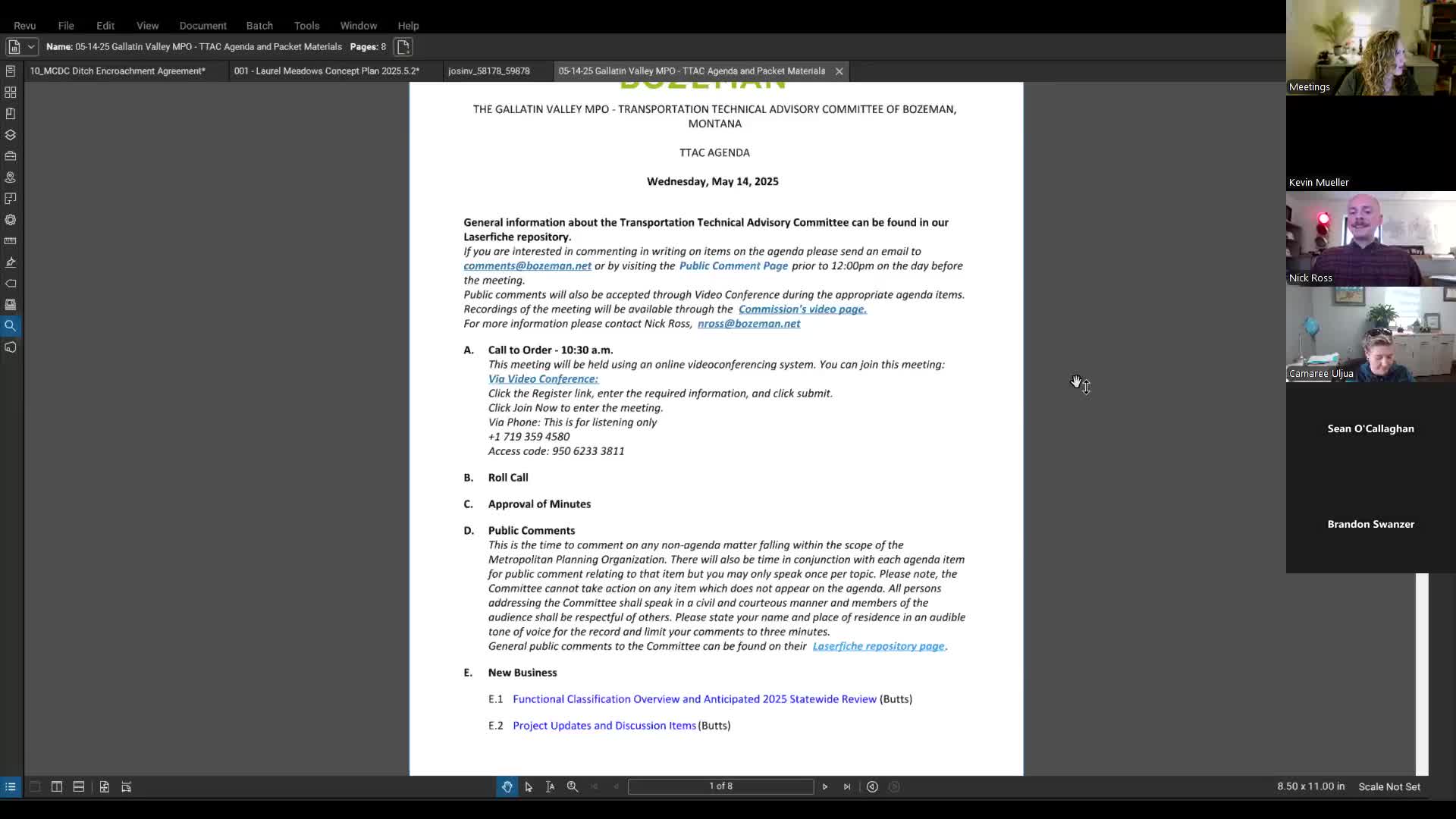
The Montana Department of Transportation is leading a statewide review of the functional classification system and invited local input from the Gallatin Valley MPO and member jurisdictions, MPO manager Jeff Butts said during the MPO's May technical committee meeting.
The review matters because functional classifications influence eligibility for federal aid and set expectations for design, maintenance and multimodal treatments on roadways, Jeff Butts, manager for the Gallatin Valley MPO, told the Transportation Technical Advisory Committee. The state-maintained official map will be updated and submitted to the Federal Highway Administration for review and approval.
Functional classification divides streets by primary purpose — from local roads that prioritize direct access to arterials that prioritize regional mobility — and FHWA guidance links classification to traffic volumes and speeds. Butts and other speakers said those choices carry trade-offs: higher-classified roads are usually eligible for federal funding but can bring stricter engineering standards, higher construction and maintenance costs, and can affect walkability, bicycle access and transit operations.
“The state maintains the official map, and FHWA reviews and approves changes,” Butts said, explaining roles and next steps. The MPO will meet with MDT at a kickoff webinar next Monday at noon to gather input, he said, and staff will continue to coordinate local proposals as the long-range transportation plan progresses.
Project lead Jeff Streeter, who identified himself as the project manager for MDT's 2025–26 functional classification review, told the committee he will present during the kickoff webinar and that MDT will open a commenting period addressing both functional classification and state highway-system designation. “We are going to be offering opportunity as well for you guys to let us know your thoughts on the highway system designation along with functional class,” Streeter said.
Committee members asked for clarity about what design standards or requirements would follow a reclassification. Brandon, a committee member, asked if there is a place to view the ramifications for required design standards tied to each classification. Butts said he has asked staff to follow up with a deeper review of federal, state and local requirements and will report back to the committee in a future meeting or by email.
Meeting participants discussed technical points in FHWA guidance cited by staff: arterial roadways typically carry more than half of vehicle miles traveled, urban collectors often account for 5–15% of daily VMT, and in some rural areas collectors can carry up to 30% of VMT. The committee also reviewed FHWA guidance stressing connector spacing and continuity, and avoiding parallel roads of the same class except in special cases.
No formal action or vote was taken; the discussion was recorded as informational and staff were asked to follow up with material on standards and implications for local jurisdictions. MDT’s public kickoff and comment period will be the formal opportunity for jurisdictions and the public to propose changes.
Officials suggested jurisdictions may submit coordinated input but noted that, ultimately, jurisdictions will also be expected to provide their own proposals where appropriate. Butts said the MPO can coordinate and host discussion without speaking on behalf of individual member jurisdictions.
The MPO will circulate information about the MDT webinar and provide follow-up materials on classification consequences and required engineering standards ahead of further discussion at the MPO and in the long-range plan process.