Get Full Government Meeting Transcripts, Videos, & Alerts Forever!
Get email alerts on the Cash In Lieu Water Rights topic
No spam. Unsubscribe anytime.
Bozeman residents urge revamp of 'cash-in-lieu' water-rights policy; petitioners brief commissioners
Summary
During consent‑agenda public comment, residents urged the commission to support reexamination of the city's cash‑in‑lieu of water‑rights policy and noted a pending ballot initiative that would require developers using cash‑in‑lieu to include about one‑third affordable housing and a rental‑rate cap.
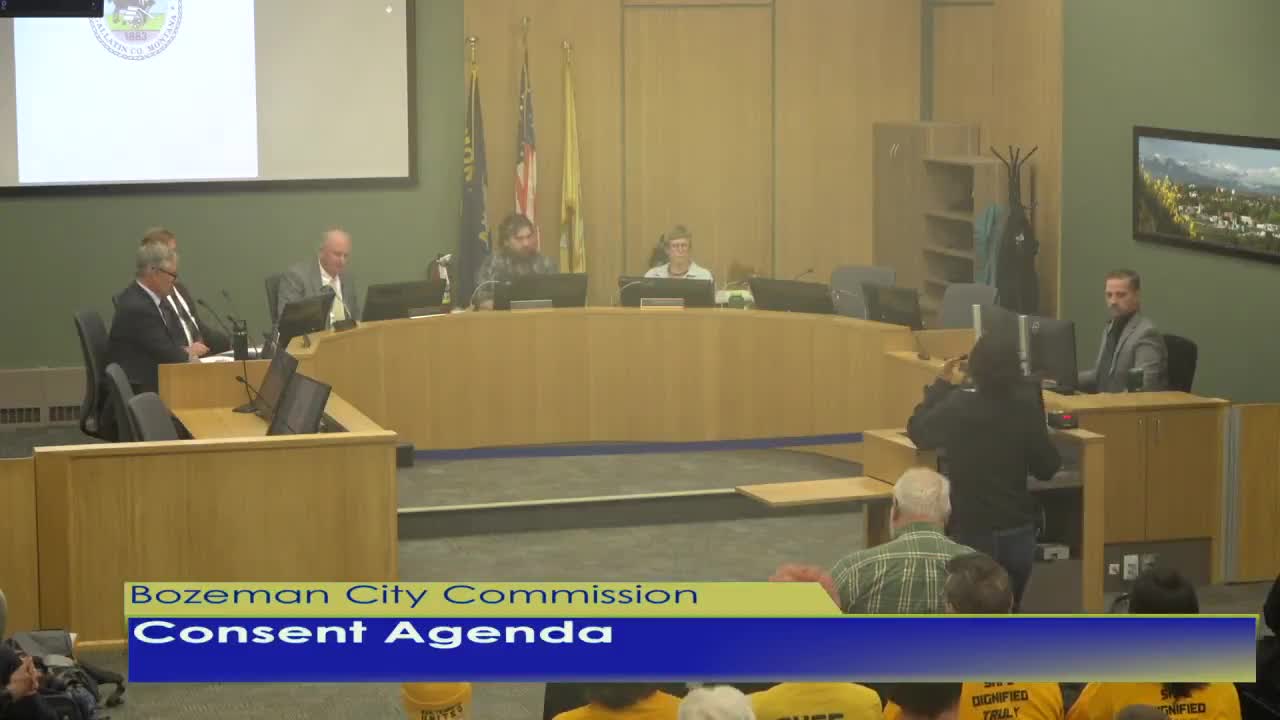
Two members of the public used the consent‑agenda comment period at the May 13 Bozeman City Commission meeting to highlight the city’s planned reevaluation of the cash‑in‑lieu of water‑rights rate and to outline a citizens’ ballot initiative to change the policy.
Natsuki Nakamura, a Bozeman resident, urged the commission to review the city’s cash‑in‑lieu fee—an amount paid by developers instead of acquiring water rights—because the city’s published price dates back to 2008. Nakamura told the commission that the listed fee, "was set back in 2008 for $6,000 per acre square foot," and argued that the present fee does not reflect current development impacts, maintenance costs or staff needs.
Attorney John Meyer, who said he worked on the initiative’s legal language with counsel in the city, described the petitioners’ plan to ask voters to amend the city’s cash‑in‑lieu policy. Meyer said, "we have asked the city voters to amend the cash in lieu of water rights to require one‑third of all new development in Bozeman to be affordable." He added that the initiative would also include a rent cap intended to limit future rent increases in units created under the mechanism.
Context: cash‑in‑lieu mechanisms allow developers to pay the city a fee instead of retiring or buying associated water rights. Depending on municipal code and state law, such fees and the resulting water‑rights strategy can influence development feasibility and housing supply. The city staff noted on the consent agenda they intend to reevaluate the fee schedule, and the public comments flagged a pending citizens’ effort to change ordinance policy via voter initiative.
No formal commission action occurred as a result of the comments; the consent agenda advanced and staff will process petition paperwork and the commission will consider any formal proposed code or fee changes in future agenda items.
What to watch: any staff report or ordinance to follow up on the fee revaluation, the legal sufficiency review of petition language, and any formal ballot‑placement steps taken by the city clerk and Recorder.