Get Full Government Meeting Transcripts, Videos, & Alerts Forever!
Get email alerts on the Hotel Occupancy Tax Grants topic
No spam. Unsubscribe anytime.
Pleasanton council adopts resolution amending hotel-occupancy tax grant policy
Summary
The Pleasanton City Council voted to adopt a resolution amending the city's hotel-occupancy-tax (HOT) grant terms and conditions after a workshop-length review of application deadlines, reimbursement practices, post-event reporting, insurance and verification procedures.
The Pleasanton City Council voted to adopt a resolution amending the terms and conditions for hotel-occupancy-tax (HOT) grants after a workshop discussion of application timing, reimbursement practices and oversight requirements.
Council members said the changes are intended to clarify how organizations apply for and are paid from HOT funds and to strengthen post-event documentation and verification. The adopted resolution (Resolution No. 226-25) covers application deadlines, options for direct payment versus reimbursement, required post-event reporting, insurance coverage periods, and use of the city logo on advertising.
At a workshop-review session before the vote, council members and staff discussed a May application deadline so the council could consider requests during the annual budget process; a May 31 application cutoff was noted. Staff said the policy will allow the city either to reimburse event organizers after they provide documentation or, when appropriate, to pay invoices directly to vendors. Council members pressed for specific post-event requirements: a detailed, itemized budget and profit-and-loss statement, a listing of sponsorship revenue, copies of invoices and proof of payment where applicable, and a signed post-event form. Staff said the city will require documentation and will conduct verification and audit reviews when needed.
Council discussion also addressed whether the policy should limit eligibility to nonprofits. Several members urged that for-profit organizers must provide the same documentation and be subject to the same verification as nonprofits; others warned that restricting eligibility only to 501(c)(3) organizations could create loopholes. The council agreed the policy should allow both nonprofit and for-profit applicants but require the same level of scrutiny and documentation from all recipients.
The draft policy as discussed would require event insurance to cover the period from event setup through cleanup, and would require a visible acknowledgement of city sponsorship (city logo placement) in advertising and on event materials. Staff said it will provide an event-advertising checklist and the official city logo for recipients to use. The draft also includes a 30-day timeline for certain pre-event submittals and a recommended 60-day window for post-event reporting and supporting documents.
During the workshop several speakers urged stronger audit language and verification authority so the city could call vendors or otherwise confirm that invoices were legitimate. One participant described common municipal practice of requiring invoices and supporting documents up front when possible and said a reimbursement-only policy can leave the city exposed if post-event audits are not strict.
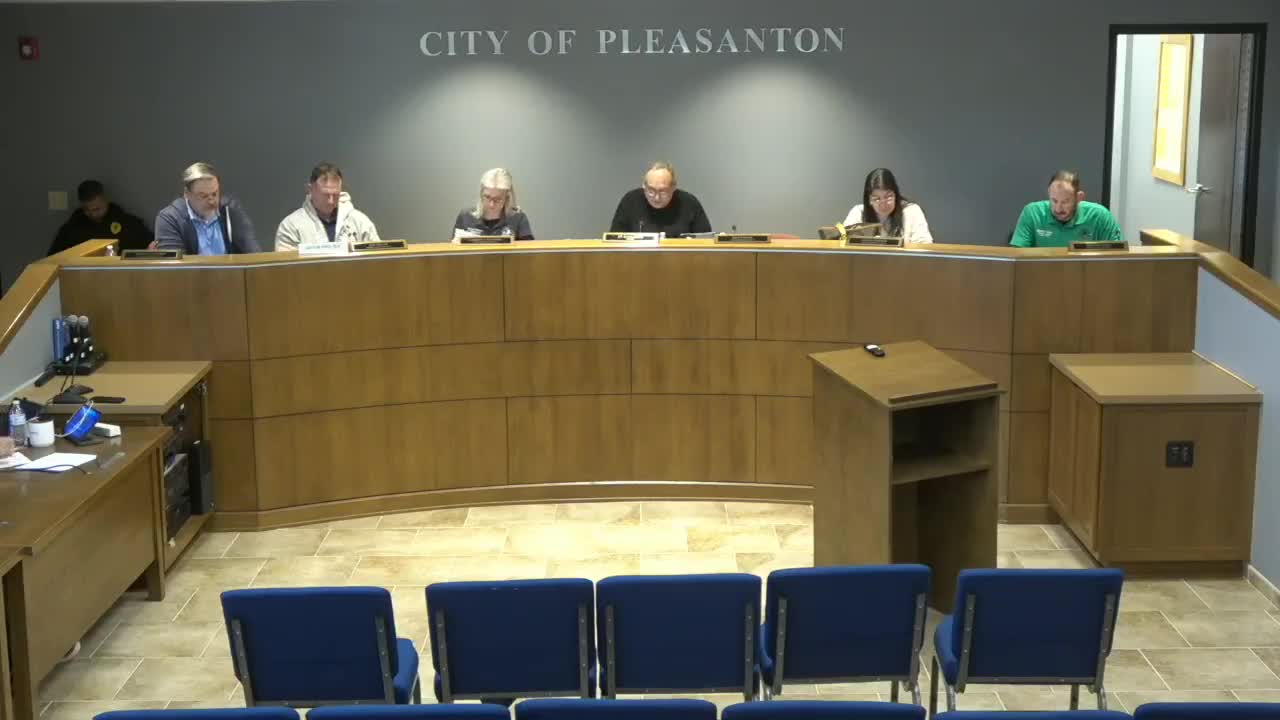
The mayor moved to adopt the resolution; a councilmember seconded. After additional discussion about incorporating workshop suggestions and reviewing a final draft on screen, the council voted by a raised-hand voice vote and the motion carried. Council members said staff will finalize the draft language to reflect the workshop's clarifications and provide the final form for council review as part of the implementation.
The council approved the resolution as part of the meeting agenda and then moved on to other business.