Get Full Government Meeting Transcripts, Videos, & Alerts Forever!
Get email alerts on the Downtown Development 27 Market St topic
No spam. Unsubscribe anytime.
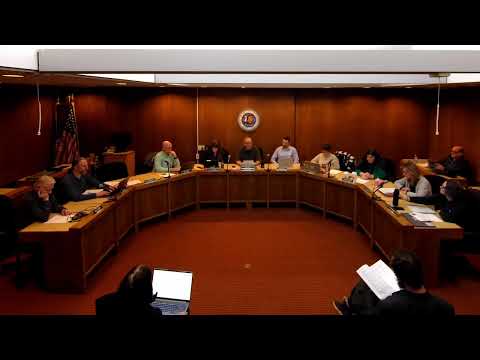
Oneonta council frames neighborhood plan around 27 Market Street; IDA pilot explained ahead of April presentations
Summary
Mayor and council said they will treat 27 Market Street as the start of a broader downtown neighborhood strategy and scheduled developer presentations; an Otsego County IDA director outlined how PILOT agreements typically work and what the city should expect.
Mayor Drennick told the Common Council on March 4 that planning for 27 Market Street should be considered part of a larger downtown neighborhood strategy and that the council will take a deliberate, staged approach before any sale or final vote. The council scheduled a detailed presentation by Rehabilitation Support Services (RSS) for April 1, invited other proposers to present at the council meeting on April 15, and said a vote on any sale is tentatively set for May 6.
The council emphasized process and public information. “We are planning holistically for a neighborhood that will engage all demographics but will especially appeal to those young people that we need so desperately in our workforce with housing that they can afford. It starts with 27 Market Street,” Mayor Drennick said. He asked residents to review posted videos and materials before the April presentations.
As part of the meeting’s informational work, Jody Zagrevsky, identified in the meeting as executive director of the county IDA/Otsego Now, recorded a briefing describing how industrial development agencies (IDAs) and payment-in-lieu-of-taxes (PILOT) agreements typically operate. Zagrevsky explained that IDAs may take title to property temporarily and negotiate PILOT schedules that phase in taxable value, and that PILOT structures vary by project type (for example, manufacturing vs. commercial vs. housing) and by IDA practice. The briefing noted that some IDAs abate only new investment rather than existing assessments and that end-of-term property assessments revert to full taxable value.
Council members discussed the limits of PILOTs depending on the developer. Several councillors pointed out RSS is a nonprofit, which affects how any PILOT or payment arrangement could function compared with a taxable commercial developer. Council legal counsel confirmed that PILOTs are contractual and can be made enforceable through contract terms; the council’s ability to compel a nonprofit to pay ongoing discretionary amounts is limited to the contract the parties sign.
Public comment included Charles Gerard of Chestnut Street, who said he supports the RSS proposal and urged the council to prioritize housing for low-income residents.
Why it matters: Council members said the process will shape whether the project helps retain young adults, support downtown businesses and generate new sales, water and sewer revenue. The April and May presentations are positioned as the primary public opportunities to evaluate proposals before any council action.
What’s next: RSS will present April 1. Other proposers will be invited to present April 15. The council signaled a potential vote on a sale or related action on May 6 and encouraged interested parties to meet individually with staff and the IDA for technical questions about PILOT terms and revenue projections.