Get Full Government Meeting Transcripts, Videos, & Alerts Forever!
Get email alerts on the School Finance topic
No spam. Unsubscribe anytime.
Mathews County supervisors press schools to trim $1 million local request as enrollment falls
Summary
At a March 21 joint work session, Mathews County supervisors questioned a roughly $1 million increase in the school division's local funding request, citing declining enrollment, rising insurance costs and maintenance-merger accounting as key concerns. Superintendent Dr. Daniel outlined budget drivers and possible cuts.
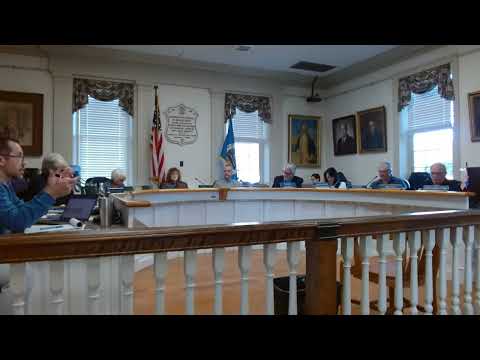
Mathews County supervisors and school officials met in a joint work session March 21 to review the school division's proposed fiscal 2026 budget and the division's request for increased local funding, a request supervisors said would add roughly $1 million to the locality's annual operating ask.
Superintendent Dr. Daniel told the joint meeting the school board's approved budget is based on an enrollment projection of 725 students while the division is currently operating at about 750, and that the division's requested local contribution this year rose from about $9.1 million (FY24 locality contribution) to about $10.1 million — a roughly $1 million increase. "The health insurance increase and the 4% plus step movement on the salary scale are the overwhelming impacts to the budget," Dr. Daniel said, citing Sentara and Anthem plan increases he quantified in the presentation.
Why it matters: County supervisors said the increase would meaningfully affect the county tax rate. County staff and supervisors repeatedly noted the math used in county planning: every $206,000 in local spending translates to roughly a one-cent change in the real-estate tax rate. Supervisors said the county's current real estate tax rate is 56 cents per $100 of assessed value and described the recurring $1 million request as fiscally unsustainable without cuts or new revenues.
Budget drivers and school division priorities: Dr. Daniel summarized the largest cost drivers in the division's budget: health insurance increases (the superintendent's presentation listed a Sentara plan increase of $322,380 and an Anthem plan increase of $43,824), a 4% scale increase plus step movement, absorption of fringe and benefits on existing positions, and three proposed new positions — a secondary reading specialist (to comply with the Virginia Literacy Act expansion into grades 6–8), a library teacher assistant, and a career and technical education (CTE) teacher. The division estimated the net cost of a 5% salary/benefit package plus the three positions at about $1.133 million of new money in the presentation.
Maintenance merger accounting: School staff outlined a planned administrative transfer of operations and maintenance accounts to the county under a merger/MOU. The presentation listed maintenance-related accounts that would transfer at roughly $958,959 (as presented) and said the division would need to retain roughly $987,000 for custodial services and service contracts (camera, access control, fire systems) and for repairs, grounds and food-service equipment maintenance. Supervisors said they had expected a larger return of funds to the county if the county assumed maintenance responsibilities and pressed for clearer line-item accounting.
State funding, the Local Composite Index and enrollment: The presentation and discussion covered state revenue sensitivity. The school division presented preliminary state-funding estimates showing roughly $5.9 million in state support at an ADM of 750 and roughly $5.8 million at 725, a decline the division estimated at about $166,000. Speakers referenced the Local Composite Index (LCI) and a JLARC study repeatedly in arguing that Mathews's LCI (discussed in the session as roughly 0.59) reduces state aid compared with urban localities and that that formula is a structural driver of the county's funding pressure.
Cuts and alternatives described: Dr. Daniel and school staff outlined an ordered checklist of responses if local funding were reduced: (1) reassess and reduce proposed pay increases, (2) scale back how much of health insurance increases are absorbed by the division, (3) not fill vacancies and reorganize positions, (4) scale back optional programs (welding, Governor's School tuition slots, athletics with low participation), (5) revisit rental and usage fees (auditorium and other facilities), and (6) as a last resort, reduction in force. Supervisors suggested a target of a 10% reduction in the local funding request and urged the division to return with a smaller local ask.
Capital, buses and county constraints: Supervisors also raised capital and operational concerns that affect long-term planning: an estimated $6–8 million fire station project, aging school facilities and athletic infrastructure that supervisors said may require multi-million-dollar capital funding, and a bus fleet with high mileage that some supervisors argued does not require immediate replacement. County representatives emphasized the need to balance operating requests with debt capacity for capital projects.
Next steps: Supervisors and school staff agreed to continue joint work sessions; supervisors asked the schools to return with a reduced local request and clearer line-item reconciliations for maintenance and other transfer items. Several supervisors encouraged coordinated lobbying of state legislators on the Local Composite Index and other state funding policies.
Ending: The session closed without formal votes on budget items; both bodies will continue work on budgets before the county sets a tax rate in April.