Get Full Government Meeting Transcripts, Videos, & Alerts Forever!
Get email alerts on the City Services Review topic
No spam. Unsubscribe anytime.
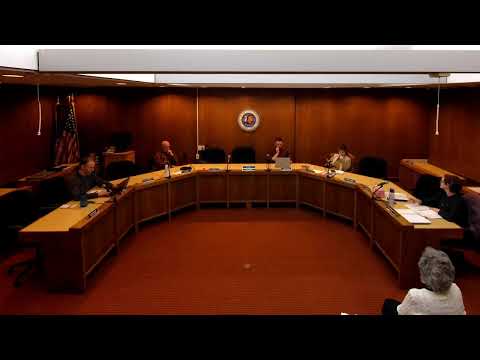
Oneonta committee begins service-by-service review, sets schedule for HR, public safety and DPW briefings
Summary
Committee members reviewed a compiled inventory of city services, discussed data and cost-of-service limits, and agreed to prioritize HR/finance, public safety, DPW and the city-owned enterprises for upcoming meetings.
At a committee meeting of city officials in Oneonta (date not specified in the transcript), members began a systematic review of an inventory of municipal services intended to inform a strategic plan and the next budget cycle. Staff said the inventory lists every service the city provides and will guide follow-up work to quantify costs and staffing needs.
The discussion centered on how detailed the committee wants staff to go in cost-of-service analysis and how to sequence presentations. Greg, a staff member, said the services list was developed “in conjunction with the Carbonheads three or four years ago” and has been trimmed to focus on present services rather than objectives. He told the group the cost-of-service work can be “very detailed, very in-depth, very time consuming” and will take weeks to months depending on the level of precision requested.
Why it matters: Committee members framed the review as a way to make budget discussions more transparent and to identify where department staffing, shared services or sponsorships might change the city’s cost structure. Several participants emphasized that some services are primarily city-maintained while others are subsidized by private donations or operated by partner organizations, and that internal support costs (payroll, IT, insurance) need separate review.
Key details and examples from the meeting
- Museums and historic sites: Staff discussed the Wilcox House (described in the transcript as subsidized mainly through private donations and a friends group that became a 501(c)(3)). Staff cautioned that quantifying city staff time devoted to the site would be difficult because time is spread across multiple departments and not tracked to a single line item.
- Events and public arts: Committee members heard that the summer concert series budget is modest. According to the budget discussion cited in the meeting, the city sets aside roughly $8,000 a year for the series, of which about $6,000 is for performers and about $1,000 for a children’s movie night; a small maintenance allocation covers band shell repairs.
- Street-level services and community beautification: Several speakers noted that brush and yard waste collection is being tracked this year so the city can measure quantities and labor before proposing any policy or fee changes. Staff said collection data will include pile counts and truck weights and could be combined with county drop-off figures.
- Enterprise and revenue-generating services: Staff noted water laboratory testing produces revenue (the transcript cites roughly $80,000 in testing revenue and a $50 per-test figure), and that some departments already provide fee-for-service work to outside entities.
- Internal systems and shared services: Committee members raised Tyler Technologies (a municipal software vendor mentioned by staff) and Pyramid (an IT contractor) as examples of investments that touch multiple services. Staff described Tyler as a potential asset-management and payroll/payables platform that would be a substantial investment and could change how staff allocate work across departments.
- Budget metrics called out in the discussion: one staff member reported roughly $815,000 in interest income across funds for 2024; council/staff also said earlier health-insurance changes (a consortium) reduced citywide costs in prior years (a savings figure was discussed by staff during the meeting).
Committee direction and schedule
The group agreed on a near-term sequencing of presentations so department heads can prepare focused materials and answer written questions: - March: Human resources and finance (combined session to ground members in personnel and budget mechanics). - April: Police (public safety overview and staffing/cost drivers). - May: Fire (staffing, overtime and service delivery). - June: Department of Public Works (pavement, snow/ice, sweeping, parks and maintenance priorities). - July: Oneonta Public Transit/OPT or other enterprise operations (enterprise fund and service-level issues).
Members asked staff to collect focused questions in a shared document (staff will distribute an editable file) and to give department heads roughly 30 days’ notice to prepare answers ahead of each session.
What was not decided
No policy changes, fees or formal votes were taken. Committee members repeatedly said the next step is information gathering: asking departments to identify high-cost services, services with high public demand, services that might be candidates for sponsorships or shared service arrangements, and services where internal systems (payroll, asset management, IT) could create efficiencies.
Closing note
The committee will use the compiled service inventory and the scheduled department briefings to inform potential budget priorities for the coming fiscal cycle and to develop public-facing materials explaining what the city provides and how costs are allocated.