Get Full Government Meeting Transcripts, Videos, & Alerts Forever!
Get email alerts on the Drought Management topic
No spam. Unsubscribe anytime.
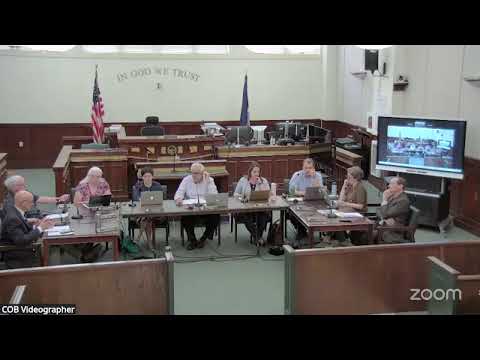
Beacon council weighs local-law cleanup to let mayor declare drought emergency based on reservoir levels
Summary
Council members discussed edits to the citys drought emergency local law that would let the mayor declare and lift drought stages based on reservoir thresholds (notably 60%), with staff to revise language and set a public hearing; no formal vote was recorded.
City officials discussed a proposed local law to amend Beacons drought emergency procedures so the mayor may declare and terminate drought stages upon the advice of the superintendent of water and sewer when reservoir levels hit the codes set thresholds.
The proposed change, presented by the city attorney, would not alter the reservoir percentage thresholds that trigger stages (including a frequently cited 60% level), but would shift the day-to-day authority to declare an emergency from the full city council to the mayor to allow faster response and public notice.
City Attorney (unnamed) said the draft is "a proposed local law to amend the existing law to provide some clarification," and that the edits were intended as cleanup language. City Administrator Chris explained operational details, noting the city draws water from three surface reservoirs—Cargo, Melzinga and Mount Beacon—plus two Fishkill wells the city owns and operates, and that the system uses about "2 and a half million gallons a day" compared with a safe yield of "4,000,000 gallons a day." Chris added the 60% threshold has been the practical trigger used in past declarations.
Council members asked about backup decisionmakers if the mayor or the water superintendent is unavailable; the city attorney advised the law permits designees and the city administrator said department heads provide a chain of command when they are on vacation. Council members also asked whether the mayors declaration would be immediately reported to council and whether council would retain a role in reviewing or rescinding emergency stages; the draft already requires the city administrator to "announce such restrictions at the soonest available city council meeting" and to post notices via the city's alert system and website. Council members requested clearer wording that the mayor may "terminate or restage" drought levels (for example, moving from stage 2 to stage 1) rather than only "terminate" the emergency; staff agreed to add that language.
Staff indicated the most impactful restrictions are on outdoor uses (car washing, driveway washing, certain hours of irrigation) and do not curtail critical water uses. Several council members emphasized the need for timely public notice so residents and businesses can respond to stage changes that affect activities such as filling pools.
Action and next steps: staff will present a revised draft that adds language clarifying termination and restaging of drought levels and addresses designees; council members indicated they were comfortable moving the edits forward and directed staff to schedule a public hearing on the local law. No formal roll-call vote on the local law was recorded during the workshop.
The council also reviewed how state emergency rules intersect with local actions; the city attorney noted that under New York state law local states of emergency are limited in duration (for example, 30 days) and that emergency orders have shorter renewal windows where applicable.
The city plans to notify the public via its emergency 911/rave call system, website, and social media when a drought stage is declared or lifted.