Get Full Government Meeting Transcripts, Videos, & Alerts Forever!
Get email alerts on the Land Use Zoning Drive Throughs topic
No spam. Unsubscribe anytime.
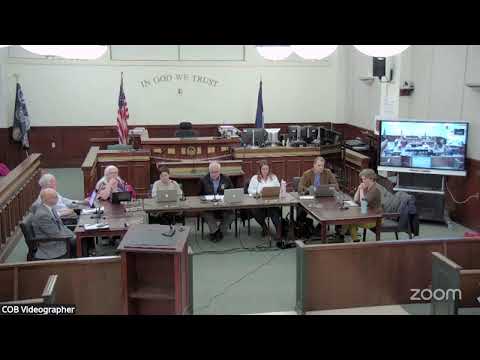
Beacon council adopts citywide ban on drive-through facilities after debate over Route 52
Summary
The Beacon City Council adopted a local law prohibiting drive-through facilities citywide after a lengthy discussion about pedestrian safety, the city’s long-term land-use goals and transitional uses along Route 52. Council adopted a negative declaration under the Environmental Assessment Form for the change.
The Beacon City Council on Monday adopted a local law that prohibits drive-through facilities citywide, concluding a months‑long series of hearings and workshops and adopting a negative declaration under the Environmental Assessment Form.
Councilors debated whether prohibiting drive-throughs immediately would help the city achieve a more pedestrian‑oriented Route 52 corridor or risk prolonging auto‑oriented uses in the short term. Proponents said zoning should be written for the future pedestrian character the city wants; opponents urged a more gradual approach to avoid incentivizing car dealerships or other automotive uses to remain.
The local law had been the subject of earlier public hearings and a workshop. The council packet included the full EAF parts 1–3; council staff said part 3 reached a negative declaration finding no significant adverse environmental impacts and that a full environmental impact statement was not required. The resolution before the council adopted the zoning amendment and the EAF determination.
Council members noted the new law does not change other automotive uses. City staff clarified that gas stations, car washes and auto body/repair shops are not affected by the new restriction.
During the discussion council members stressed both timing and long‑term goals. One councilor urged caution, saying that if zoning is changed too quickly it could have the opposite effect by making transitional uses difficult and thereby entrenching existing auto‑oriented businesses. Another councilor said the city should “zone for what we want ultimately to see” and cited ongoing sidewalk work and the planned rail trail as reasons to prioritize pedestrian‑oriented zoning.
Council member Paloma Wolamawake said she intended to support the measure, adding that she believed the ban would be “a net good for the city” by prioritizing pedestrian access and reducing vehicle idling and air quality concerns. At least one council member announced opposition on timing grounds during the vote.
The council adopted the local law and the negative declaration and moved on to other business.
The change leaves in place the city’s other zoning and permitting tools; staff and planning board members will continue to advise on implementation and on any parcel‑level applications that may be affected by the new rule.