Get Full Government Meeting Transcripts, Videos, & Alerts Forever!
Get email alerts on the Sewer Discharge topic
No spam. Unsubscribe anytime.
Residents and Seneca Nation urge faster action on Olean sewage discharges into the Allegheny River
Summary
Multiple residents and Seneca Nation representatives urged City of Olean leaders to accelerate plans to stop sewage discharges into the Allegheny River, questioned transparency around reporting and planning, and reacted to a council proposal that would fund a consultant to study three lift stations.
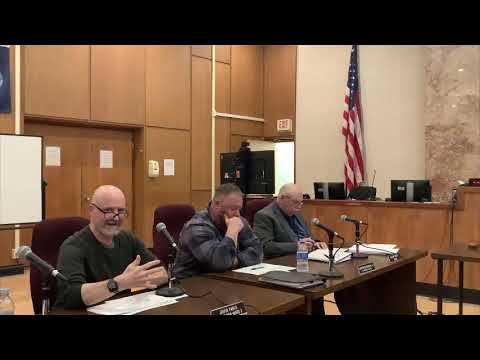
Community members pressed Olean city leaders on March 25 to speed up work to stop recurring sewage discharges into the Allegheny River and to improve public communication about the problem.
Several speakers during the public comment period criticized the pace of the city’s response, questioned reporting of discharges to state systems, and urged use of state funding tools and partnerships — including assistance offered by the Seneca Nation — to accelerate repairs and mitigation.
The concerns centered on a council item discussed earlier in the meeting, referred to in public comment as p.l. 31-255, which earmarks $50,000 to hire a consultant to evaluate three problem lift stations. Lynn Zachowitz read a letter from Glenn Wall noting the $50,000 allocation but asking why the study would be limited to lift stations rather than a systemwide analysis. Zachowitz quoted community questions about whether prior contacts with outside firms (including a Syracuse firm) had progressed and whether the city had investigated faster, lower-cost house-level fixes or available state grants.
Why it matters: Residents and tribal leaders said health and economic harms extend downstream and across jurisdictions. Tina Abrams, Tribal Council, Seneca Nation of Indians, told the council that the Seneca Nation offered grant-writing support and said officials from the New York State Department of Environmental Conservation told Seneca representatives that the city “has many tools that they're not utilizing.” Clint Nephew, Tribal Counselor, Seneca Nation, echoed the call for the city to accept assistance and to act more quickly.
Speakers described health concerns and possible illnesses they linked to water quality. Jessica Davis, of North Olean, said she and her family have paid for water filtration and replacement filters to avoid skin and gastrointestinal problems she attributes to local water. Other speakers, including Mark Alessi and Oliver Cashmer, described long-standing worry about river health and suggested the city’s pace of action has been inadequate.
Commenters also raised reporting discrepancies. Zachowitz, reading Glenn Wall’s letter, said the number of recorded discharges in 2022 and 2024 is higher in the city’s internal materials than in the New York alert system and said she had not received requested data when she emailed city staff. She said those gaps suggested incomplete reporting or at least a need for clearer publication of discharge records and timelines.
A related regulatory point came up in public comment: at one meeting the city noted an Administrative Order of Consent (AOC) with the DEC that commenters characterized as a long-term compliance timeline that includes a 2042 date. Tina Abrams said an attorney in Albany told Seneca delegates the AOC can be modified to shorten the schedule, and she urged the mayor and council to pursue such changes.
Council action and next steps were not shown in the transcript excerpt during the public comment sequence. Commenters repeatedly asked the city to publish a clear plan and timeline, to post an ongoing status page (which several said had not appeared despite a prior pledge), and to pursue state grant programs and technical assistance to accelerate repairs.
Ending: Speakers asked the council to follow up publicly: publish discharge counts and analysis, explain the scope of the $50,000 consultant study, and outline a timeline for using available grants or modifying the DEC administrative order to expedite repairs. Several speakers asked to be kept informed of future meetings and decisions.