Get Full Government Meeting Transcripts, Videos, & Alerts Forever!
Get email alerts on the Wastewater Sewage Discharge topic
No spam. Unsubscribe anytime.
Olean residents press council for clearer data and faster fixes after repeated raw-sewage discharges
Summary
Multiple residents urged the Olean Common Council to publish regular updates and commit resources after continued raw sewage discharges tied to storm events and treatment-plant bypasses; residents and an environmental engineer urged immediate infrastructure fixes and transparency.
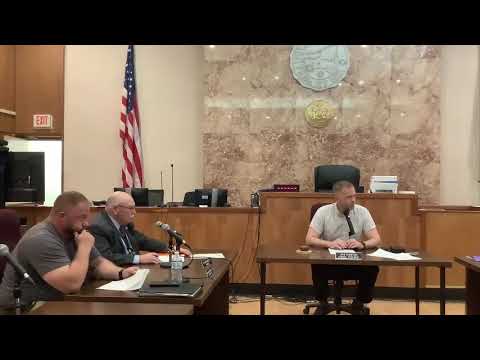
Multiple Olean residents used public comment time at the Common Council meeting to demand faster, clearer action after repeated raw sewage discharges tied to storm events and wastewater-treatment bypasses.
Resident Glenn Wall of Little Valley said recent dye testing shows only a small share of tested catch basins connect to the sewer system and asked the council for more transparent, frequent updates. “You need to greatly increase the amount of information put out about this issue,” Wall said, asking for weekly or biweekly updates to an information page.
Other residents described health and quality-of-life impacts. Clarissa Billeridon, who said her family has lived next to Franchot Park for six generations, said loud ongoing issues tied to the matter have driven residents from their homes and that the problem “needs to be cleaned up right away.” An attendee who identified themself as a Haudenosaunee environmental engineer criticized past handling of discharges and asked what happened to previously allocated funds.
Speakers cited initial test numbers and prior statements: a city table posted online shows 232 catch basins tested so far, with roughly 6% reported as plumbed into the sewer system; Glenn Wall referenced a prior statement by Brad Camp that about 75 catch basins feed into the sewer system. Commenters asked which of those basins had been dye-tested, which basins feed the three problem lift stations, and whether the city has enough data yet to choose between fixing inflow at catch basins or expanding lift-station capacity.
Residents urged specific remedies and greater public reporting. One speaker suggested adding a storage tank to hold inflow during storms and pump it to the plant later, noting engineering details and exact sizing would require study. Commenters repeatedly asked the council to explain grant applications, timelines and the city’s plan to fix the problem.
No formal council action was recorded during public comment on the matter; speakers asked the council for clearer communication and faster implementation of infrastructure solutions. Council members and staff were asked to provide more frequent updates to the public and to clarify what remaining data are required for a plan of action.
The public-remarks portion of the meeting included multiple follow-up requests that the council report progress at future meetings until the problem is resolved.