
Mathews County leaders press schools for clearer budget as school request rises about $1 million
Get AI-powered insights, summaries, and transcripts
Subscribe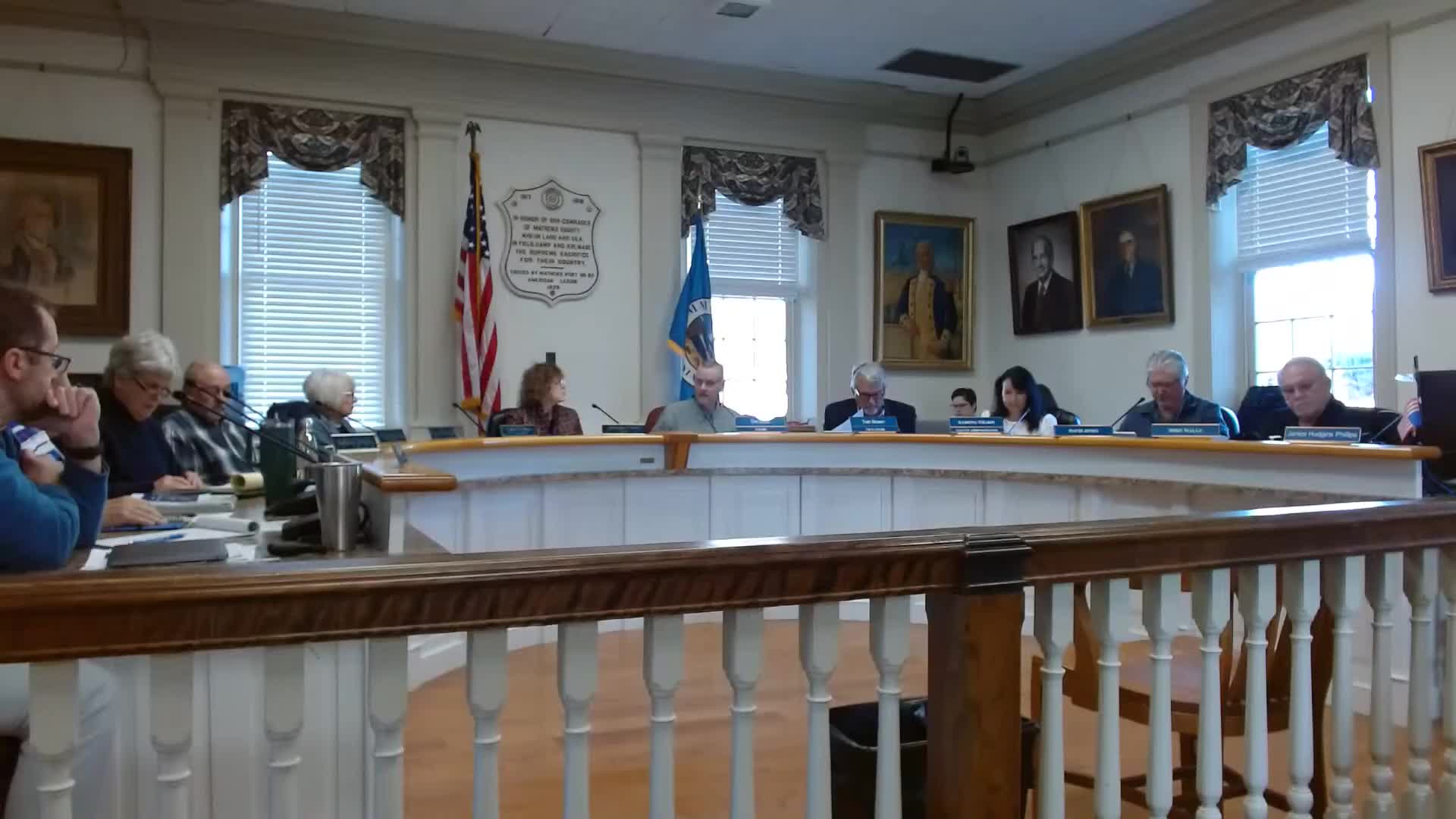
Summary
Mathews County supervisors and the Mathews County School Board met in a special joint work session on March 21 to review the school division’s budget request, which asks the county for about $10.1 million in local funding for the coming year.
Mathews County supervisors and the Mathews County School Board met in a special joint work session on March 21 to review the school division’s budget request, which asks the county for about $10.1 million in local funding for the coming year.
Supervisor (unnamed), Mathews County Board of Supervisors said the school budget “to me is very confusing,” and pressed the school division for clearer, line‑item detail so supervisors can answer citizens’ questions about specific expenditures.
The county’s requested local contribution was described in the session as $10.1 million this year, up from about $9.1 million in FY24. Superintendent Dr. Daniel Bisson, Mathews County Schools, said the school board’s approved budget is based on an enrollment estimate of 725 students (the division currently reports roughly 750–753 students). Bisson said the division anticipates a reduced student population and that the FY25 approved budget includes three new positions: a secondary reading specialist, a library teacher assistant and a career and technical education (CTE) teacher.
Why it matters: supervisors said the county’s share of school funding has been rising and they need clearer breakdowns to justify increases to taxpayers. Supervisors repeatedly pressed the division on how much of the requested increase is driven by salary and benefit costs, the effect of state matching, and whether one‑time or recurring items are included.
Major cost drivers explained at the meeting included health insurance and step/scale increases. Bisson told the joint session that health‑insurance cost increases accounted for the largest single impact: the Sentara plan increase was described as $322,380 and the Anthem plan increase as $43,824; combined with a proposed salary step and a 4% scale increase, he estimated new recurring money of roughly $1,133,000. In presentation slides summarized by Bisson, a 3% across‑the‑board salary increase was shown as a roughly $337,000 cost to the division’s budget (the presentation calculated costs on current FTEs and existing positions).
Bisson also described maintenance and custodial accounts that will shift if the county and schools complete a planned merger of maintenance functions. He said operations and maintenance items slated to move to the county total about $958,000–$959,000 and that the school division would still need to retain roughly $987,000 for custodial and contracts tied to cameras, access control, PA and fire systems and equipment repairs. The division previously held certain custodial duties and grounds responsibilities that have historically been shared between custodial staff and the maintenance team.
Supervisors asked for greater specificity about vacant positions and their budgeted cost. Bisson said seven positions in the FY25 budget were placeholders (three custodial and four instructional) and gave a rough estimate of $375,000 in salary and benefits for those roles if they were to be filled. He said the division is managing vacancies by absorbing responsibilities where possible and evaluating retirees and open positions before hiring.
On state funding and matching: Bisson explained the Standards of Quality (SOQ) reporting and the Department of Education calc tool drive state matching. He said the state’s matching calculation is complex (using the Local Composite Index and SOQ staffing formulas) and that the division would need to provide at least a 3% raise over the biennium to capture the related state match. He said the district expects some additional one‑time state proposals (for example, a proposed $1,000 bonus for SOQ positions), but that administering a universal $1,000 bonus could cost the division roughly $79,000–$80,000 and may require policy decisions about part‑time eligibility.
Enrollment, attendance and per‑pupil figures: Bisson said the division’s count is roughly 750–753 students and that March 30 is the required count date that affects state funding. He said daily absences vary by school and gave example daily absences: 16 at the elementary on one storm‑affected day, 8 at Thomas Hunter and 24 at the high school. A supervisor cited a per‑student cost figure presented in the discussion — about $25,058 per student in the proposed budget — versus a cited state average of $16,445; the supervisor said those figures affect taxpayer assessments of the request.
Facilities and extracurricular programs surfaced as budget priorities and points of contention. Supervisors and the superintendent discussed athletic facilities, safety issues at the football field (aging wooden light poles, wiring, press box condition) and whether to invest in a regulation track or other long‑term facility improvements. Bisson said a facilities plan could influence recruitment and retention by improving “curb appeal” for families considering relocation.
What supervisors asked staff to do: several supervisors asked the division to (1) provide clearer line‑item budgets in spreadsheet/Excel format for easier review next year, (2) verify revenue projections (one supervisor noted a potential $190,000 shortfall related to a local revenue item and asked staff to confirm whether that figure has been adjusted), (3) reconcile which vacant positions remain budgeted and the cost of those placeholders, and (4) return with more detail on the amount the state would provide if the county funds a 3% raise. Bisson agreed to follow up on those items and to provide additional supporting calculations.
Votes at a glance: the meeting opened with a procedural motion to approve the agenda, which passed by voice vote after a motion and second; no other formal votes on budget measures occurred at the session.
Next steps: the boards paused for a short recess and directed staff to bring revised, more detailed line‑item information and revenue reconciliations back to the boards for further review before the county finalizes its local appropriation.