
Independence Fire Department says criteria-based dispatch cut fire responses by about 23% since January
Get AI-powered insights, summaries, and transcripts
Sign Up Free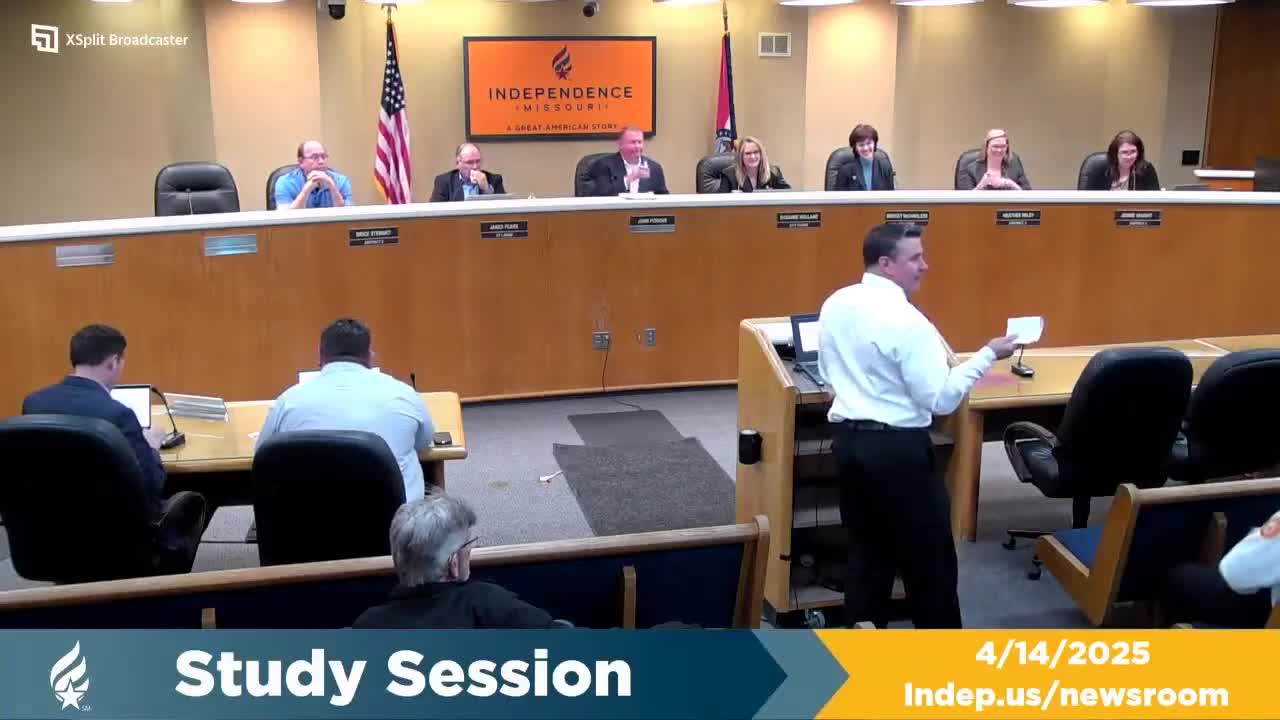
Summary
Fire leaders told council the department implemented criteria-based dispatching on Jan. 1 to reduce unnecessary engine responses; department data show roughly a 23% reduction in fire-unit dispatches with safeguards to return calls to fire if AMR requests assistance.
Chief Jimmy Walker and Battalion Chief Burrell told the council on April 14 that the Independence Fire Department implemented a criteria-based dispatch system on Jan. 1 to limit automatic fire-vehicle responses to low-acuity medical calls.
Walker said the department’s annual call volume has climbed from roughly 18,000 calls a year a decade ago to about 29,000, increasing wear on apparatus and personnel. “One of the things we identified was…criteria-based dispatching or keyword dispatching as a way to responsibly reduce the call volume while still responding to important calls,” Walker said.
Under the system dispatchers screen incoming 911 calls for keywords that indicate high-acuity events — for example, chest pain still triggers a fire response — while lower-acuity complaints such as chronic back pain or a rash are routed to the ambulance provider (AMR). Battalion Chief Burrell said the department expected about a 25% reduction and is seeing approximately a 23% reduction in fire unit responses so far. The department established a benchmark that no more than 15% of calls routed initially to AMR should return to require fire assistance; staff report the return rate has stayed below that benchmark except during an early-week snowstorm.
The chief said the city evaluated implementing full Emergency Medical Dispatch (EMD) but found upfront costs high — the presentation cited an estimated $4 million implementation cost — and concluded criteria-based dispatch was a faster, lower-cost approach that still allows AMR to run EMD on ambulance calls. The department said AMR can immediately request fire assistance or “kick back” a call if the ambulance becomes committed; the city and AMR leadership meet regularly to review operations.
Council members asked about complementary programs that reduce calls before dispatch, including ARCH, which staff said accounted for roughly 800 call diversions last year; staff suggested expanding ARCH hours could materially reduce annual call volume further. Fire leaders cautioned that the program must be actively monitored and adjusted and emphasized that dispatchers and AMR are part of ongoing training and feedback loops.