
Independence council backs plan to earmark $100,000 for rewards and DNA testing for cold homicides
Get AI-powered insights, summaries, and transcripts
Sign Up Free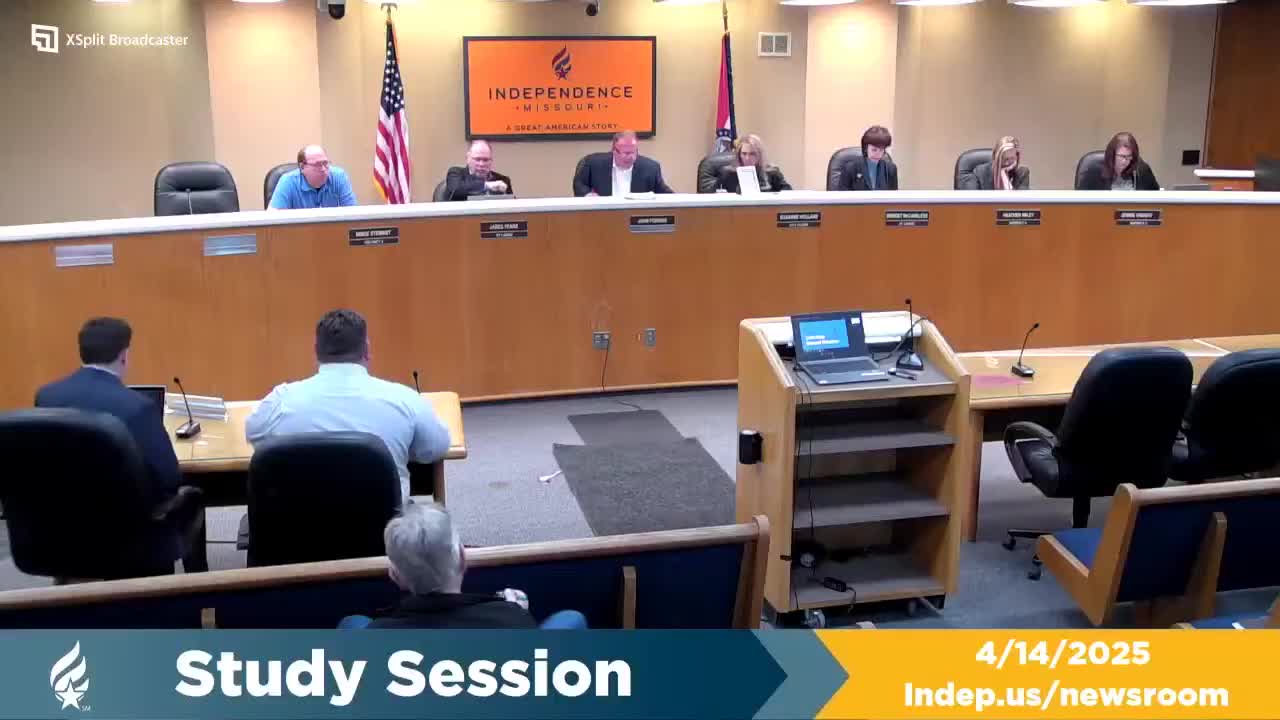
Summary
Council members discussed a proposal to set aside $100,000 from the marijuana sales tax fund to offer rewards and to pay for DNA testing in unsolved homicide cases; staff will add a resolution to a forthcoming regular meeting agenda after council consensus.
Council members on the Independence City Council on April 14 discussed a staff-backed plan to earmark up to $100,000 from the city’s marijuana sales tax fund to provide rewards for tips and to pay for DNA testing in unsolved homicide cases.
The program as described by Councilman Bryce Stewart and Independence Police Department officials would allow the city to earmark up to $10,000 per case for advanced DNA testing or reward payments and to highlight selected cold cases through an established tips hotline. “We’re not reinventing the wheel,” Major Michael Onka, commander of the police department’s investigations unit, said, describing the department’s plan to use an existing tips hotline and to assign detectives familiar with each selected case.
The city’s chief of police, Adam Dustman, said the proposal is intended to generate new leads in cases that remain unsolved and to provide “some justice and closure for these victims, their families, and our community overall.” Dustman said staff identified $100,000 within the marijuana sales tax fund to pilot the program and that the money would be distributed case-by-case as testing or reward needs are identified.
City staff described logistics: the tips hotline used for public leads has operated since 1982, and the department expects to use that existing mechanism to preserve anonymity for tipsters while publicizing earmarked rewards for a set of highlighted cases. Major Onka identified the 1994 Diane Ault case as a candidate in which advanced DNA testing — possibly including trace DNA from under a fingernail or from a rug — might be useful, and he said the department will prioritize cases where investigative staff already has continuity.
Council members pressed staff on budgeting and program limits. The city manager said the current fund balance in the marijuana sales tax account is sufficient to pilot the program for an initial set of cases, but staff have not forecasted whether the program would be sustainable if repeated annually. “We could do the initial 10,” the city manager said, noting staff had identified criteria to support an initial list of cases.
Council members asked how rewards would be distributed. Major Onka said a tip must lead to an arrest and conviction (or, in cases where prosecution is not possible, a reduction of the case) before a reward would be paid. Council members also discussed program safeguards: if earmarked amounts are not paid out because no actionable tips arrive, the funds remain in the fund balance and are not spent.
Councilman Stewart asked for a consensus to place the resolution on the next regular meeting agenda so the council could act sooner than typical schedule rules would allow; staff confirmed adding items to an agenda is permitted in a study session and that staff would proceed to add the resolution for council consideration at the next available regular meeting. No formal roll-call vote was recorded at the study session; council direction was recorded as consensus to place the item on the upcoming agenda.
The council asked staff to return with a six-month report on program results and metrics to show whether the initiative generated leads, how frequently earmarked testing funds were used, and what next steps staff recommended.