Get Full Government Meeting Transcripts, Videos, & Alerts Forever!
Get email alerts on the Debt Collection topic
No spam. Unsubscribe anytime.
S.C. Department of Consumer Affairs attorney explains debt-collection rights, repossession rules and where to get help
Summary
Phil Porter of the South Carolina Department of Consumer Affairs outlined federal and state rules on debt collection, repossession, credit reporting and consumer resources during a department webinar, including validation notices, limits on contact and consumers’ right to cure defaults.
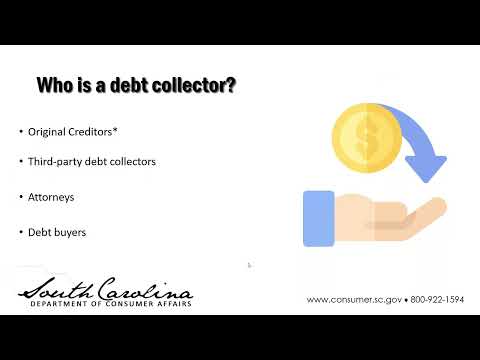
Phil Porter, an attorney with the South Carolina Department of Consumer Affairs, used a department webinar to summarize how state and federal debt-collection laws affect consumers and where residents can get help.
Porter said the webinar was intended as “an introduction and overview,” not a substitute for reading the statutes or seeking counsel. He listed protections under the federal Fair Debt Collection Practices Act and South Carolina law, described procedures for repossession and garnishment, and walked through practical steps consumers should take when contacted about a debt.
The presentation covered several rules consumers commonly encounter. Under the federal validation and dispute process, a collector’s first communication or a notice within five days must identify the amount owed and the current and original creditor and must inform consumers they have 30 days to dispute the debt. Porter said, “If you don't [dispute] that may be used against you.” He also noted new timing limits on calls: collectors generally must contact consumers only between 8 a.m. and 9 p.m., and a so-called “7-to-7” rule bars collectors from calling more than seven times in seven consecutive days about the same debt.
Porter described how different collection methods work and what consumers can expect. Repossession can be voluntary or involuntary; creditors and repossession agents may retake collateral without court action if a contract grants them that right under the Uniform Commercial Code, but they must not create a breach of the peace. A consumer also has a right-to-cure notice in many consumer-vehicle financings: after a payment is 10 days past due, a creditor generally must send a cure letter and give the consumer about 20 days to pay or cure the default, Porter said.
On statutes of limitation and credit reporting, Porter explained that the time limit to sue on most unsecured consumer contracts in South Carolina is three years, mortgages on real property are 20 years and a judgment lasts 10 years. He cautioned consumers that making a payment can restart the limitation clock, and that debts may still be reported to credit bureaus for a prescribed period (often up to seven years) even if a statute of limitations has run.
Porter advised practical steps for consumers: do not give additional personal information to a collector until a validation notice is received; send disputes and requests in writing (certified mail recommended); review credit reports from the major bureaus (Experian, TransUnion and Equifax) regularly; and file complaints with the Department of Consumer Affairs or the Consumer Financial Protection Bureau when rights appear to have been violated. He summarized one familiar warning: “If they sound too good to be true, in fact, always, if they sound too good to be true, they are,” when discussing scams and ID-theft schemes.
The department offers free brochures and presentations across the state and maintains consumer resources online at www.consumer.sc.gov. Porter listed upcoming SCDCA webinars and directed viewers to the department’s social channels for publications and additional guidance.
This webinar was an explanatory presentation; it did not create legal advice, change statutes, or record enforcement actions. The talk aimed to help consumers recognize unlawful collection practices, understand timelines and deadlines, and find resources for formal complaints or legal referrals.