Get Full Government Meeting Transcripts, Videos, & Alerts Forever!
Get email alerts on the Business Registration topic
No spam. Unsubscribe anytime.
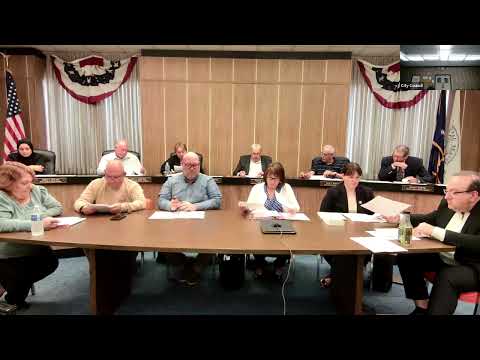
Lackawanna council tables decision on Public Auto Connect after residents cite safety, parking and code concerns
Summary
The Lackawanna City Council on May 5 tabled a business registration for Public Auto Connect (formerly Trinity Motors) after residents described unlicensed cars, blocked streets and speeding. The council asked the law department to research whether site-plan or revocation authority applies before acting.
The Lackawanna City Council on May 5 voted 5-0 to table action on a business registration for Public Auto Connect, a used-car operation that residents say has created parking, traffic and safety problems on Abbott Road and Barlow Avenue.
Councilmember Moreno moved to table the item and Councilmember Surdi seconded; the motion carried unanimously. The council asked the law department to research whether the city can require a site plan or pursue license revocation before taking a final vote on the registration.
Why it matters: Neighbors told the council they regularly see unregistered cars, vehicles parked on both sides of a narrow residential street, and drivers speeding through the neighborhood. City officials said the choice before the council is procedural — whether the property needs a site-plan review or whether the council should pursue revocation of an existing license — and that additional legal research and enforcement records are needed before deciding.
During the public comment period, resident Catherine Mill told the council, “On a daily basis, the business illegally parked cars…many of these cars do not have plates on them,” and described near collisions when vehicles block sight lines turning from Abbott onto Barlow. Another resident, Sharon Beers, who represents Sunny Red’s (a separate business), said new owners planned fencing and other measures to reduce outdoor-noise impacts but distinguished that matter from the used-car complaints.
Adriana Kwiatkowski, the city attorney, urged a cautious legal approach. “From a legal standpoint, I believe that we would be looking not at approving a new business registration but, looking at a potential revocation if that is what the council deems appropriate,” she said, adding that the city code lists bases for revocation including where a business “is adversely affecting the public good, welfare, health, safety [or] morals of the city.” Kwiatkowski also described the revocation process in general terms, saying that if the council decided to pursue revocation it would trigger notice to the owner and a public hearing timeline the law department would need to follow.
Council discussion focused on two practical limits. Planning staff and council members noted the lot at issue apparently lacks a site plan that would prescribe a maximum number of vehicles; without a prior site-plan condition, enforcing a numeric limit is difficult. As one council member said, site-plan review is triggered when there is a material change of use or a property has been dormant for more than a year; otherwise an unchanged operation may not be subject to retroactive site-plan limits.
Several council members and staff recommended that the law department clarify: (1) whether the city can require a site plan for an existing operation that previously operated without one; (2) whether code enforcement has issued fines or tickets that would support a revocation; and (3) what the statute requires procedurally to begin a revocation. The council voted to table the registration until the city can collect that information and report back.
Next steps: Council members instructed staff to gather record of complaints and enforcement actions, and asked the law department to return with a legal opinion on site-plan authority and the revocation timeline. No revocation or denial was decided at the meeting; the item remains tabled pending further information.