Get Full Government Meeting Transcripts, Videos, & Alerts Forever!
Get email alerts on the Property Tax Assessment topic
No spam. Unsubscribe anytime.
Council debates assessment-driven tax changes as residential values rise
Summary
Councilors discussed recent residential reassessments, uneven commercial reassessment coverage, and the effect on homeowners after staff said assessments increased sharply over the last two years; members explored state reimbursement for non-taxable properties and possible curb/sidewalk surtaxes as long-term options.
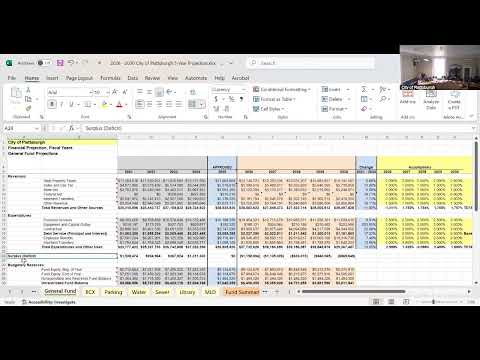
Members of the Plattsburgh Common Council spent significant time discussing property-assessment changes and their effect on local taxes after staff presented assessment data covering 2021–2024.
Staff described large assessment increases driven primarily by residential comparables, noting roughly $270 million in residential reassessment growth over two years and individual residential increases of 10–25% in recent years. Councilors said commercial properties were not uniformly reassessed in the same cycle and that the county assessor performed desktop residential assessments owing to limited sales data. Staff said the county plans a fuller reassessment next year that would include commercial parcels.
Councilors raised the consequence for homeowners: even if the city lowers its tax rate, taxpayers whose assessments increased will often face larger bills because their taxable value rose. Members discussed the city’s share of state reimbursement for non-taxable properties (staff cited examples such as Cortland achieving about 60% reimbursement) and the idea of pursuing a higher state reimbursement rate for Plattsburgh’s large non-taxable tax base. Staff additionally described a long‑running concept—sometimes called a curb or sidewalk tax—that would apportion some infrastructure costs across all properties (taxable and nontaxable) by frontage; staff said securing state approval for such a change could take several years and would be uncertain.
Councilors asked for more detailed, comparable town/city data on tax rates and nontaxable assessed values to inform any policy response. Staff said they are collecting examples from other municipalities and awaiting additional assessor information; councilors urged continued outreach to the county assessor and state contacts about reimbursement and reassessment timing.
No formal action or ordinance was proposed during the session; councilors directed staff to pursue additional data and prepare materials to review at future meetings.