Get Full Government Meeting Transcripts, Videos, & Alerts Forever!
Get email alerts on the Use Variance Klf Wall Street topic
No spam. Unsubscribe anytime.
Plattsburgh board postpones KLF Propertiesʼ use‑variance requests for Wall Street sites to May
Summary
The Board of Appeals postponed decisions on appeals 2393 and 2394, which seek to permit townhouse development in an industrial zone, and asked the applicants to provide additional evidence (financial, market, and feasibility analyses) to meet the legal standard for a use variance.
The City of Plattsburgh Board of Appeals on April 14 postponed decisions on appeals 2393 and 2394, requests by KLF Properties to allow townhouse/residential development in land currently zoned for industrial uses.
The postponement matters because the applicants seek a use variance (a legal exception that permits a use otherwise not allowed in the zoning district). The board said applicants must provide more documentation showing a unique hardship and that permitted industrial uses are infeasible for the site.
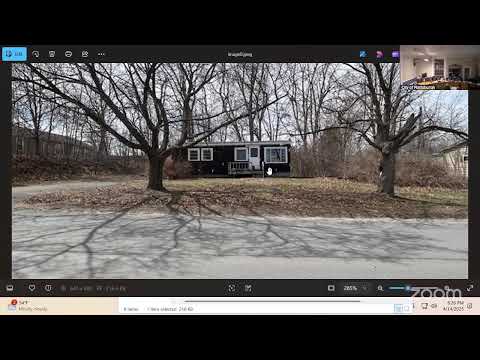
Applicant representatives asked to demolish an existing, deteriorated house and construct multiple townhouse units on the Wall Street parcels. They described the existing building as structurally compromised and said prior, adjacent variances and redevelopment on nearby lots were part of their expectation to redevelop. Board members and staff discussed that although several neighboring lots already have residential use or prior variances, the use‑variance standard requires the applicant to show (1) an inability to realize a reasonable return on permitted uses, (2) uniqueness of the hardship to the property, (3) that granting the variance will not alter the neighborhoodʼs essential character, and (4) the hardship was not self‑created.
Scott (staff member) read the statutory test for a use variance, noting in part: "the applicant cannot realize a reasonable return, provided that lack of return is substantial as demonstrated by competent financial evidence." The board requested that the applicants supply financial documentation (for example, appraisals, accountant or realtor affidavits, comparable‑rental income estimates), and specific analyses explaining why permitted industrial uses cannot be reasonably realized on the parcels.
Board members suggested the applicants document prior sale offers, provide affidavits from previous owners or brokers and bring comparable income estimates for residential versus industrial uses. The board also discussed that some industrial uses listed in code (warehousing, manufacturing, offices, certain public or utility uses) might technically be permitted but are likely infeasible on the lot size; the board asked applicants to document that analysis.
The board opened public comment and received no substantive objections on record. A motion to postpone both appeals to the boardʼs May meeting was made and seconded; the transcript records the motion to postpone on behalf of the applicant to the next meeting in May (appeals 2393 and 2394). The board indicated that, once applicants provide the requested financial information and feasibility analysis, the board could consider the use‑variance standard and move toward a decision.
The postponement does not grant or deny the use variances; it requires the applicants to return with additional evidence. Staff and board members noted that an area‑variance request (to change setbacks) is procedurally easier than a use variance and that the applicants may also pursue area variances for setback relief while the use‑variance record is developed.