Get Full Government Meeting Transcripts, Videos, & Alerts Forever!
Get email alerts on the Environment Food Waste topic
No spam. Unsubscribe anytime.
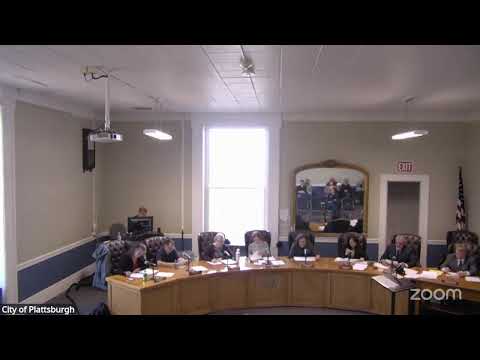
Plattsburgh task force advances broader food-waste program; resident urges caution on 'No Mow May'
Summary
City task force reported it is developing a proposal to pursue county and grant funding to expand food-waste collection beyond municipal buildings; the 2022 municipal food-waste policy was trained but not funded for hauling. A public commenter warned against a separate 'No Mow May' campaign, citing pests, lawn health and neighbor concerns.
Plattsburgh officials said the city’s Climate Smart task force is preparing a proposal to pursue external grant funding and partnerships to expand food-waste collection beyond municipal buildings, a step task-force leaders said could cover hauling costs for up to a year and allow a wider community rollout.
The work-session discussion matters because the city passed a municipal food-waste policy in 2022 but did not move to pay a hauler to pick up food from municipal buildings. Task-force members said training and materials were completed during the earlier grant, but the step that would have paid a contractor to remove collected food waste never occurred, so the program did not move into regular operation.
Task force coordinator Alicia said the group has been coordinating with county partners and a consultant (identified in meeting notes as Cody) about a county grant the task force could use to expand collection, and that the group intends to develop a proposal and bring options to the council within the next few months. She told the council the county-level grant timeline is short and that, if the city decides to participate, the funding could cover hauling costs and other start-up needs.
Task-force members discussed partnering with existing waste firms and local operators. The discussion named Jennifer Perry (a food‑waste hauler who previously provided training and operated a digester) and Casella (a regional waste firm) as possible contractors. Members asked that DPW and other experienced waste managers be consulted to avoid unintended operational problems. Several speakers urged caution when introducing private vendors into procurement conversations because firms could compete for the same work.
Council members and task-force leaders said the 2022 municipal policy was implemented only through training and materials procurement; the training included countertop buckets and signage but no sustained hauling contract. Multiple speakers said final implementation — including paying a hauler to remove food waste from municipal buildings — would require mayoral approval and a procurement action to identify and fund a contractor.
Task-force leadership described a potential two-pronged approach: (1) use a county grant or similar external funding to pilot or expand collection and (2) pursue partnerships (for example, with Clinton County public-health programs or the local housing authority) that would increase scale beyond municipal buildings. The task force said it plans to evaluate logistics, pick accessible collection sites, and consult DPW or private firms about collection frequency and depot access before returning a formal proposal to council.
During the public-comment period, John Hobner, a resident and former Cornell Cooperative Extension volunteer, addressed a different environmental campaign: a community practice called “No Mow May.” Hobner said he supports pollinator habitat in principle but urged caution with a blanket month‑long no-mow policy in Plattsburgh. He told the council that in his observation and review of available research, long, uncut cool‑season lawns in May can encourage invasive weeds, fungal lawn disease, rodents and ticks, and can create difficult mowing and aesthetic problems when long grass must be cut later. He suggested alternatives such as targeted pollinator beds, limited reduced mowing, or designated permanent uncut lawn patches rather than a single-citywide month of uncut lawns.
There was no formal council vote on the task-force proposal or on changing the 2022 municipal policy during the session; task-force leaders said they will return with a concrete proposal, cost estimates and recommended next steps for council consideration.
Ending: The task force plans to deliver a formal proposal and options to the council in the coming months; until the council or the mayor’s office authorizes funding, the 2022 municipal policy will remain unenforced beyond prior training and materials purchases.