Get Full Government Meeting Transcripts, Videos, & Alerts Forever!
Get email alerts on the Tree Preservation topic
No spam. Unsubscribe anytime.
Kingston CAC raises legal concerns about proposed tree-preservation ordinance
Summary
Members questioned the proposed tree-preservation ordinance's scope and enforceability, with several participants warning of possible takings claims or litigation if the ordinance imposes limits on private property without clear standards and compensation mechanisms.
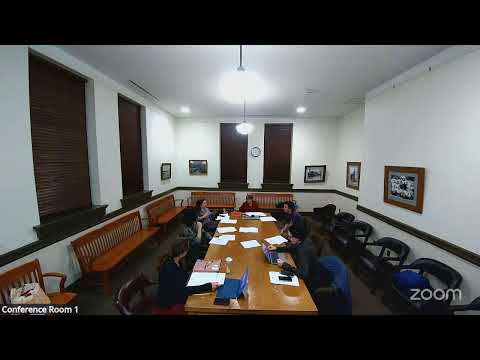
The Kingston Conservation Advisory Council spent substantial time reviewing a draft tree-preservation ordinance and raised legal and practical concerns about how it would affect private property and enforcement.
Council members and presenters debated whether specific language in the proposal—particularly provisions covering private trees—could trigger takings claims under the Fifth Amendment or otherwise invite litigation. One member recounted consulting with an attorney and a planner who used the term "overreach" to describe aspects of the draft that might risk constitutional challenge.
"Overreach," a participant said after reviewing counsel and state guidance, could "trigger a...constitutional taking, just compensation situation," a legal risk that prompted members to urge caution.
Members also expressed concern about how an ordinance would be enforced in practice. They noted scenarios such as private landowners cutting trees on large lots and questioned whether the ordinance could be enforced fairly and consistently across the city. The council discussed whether the proposed ordinance used a narrow, prescriptive list of species that differed from state-regulated invasive-species lists and whether it should cross-reference established state lists to improve clarity.
The CAC asked for an updated draft from the planner who presented the proposal (Brent) and sought clarifications on several points: whether invasives would be exempted (Brent indicated some invasive species would be allowed to be removed without replacement), how compensation or replacement would be calculated if removals were authorized, and how the ordinance would interact with existing historic-preservation rules and public-street tree regulations.
No formal CAC vote was taken on the ordinance; members agreed to wait for the revised draft and to consider drafting a letter with support conditioned on specified clarifications and practical enforcement mechanisms.
Speakers repeatedly emphasized the need for a measured approach that avoids inadvertent legal exposure for the city and unnecessary burdens on residents. Several members recommended that any CAC input be framed as conditional—support "if modified"—and urged consultation with legal counsel and planning staff before recommending council action.