Get Full Government Meeting Transcripts, Videos, & Alerts Forever!
Get email alerts on the Housing Social Housing Authority topic
No spam. Unsubscribe anytime.
Kingston caucus backs memorializing resolution on state social-housing authority, agrees to change “union-built” language
Summary
City of Kingston Common Council caucus voiced support for a memorializing resolution urging New York lawmakers to create a state social housing development authority, and directed floor sponsors to amend language so projects are described as built with workers earning prevailing wage rather than as “union-built.”
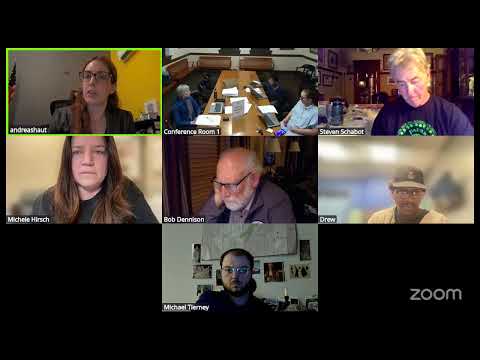
City of Kingston Common Council caucus members on Monday agreed to support a memorializing resolution urging the state Legislature and governor to create a social housing development authority, but they instructed sponsors to remove language saying housing would be “union-built” and replace it with wording referencing workers who earn prevailing wage.
The resolution asks Albany lawmakers to create an authority that sponsors say would develop large numbers of permanently affordable units statewide, set rents at no more than 25 percent of income for qualifying tenants and prioritize residents at up to 80 percent of area median income. Councilmembers described the measure as time-sensitive because the state legislative session ends in June.
Supporters said the authority is intended to create tens of thousands of permanently affordable units and to expand options for municipal partners. Councilmember Michael (Councilmember) outlined the bill’s broad goals and noted it is sponsored in Albany by Assemblymember Shrestha and Senator Hinchey. Several councilmembers raised concerns about two provisions they said could affect local partners: the resolution’s reference to “union-built” housing and a state right-of-first-refusal provision for certain property acquisitions.
Councilmember Carol (Councilmember) said she supports the concept but objected to the phrase “union-built housing.” “I continue to have problems… I have problems with the use of the word union built housing in the last two whereas,” she said, asking that the memorial remove the phrase so that open-shop contractors would not be disadvantaged. Other councilmembers asked staff and sponsors to clarify whether the state bill would bar nonunion contractors from bidding.
Staff and council discussion clarified that the bill does not expressly bar nonunion bidders and that prevailing-wage rules and project labor agreement (PLA) provisions were described by a bill supporter as applying only to larger projects. A written communication cited in committee said PLAs would apply only for projects with labor costs of $10,000,000 or more; otherwise contractors that pay prevailing wage could compete. Councilmembers asked for that threshold and the prevailing-wage rule to be reflected in how the council memorializes its position.
Members also debated a right-of-first-refusal provision in the draft legislation and whether a statewide authority would compete with local entities such as the Kingston Land Bank or Kingston Land Trust for parcels. Some councilmembers said the scale and mission of a statewide authority would differ from the local land bank’s usual work; others said they preferred explicit language that the city’s land bank not be displaced. The caucus agreed that staff should follow up with the Kingston Land Bank and with legal counsel for additional language options.
By the end of the caucus, members instructed a floor sponsor to move an amendment when the memorializing resolution reaches the council floor: remove the phrase “union-built” and substitute language indicating projects would be built by workers earning prevailing wage (and noting the PLA threshold as appropriate). Councilmember Terrell volunteered to make that motion on the floor; the caucus did not hold a final vote on the resolution during the caucus meeting.
The caucus also discussed outreach and how the council’s comments could be conveyed to Albany leaders, including a request that sponsors in the Assembly and Senate be made aware of the council’s specific concerns before the session ends.