Get Full Government Meeting Transcripts, Videos, & Alerts Forever!
Get email alerts on the Sheriff Equipment And Finance topic
No spam. Unsubscribe anytime.
Lee County approves financing addendum with Axon to equip deputies with dash and body cameras
Summary
The commission approved a co‑term amendment to an existing state‑bid contract with Axon to acquire in‑car dash cameras and body‑worn cameras, with payments stretched over five years; county officials said the change will enable all sworn deputies to be equipped.
The Lee County Commission on May 1 approved a co‑term addition to the sheriff’s existing state‑bid contract with Axon to buy in‑car dash cameras and body‑worn cameras and to spread payments over five years.
The change will allow Sheriff Jay Jones to accept vendor financing that would supply remaining body‑worn cameras now and defer the contract payments into two installments per year over a five‑year period, officials said. Sheriff Jones told the commission the package would allow the department to equip every sworn certified enforcement officer with a body‑worn camera.
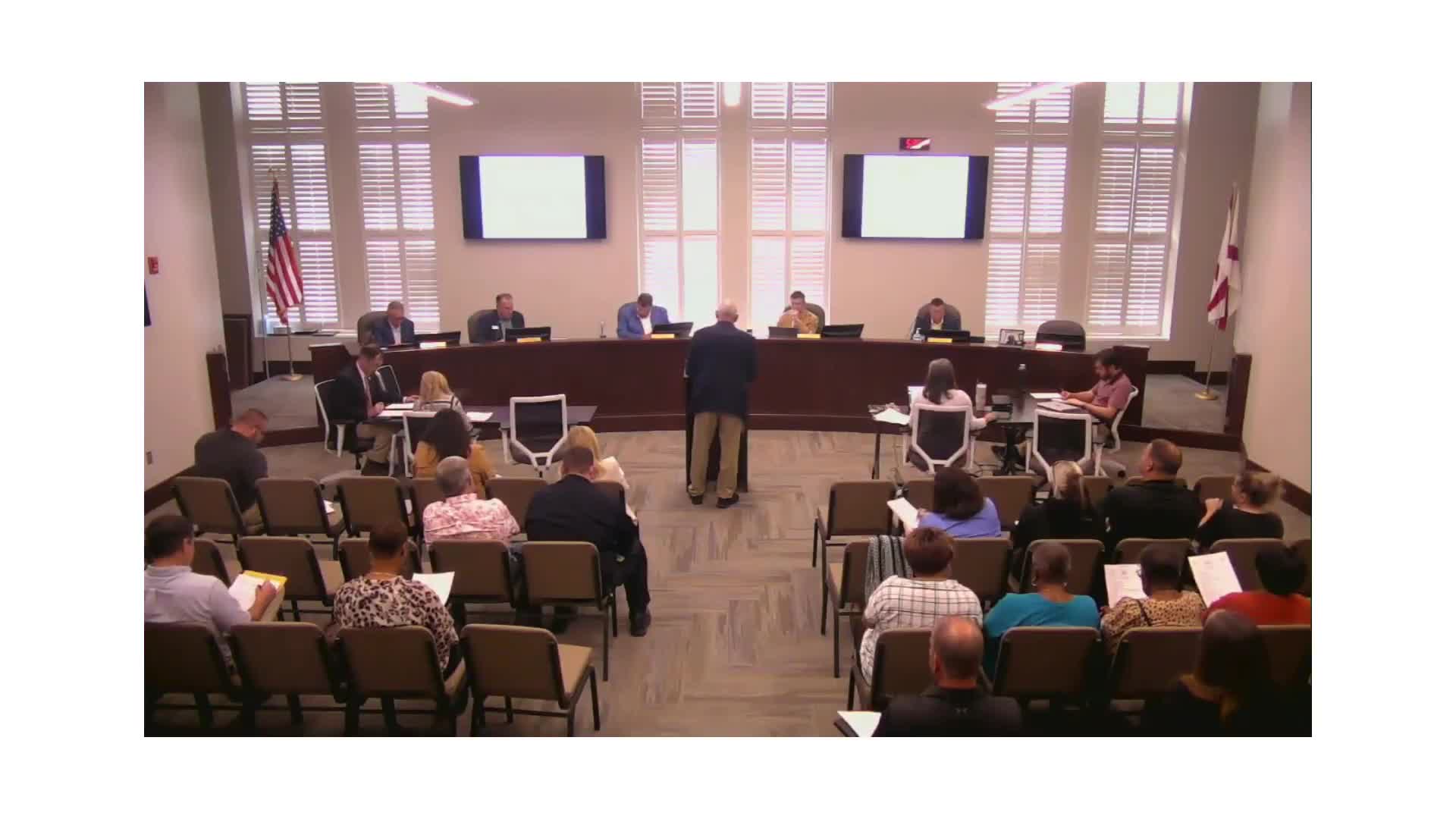
Sheriff Jay Jones, Lee County Sheriff, described the equipment request and the financing structure during his presentation to the commission. He said the original capital allocation covered part of the department’s needs but increased equipment costs reduced the available funds. “What we’re requesting, is, as you’ve probably read, we received an allocation, thank you, capital allocation to provide for in car dash cams and body worn cameras,” Jones said. He described a quote to buy 19 in‑car dash cameras and 45 body‑worn cameras and said Axon would supply the remainder of cameras under the proposed payment plan.
Why it matters: Jones and commissioners said equipping deputies with body‑worn cameras is important to recording enforcement encounters and can reduce outsourcing and equipment replacement costs. The sheriff’s office characterized the financing as a cost‑effective option compared with purchasing all equipment up front.
Details and vote: Jones told the commission the co‑term would shift payments into a two‑payment-per‑year schedule for five budget years, with a total cost “about $789,204 over that five year period,” and that the vendor had offered an equipment renewal feature in year three. He described the procurement as operating under a state bid. After discussion the commission approved the co‑term addition; a commissioner moved the motion and another seconded it, and commissioners verbally indicated approval. The record does not show a roll‑call tally in the transcript; the commission approved the contract amendment by voice vote.
Discussion vs. direction vs. decision: The sheriff requested formal approval to add the co‑term to the existing state‑bid contract (decision). Commissioners asked clarifying questions about the fiscal years and payment timing. No additional direction to staff beyond approving the contract amendment appears in the transcript.
Budget and timeline: The sheriff’s remarks included several budget figures and proposed payment dates (January and July each year over five years) and a five‑year total near $789,204; the transcript contained some arithmetic that the sheriff acknowledged was corrected during his remarks. The transcript does not show specific line‑item budget transfers or the final fiscal year when full payments would be recorded.
What’s next: With commission approval the sheriff may execute the contract amendment under the existing state bid. Sheriff Jones noted the financing arrangement would, in his assessment, deliver replacement equipment in year three without additional cost, but the transcript does not include contract language or a copy of the vendor agreement for review by the county attorney in the meeting record.