Get Full Government Meeting Transcripts, Videos, & Alerts Forever!
Get email alerts on the Mental Health topic
No spam. Unsubscribe anytime.
Baldwin County proclaims Mental Health Awareness Month and Children’s Mental Health Week
Summary
The Baldwin County Commission on May 6 adopted proclamations designating May 2025 as Mental Health Awareness Month and a week in May as Children’s Mental Health Awareness Week, with local providers and NAMI calling for reduced stigma and expanded supports.
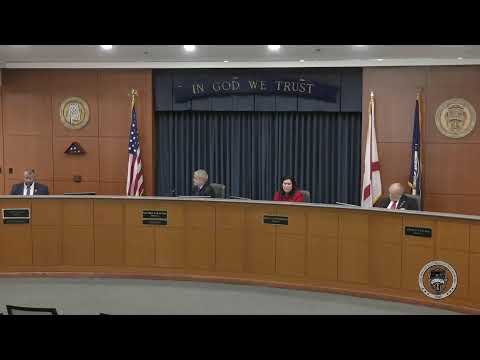
The Baldwin County Commission on May 6 designated May 2025 as Mental Health Awareness Month and set a week in May as Children’s Mental Health Awareness Week, motions that passed unanimously after local providers and advocates addressed the panel.
County leaders said the proclamations recognize both adult and youth needs and the county’s partnerships with providers. Anna Hutchison of NAMI Baldwin County told the commission, “We just wanna break down the stigma,” and urged greater awareness about crisis response and local training efforts. AltaPointe representatives and other providers described local outreach and services during remarks at the meeting.
Why it matters: the proclamations formalize county support for awareness and connect to programs that affect local crisis response, jail diversion and school-based services. Commissioners and speakers cited the county’s “stepping up” program in local jails and recent crisis intervention training (CIT) for deputies as evidence of expanding response capacity.
Commission members and providers gave several examples of local activity: Anna Hutchison said NAMI’s April 26 awareness event at Honey Bee Park in Robertsdale drew local law enforcement and community partners. A county official noted that when the group started, only a few of Alabama’s 67 counties had the stepping up program in jails; the county helped recruit many others and the legislature later made funding available. AltaPointe staff and the Child Advocacy Center also spoke about partnerships and early-intervention services for children.
The proclamations cite national and local statistics mentioned at the meeting — “one in five people” living with a mental health condition — and encourage public, private and school-based organizations to support prevention and access to care. The commission moved, seconded and adopted the proclamations during the regular session.
Speakers emphasized practical steps: more mental health training for first responders, wider use of crisis intervention resources and continued public education to reduce stigma. Commissioners encouraged residents to use available local services and to contact county offices for information about partnerships and programs.
The proclamations were adopted by vote; staff and providers said they will continue outreach work and report back to the commission as events and training occur.