Get Full Government Meeting Transcripts, Videos, & Alerts Forever!
Get email alerts on the Fy26 Budget topic
No spam. Unsubscribe anytime.
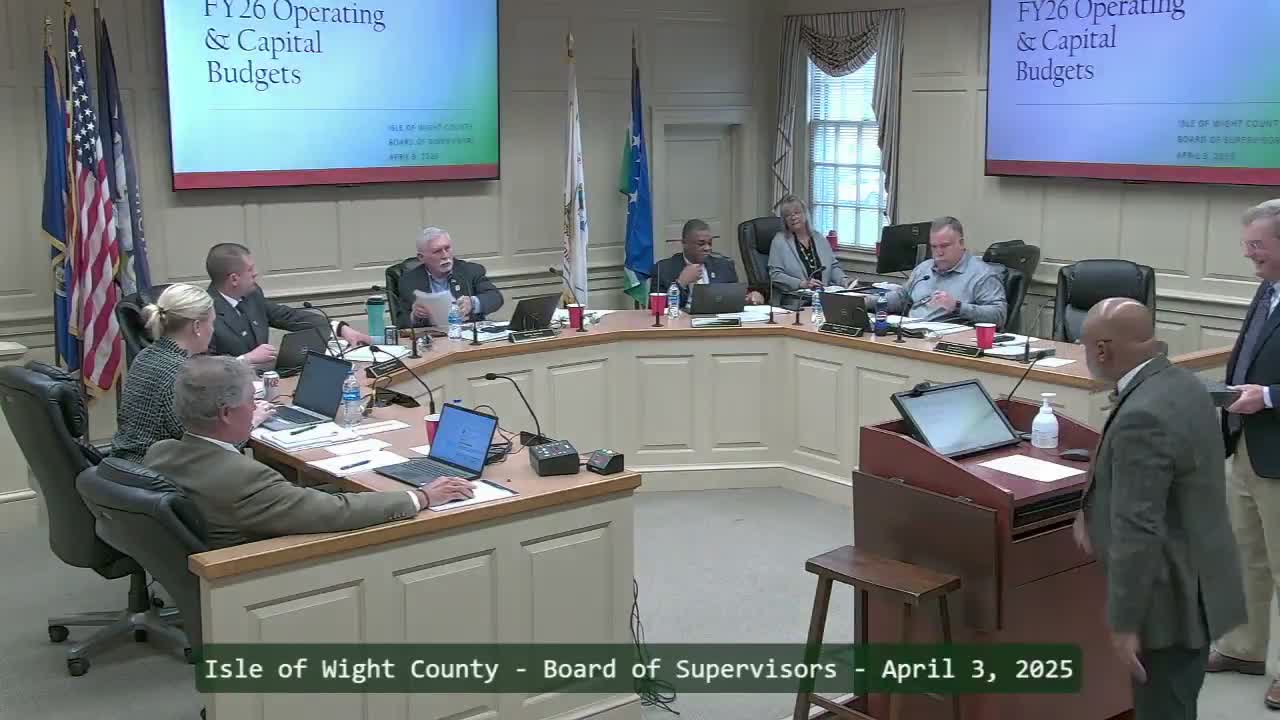
Board hears FY26 maintenance budget: proposes 5'cent real estate tax rate increase as insurance exemptions climb
Summary
County staff introduced a maintenance-only FY26 budget that assumes a 5¢ real estate tax rate increase to address rising costs (health insurance, school operating needs, debt service) and rapidly growing property‑tax exemptions for veterans and elderly/disabled programs.
County administration presented the Isle of Wight County Board of Supervisors with a maintenance‑only proposed budget for fiscal year 2026 that contains no new positions and relies in part on a proposed 5¢ increase in the real estate tax rate.
Staff said the recommended budget increases by roughly $5.6 million overall. The presentation identified health‑insurance cost increases (about $2.0 million combined for county and schools), a 3% across‑the‑board salary increase matching the state, and rising tax‑relief exemptions tied to elderly, disabled and disabled‑veteran property tax programs. Staff told the board tax exemptions have grown quickly in recent years and that Isle of Wight ranks among the more heavily impacted Virginia localities by percent of taxable base consumed by these exemptions.
On revenues, staff said roughly $3.3 million of the recommended revenue increase would come from the proposed 5¢ property‑tax rate increase; normal growth (new construction) accounts for about $700,000 of projected revenue. Sales tax receipts and other revenue lines showed favorable growth in the current year, but staff recommended conservative revenue assumptions going forward.
Key expense highlights in staff materials and presentation: - School operating costs: a $3.15 million increase for required items (health insurance, the 3% salary increase and maintenance); schools had larger discretionary requests that staff did not recommend in full. - County employee cost of living: slightly under $700,000 to fund the 3% increase. - Debt service: $545,000 increase, tied to the Carrollton HVAC bond. - Emergency communications (E911): a net increase reflecting comp‑board shifts and personnel funding changes; the county shares E911 costs with Smithfield and Windsor and staff said the county currently bears about 72% of the local share in the formula used.
Staff also described capital requests and one‑time funding sources: $4.0 million from fund balance, proffers for school capacity projects (about $760,000 as last checked), and a potential new borrowing (bond) request of up to $6 million depending on board direction. The county has received some solar farm payments (Sycamore Cross) and staff proposed using $2.0 million already received to accelerate replacement of fire apparatus and medic units now funded for future years.
Utility and fee changes presented to the board included a proposed water commodity increase of $0.66 per 1,000 gallons, a monthly meter fee increase of $0.43, and a sewer commodity increase from $7 to $9 per 1,000 gallons. Staff estimated a typical household using 5,000 gallons would see approximately a $13 monthly increase combined for water and sewer under the proposed rates. Connection fees for water and sewer were proposed to rise by $500 each.
Board members asked for more detail on a range of items: the growth and causes of tax‑relief exemptions (staff said many applications were incoming from new residents and new construction, including disabled‑veteran requests), the assumptions behind housing starts and assessment growth, the phasing of capital projects (libraries, Carrollton work, Windsor pump stations), and options for mitigating impacts to fixed‑income households. Staff agreed to provide additional spreadsheets and departmental request details and to follow up on grant opportunities for lead/copper service replacements and other capital items.
Staff emphasized the recommended budget was conservative and described the FY26 package as a maintenance budget rather than an expansion budget; they cautioned many items (tax relief refunds and state policy changes) add uncertainty to projections. Board members discussed policy issues arising from the budget—defining “affordable housing” for policy use, pay‑practice goals tied to market percentiles, and how to support school transition to local choice health plans—but did not take action on those policy matters during the work session.
Next steps: staff to provide additional spreadsheets and clarifications, incorporate board direction, and return with a budget scheduled for advertisement and public hearings.