Get Full Government Meeting Transcripts, Videos, & Alerts Forever!
Get email alerts on the Ashcake Road Landfill topic
No spam. Unsubscribe anytime.
Hanover supervisors approve amendment allowing new landfill area at Ashcake Road with conditions
Summary
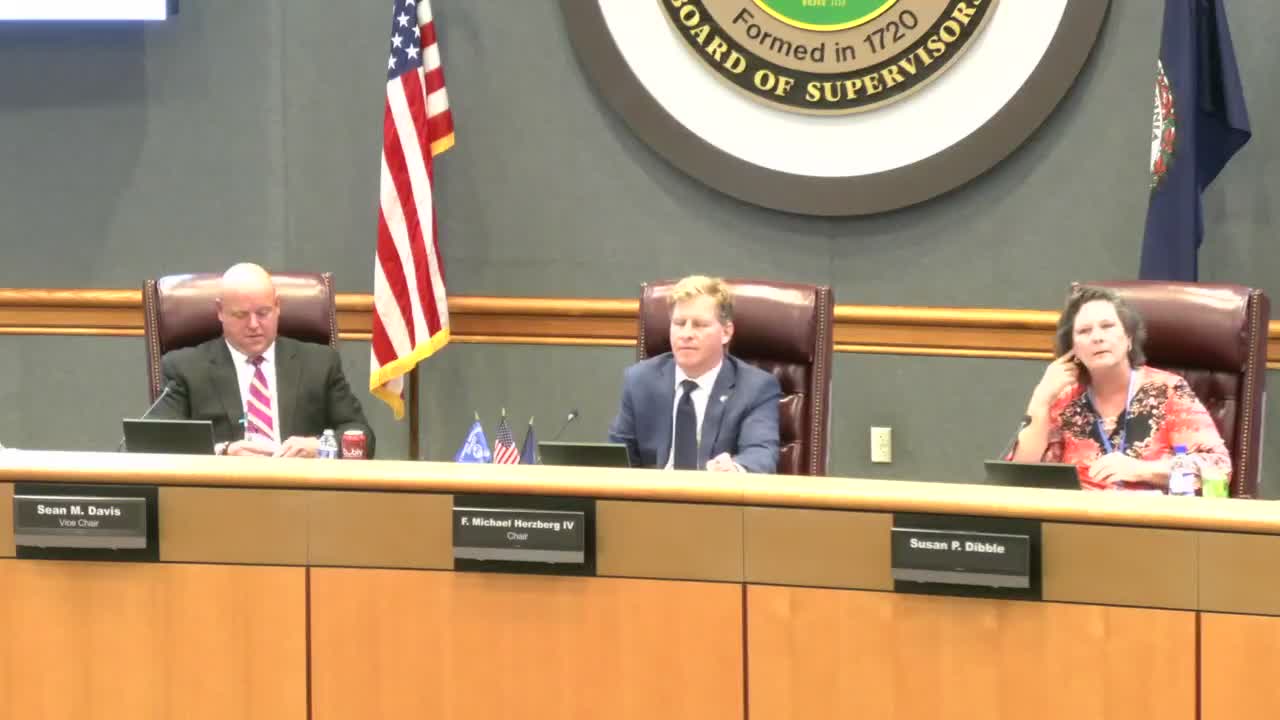
After more than three hours of testimony and technical presentations, the Hanover County Board of Supervisors voted 4–3 on April 23 to amend the conditional use permit for the Ashcake Road construction-and-demolition landfill to permit a new landfill area inside an adjacent borrow pit once the existing cell reaches capacity.
After more than three hours of testimony and technical presentations, the Hanover County Board of Supervisors voted 4–3 on April 23 to amend the conditional use permit (CUP) for the Ashcake Road construction-and-demolition landfill to permit a new landfill area inside an adjacent borrow pit once the existing cell reaches capacity.
The vote followed a long planning staff presentation and extensive public comment both for and against the landfill. The board approved the amendment after Supervisor Stoneman moved to approve "CUP 20 20 four-twenty 2 as submitted." The motion passed with Supervisors Floyd, Davis, Dibble and Stoneman voting yes; Supervisors Pritchard, Hudson and Chairman Herzberg voted no.
Why it matters: The change would allow the county—s only C&D landfill to continue accepting county construction and demolition debris once the current working cell fills. Supporters said maintaining local capacity keeps disposal costs down and supports recycling operations; opponents said the area is already burdened by industrial activity and historic neighborhoods and raised water quality, noise and community-integrity concerns.
Staff and applicant overview Andrew Pompey, deputy director of planning, told the board the request would convert a portion of a borrow area into a new landfill cell and emphasized the site is partly inside the suburban service area and partly designated rural agricultural. He summarized mitigation measures in the staff report, including a staff-recommended package of conditions addressing buffers, berms, noise and monitoring.
The applicant—s legal representative, Andy Condlin, said the company would accept the conditions in the staff report and highlighted the site—s existing recycling operations. Condlin also disputed assertions of historic groundwater contamination, saying, "let me unequivocally say there has absolutely been no contamination from the existing C and D landfill in the 30 years of its operation," and pointed to decades of monitoring and DEQ oversight.
Opposition and public concerns Opponents who live near the site and in the Brown Grove historic area testified that groundwater testing cited by DEQ and referenced in public letters raised real concerns. Speakers said DEQ had issued warning letters since 2021 that required additional testing and asked the board to weigh environmental risk and the character of the historic community. Donnie Shometti, who said he represents residents who signed a petition, told the board: "This landfill isn't just a zoning issue; it's a direct threat knocking at our doors, endangering the lives that we've built."
Key conditions and operational limits Planning staff recommended, and the board adopted as part of the CUP amendment, a sizable set of conditions intended to reduce visual, noise and water-quality impacts. Highlights included: - A minimum 100-foot natural perimeter buffer around the relocated landfill area. - Two 25-foot earthen berms with additional evergreen and deciduous plantings; staff and the applicant discussed the use of tall, fast-growing evergreens (developer materials referenced "green giant arborvitae"). - A maximum landfill height for the new area of 80 feet above existing grade; berms and plantings were described as part of the screening strategy. - A noise study to be performed within 60 days of commencing operations in the new area and compliance with the county noise ordinance; the study must identify mitigation if noise exceeds standards. - Extension of pavement on the access road (about 950 feet to the scale house) to reduce mud/dust tracked onto Ashcake Road. - Requirement to secure and provide to staff the required Virginia Department of Environmental Quality (DEQ) permits before operating the relocated cell. - A Phase I environmental historic resources study (recommended by the county Historic Commission) before beginning operations in the new cell. - Continued groundwater-monitoring wells and stormwater controls; DEQ monitoring and enforcement retained primacy for technical compliance. - The relocated cell would not accept waste until the existing landfill cell is closed according to the DEQ-approved closure plan.
What the board said Supervisor Stoneman moved approval after questioning DEQ records, monitoring frequency and operator commitments. Supervisor Pritchard said she remained opposed because of the project's impact on historic Brown Grove and the surrounding residential neighborhoods. Chairman Herzberg also voted no; he stated that the decision was difficult and cited community concerns about changing the character of the area.
Next steps and limits If the CUP amendment stands, the applicant still must obtain required DEQ permits and build the engineered liner and monitoring systems required by state law; staff said those steps will take additional time and will be tracked by county planning and DEQ. The board resolution adopted the staff-recommended conditions; county staff will monitor and report compliance.
Ending: The board approved the amendment 4–3, but the close vote and wide disparity of public comment underscore continuing community division over the landfill—s future role near Brown Grove and neighboring subdivisions.