Get Full Government Meeting Transcripts, Videos, & Alerts Forever!
Get email alerts on the Data Centers Ordinance topic
No spam. Unsubscribe anytime.
Board tightens rules for data centers and power generation — adds noise monitoring, setbacks and conditional‑use review
Summary
Frederick County amended its zoning code April 9 to define data centers, require environmental noise impact assessments and monitoring, impose a minimum 200‑foot residential setback, limit generator testing to weekdays, and make data centers conditional uses in several industrial districts.
The Frederick County Board of Supervisors on April 9 adopted an amendment to Chapter 165 of the county code to regulate data centers and separate power generating facilities from transmission/distribution utilities.
Key provisions of the ordinance amendment: - Data centers are defined as premises where computers, telecommunications and related equipment primarily process, store or transfer information, including associated infrastructure such as generators or substations. - Data centers in B‑3 (Industrial Transition), M‑1 (Light Industrial) and M‑2 (Industrial General) zoning districts will require a conditional use permit; the TM (Technology/Manufacturing Park) district remains an allowed use where that district exists. The change removes automatic by‑right approval in the listed districts and adds legislative review. - A 200‑foot minimum setback is required where a data‑center site adjoins residentially zoned property (including RP, R4, R5, MH1 and RA); staff emphasized this is a minimum and site‑specific approvals may require larger buffers. - A category C full screen buffer is required where data‑center property adjoins residences. - Applicants must submit an environmental noise impact assessment prepared by a qualified acoustical consultant at the time of rezoning or conditional use permit application; monitoring must be performed at the property line. A baseline noise model is required prior to legislative approval, with post‑construction verification 12 months after certificate of occupancy and subsequent five‑year updates; changes or expansions will trigger new assessments. - Generator cycling and testing is limited to Monday–Friday, 8 a.m.–5 p.m. The ordinance also specifies that on‑site mechanical equipment should be located and screened to limit off‑site noise. - Power generating facilities (solar, wind, natural gas, diesel, etc.) were separated in the code from transmission/distribution utilities; many generation facilities will require conditional use review to allow case‑by‑case consideration of impacts and infrastructure needs. - Site assessment requirements for data centers include water‑use estimates; staff noted technology has reduced water demand on many newer designs, but water use must be evaluated case by case.
The planning commission recommended approval after a February public hearing; the board received public comments April 9 urging stricter setbacks, stronger air‑pollution and e‑waste management measures, and more rigorous water‑use limits. Staff and the board said the ordinance reflects lessons from nearby jurisdictions and a Commonwealth white paper and supplements those with noise‑study standards recommended by an acoustical consultant.
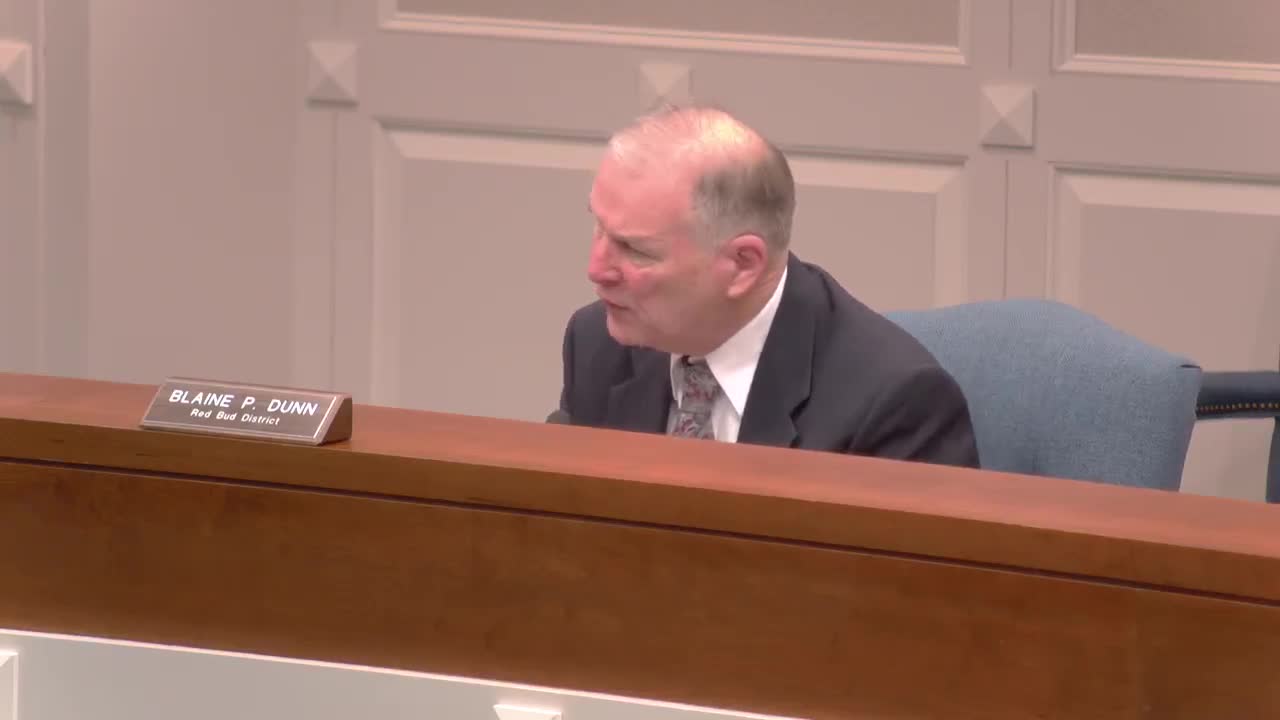
The board approved the ordinance amendment by unanimous vote. Roll call: Supervisor Jewell — aye; Supervisor Dunn — aye; Supervisor Wells — aye; Vice Chair — aye; Supervisor Lockridge — aye; Supervisor Leerro — aye; Chair — aye.
Ending: The ordinance now requires developers to seek conditional use review and meet technical noise and siting standards; staff said they will continue to monitor best practices and suggested the county could pursue additional e‑waste or air‑quality measures separately if needed.