Get Full Government Meeting Transcripts, Videos, & Alerts Forever!
Get email alerts on the Land Use Backyard Chickens topic
No spam. Unsubscribe anytime.
Frederick County approves backyard-chicken zoning change for R4 and R5 neighborhoods
Summary
The Frederick County Board of Supervisors voted to amend the county zoning ordinance to allow up to six hens (no roosters) as an accessory use in R4 and R5 residential districts, with a three-month delay before implementation to allow homeowner associations time to respond.
The Frederick County Board of Supervisors voted to amend the county zoning ordinance on May 14 to allow backyard chickens — up to six hens and no roosters — as an accessory use in the R4 and R5 residential zoning districts, with the ordinance’s implementation delayed three months to give homeowner associations (HOAs) time to consider their own rules.
The change lifts a county-level prohibition in those suburban zoning districts and adds conditions including coop setbacks, storage requirements for feed and waste, and a definition of “chicken coop.” County planning staff said HOAs and private covenants would still apply and be enforceable by the association, not the county.
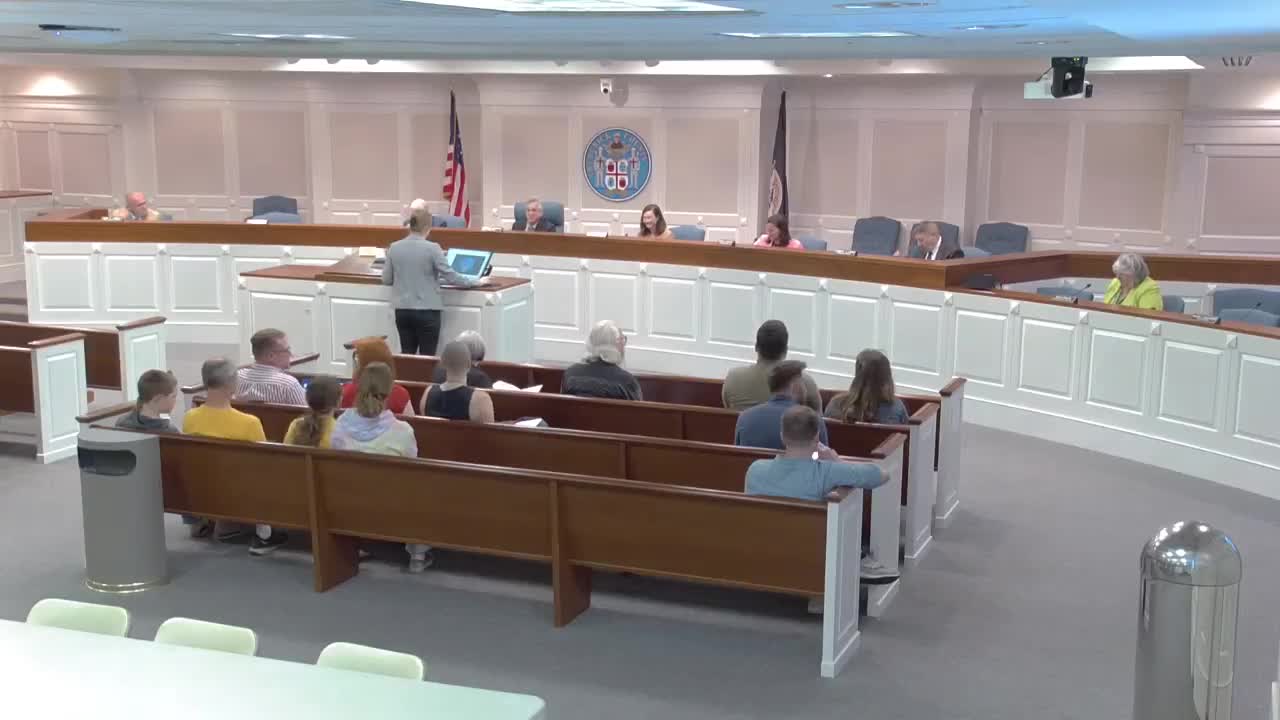
County planning staff outlined the amendment during a public hearing. “Chickens shall not run at large,” planning staff said, noting Chapter 48 of the county code already prohibits animals and fowl from running at large and that enforcement is handled by the sheriff’s department. The planning presentation also proposed a maximum of six hens per single-family dwelling, accessory only to detached single-family homes, and accessory structure setback requirements consistent with the RP district standards.
Supporters who spoke during the public hearing emphasized food security, educational benefits and small-scale composting. “They provide routine, which is good for our mental health,” said Christiana Mar, a resident of the Back Creek District, who described eggs, composting benefits and pest control as local advantages. Other residents urged the board to avoid an administrative-permit requirement; multiple speakers said permits would add unnecessary bureaucracy for small numbers of hens.
Board members debated whether to require an administrative permit and how long to delay implementation to give HOAs time to change covenants. A motion to allow chickens in R4 and R5 and to delay implementation for three months carried on a roll-call vote. A subsequent amendment to also add the RP district failed; the final ordinance as approved applies only to R4 and R5.
The ordinance requires hens only (no roosters), defines chicken coops as fully enclosed structures, restricts coops to accessory detached single-family homes, limits chickens to six per dwelling, and preserves HOA and covenant authority to further restrict or prohibit chickens. The board recorded a roll-call vote on the ordinance amendment; the board will publish the adopted ordinance text and effective date in the county code when staff completes the updating process.
Residents and HOAs in affected neighborhoods were advised during the meeting that, because private covenants remain in force, an HOA that chooses to prohibit chickens may do so during the three-month delay. The county planning office said it would notify known HOAs in R4 and R5 of the ordinance change and the enrollment window.
The board’s action closes a multi-year discussion that included prior committee and planning commission hearings; the planning commission recommended removing the RP district and adding a permit requirement and a six-month delay, but the board approved a shorter delay and no administrative permit.