Get Full Government Meeting Transcripts, Videos, & Alerts Forever!
Get email alerts on the Land Bank Disposition Policy topic
No spam. Unsubscribe anytime.
Kingston council updates surplus-property disposition policy to reflect state law; land bank options narrowed by new upfront costs
Summary
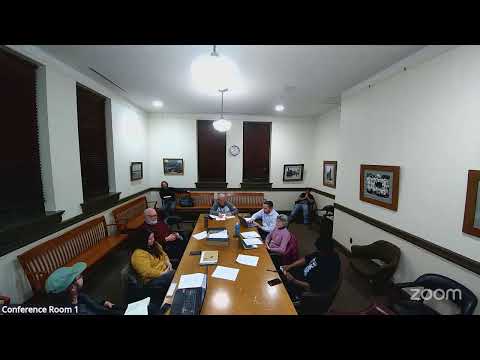
The City of Kingston Common Council on April 9 amended its surplus-property disposition policy to conform with recent New York state law changes, expanding land‑bank eligibility for some housing units while adding appraisal and upfront-payment requirements that could limit the land bank’s practical ability to acquire properties.
The City of Kingston Common Council on April 9 amended its surplus-property disposition policy to conform with recent changes in New York state law governing properties acquired through tax foreclosure and abandonment proceedings.
The revisions expand which parcels a municipal land bank may take first right to purchase, but they also require appraisals and upfront payment of assessed market or appraised value (or higher-tiered payments in some cases). Council members and staff said those provisions could significantly raise the immediate cost for the land bank and alter whether the city moves properties by request-for-proposals (RFP) or by auction.
Council staff presented the item as necessary to comply with state statutory changes that affect properties acquired under Article 11 (tax lien/foreclosure acquisitions) and Article 19-a (abandonment proceedings). Under the adopted policy changes, the land bank’s eligibility was expanded from 1- and 2-unit residential properties and vacant lots to include 3-unit residential properties as well; for Article 11 properties the city removed the prior back-tax threshold (previously $30,000) so the land bank may be eligible for a broader set of properties but must now pay upfront either the assessed market value or appraisal value (whichever is lower) when acquiring a parcel. The policy requires an appraisal when the land bank seeks to acquire a parcel; the land bank would bear appraisal costs.
For properties acquired under Article 19-a, the policy likewise expands unit-size eligibility and increases the back-tax threshold used to define properties the land bank may receive first. The amended policy also clarifies that an RFP is optional in many cases and that auction remains a default mechanism; multiple council members said the state changes effectively push municipalities toward auction if the land bank declines a parcel because auctions may yield lower proceeds than assessed or appraised values.
Council members pressed for clearer internal procedures for reviewing RFP responses and recommended that the finance committee serve as the review committee for any RFP process. Members also asked staff to add optional language permitting the finance committee to invite community members to participate in reviews when appropriate; the council approved that change. Several members noted they received public feedback about past review processes and said greater transparency in scoring and committee composition would improve public confidence.
Council staff and members emphasized practical effects: requiring appraisals and upfront payment raises the land bank’s acquisition costs and could limit the number of properties it can accept. Staff said the appraisal requirement and upfront payment are driven by state legal changes; the city cannot unilaterally waive those requirements. The council voted to adopt the amended disposition policy and to designate the finance committee as the review committee for RFPs, with the option to invite community participants in review meetings.
The resolution passed at the meeting; staff said the finalized language will be circulated and that additional minor edits could be transmitted before final adoption if needed.
Ending: The council’s amendment seeks to balance compliance with state law against local housing and revitalization goals. Council members and staff signaled they will monitor how the appraisal and upfront-payment rules affect the land bank’s ability to acquire and rehabilitate properties and return to the council with further adjustments if necessary.