Get Full Government Meeting Transcripts, Videos, & Alerts Forever!
Get email alerts on the Public Safety topic
No spam. Unsubscribe anytime.
Kingston police report new records system, expanded traffic enforcement and staff plans
Summary
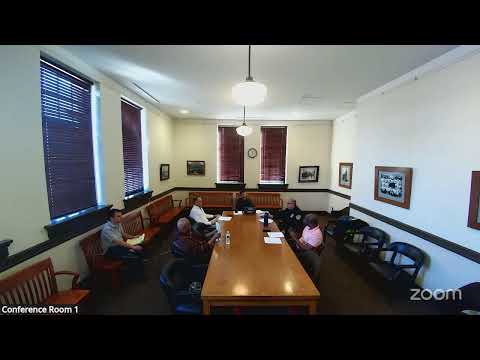
At a March 19, 2025 Kingston commission meeting, department staff summarized a shift to a county records system, upgrades to vehicle and camera technology, traffic-safety unit enforcement totals and upcoming staffing and training plans. The commission approved the minutes by voice vote.
The Kingston Police Department reported a planned migration to a county-managed records management system, upgrades to in-car and camera technology, expanded license-plate reader coverage and recent traffic-enforcement results at the commission’s March 19, 2025 meeting. The commission approved the meeting minutes by voice vote.
Department staff told commissioners the department finalized an agreement with the county to replace its current local system, Impact, with the county’s records-management system. Staff said the county is building a Kingston-specific instance and that training will begin after the build-out is complete; the department was advised to schedule three consecutive days of training for users. The report also said the department will move from a paper-based evidence and property system to a barcode-based tracking system so evidence items can be scanned and traced through custody.
The department described several in-vehicle and camera technology changes intended to give supervisors and investigators real-time data. Staff said Kingston has adopted a county vehicle-locator system that displays patrol cars in real time and keeps a longer vehicle-history record than the prior Trackstar system. The department is testing a fixed-mount tablet that can be removed from a vehicle for use at a scene, and plans to replace semi-rugged laptops in squad cars. A trial camera from Vigilant is in place; staff said the camera currently lacks gunshot detection and LPR (license-plate recognition) in the test configuration but can be configured to add those functions later.
Traffic-safety technology upgrades include expanded mobile LPR capability and upgraded dash cameras. Staff said dash systems now include automated LPR capability that compares plates against statewide alerts, and that the department expects to move from one mobile LPR to 13 mobile LPR-capable units. The department also described potentially adopting an upgraded vendor tier (described as a safety-focused package) that includes live transcription features and other data services.
The department gave enforcement statistics for the traffic-safety unit: more than 828 stops; 800 traffic summonses issued; 297 warnings; 22 arrests; and 31 crashes investigated. Staff said about 53% of stops involved city residents. When including broader shift activity assigned to traffic emphasis, staff reported more than 1,400 stops and 1,129 summonses departmentwide during the reporting period.
Staff also reported recent community- and safety-focused activities: participation in a Saint Patrick’s Day parade (no closures or incidents reported), distribution of donated child car seats from Nuvance Health and plans to certify more officers as car-seat technicians and in CarFit (a safety-fit program for older drivers). The department said two officers, Brandon North and Ryan Mace, are certified car-seat technicians.
On staffing, the department said no current vacancies exist but expected at least one in late March when Officer Logan Irvin departs for the state police; backgrounds for additional candidates are underway and interviews were planned for April. Staff discussed recruitment challenges tied to academy schedules and part‑time hiring limitations and said the department will consider lateral hires with prior agency experience.
Training and preparedness items noted included planned incident-command training for supervisors and lieutenants (100/200/300 levels referenced), and additional officer training opportunities through vendor-provided virtual reality and simulation tools, which staff said are increasingly offered by providers.
The commission took one formal action recorded in the transcript: a voice vote to approve the minutes. No roll-call tally was recorded in the transcript provided.
"Everybody was extremely professional," said Keith, a department staff member, quoting a resident who praised officers’ response to two recent mental‑health related calls.
No ordinances, contracts, grants or other formal policy actions were taken or announced in the recorded portion of the meeting beyond approving the minutes. Staff repeatedly described planned or in-progress procurements and system integrations that will require vendor implementation work and user training before full deployment.