Get Full Government Meeting Transcripts, Videos, & Alerts Forever!
Get email alerts on the Community Preservation topic
No spam. Unsubscribe anytime.
Kingston advisory board holds inaugural meeting, elects officers and reviews new open‑space fund
Summary
The Community Preservation Advisory Board met for the first time, elected a chair and secretary, and received an overview of the city’s Community Preservation Plan and the real‑estate transfer tax fund that will finance open‑space purchases and stewardship.
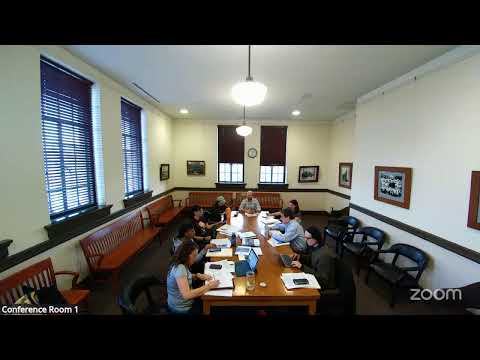
Julie Noble, the city’s sustainability coordinator and staff liaison, opened the inaugural meeting of Kingston’s Community Preservation Advisory Board and outlined the board’s role in advising Common Council on spending from a newly created real‑estate transfer tax fund. “This is the inaugural meeting of the Community Preservation Advisory Board. Welcome, everyone,” Noble said.
The board elected Bert Samuelson as chair and Kevin McAvoy as secretary during the meeting. Those internal housekeeping votes preceded a detailed briefing from Noble about the Community Preservation Plan, the fund that supports it and how the board will handle proposals and conflicts of interest.
Nut graf: The Community Preservation Plan and its accompanying local laws establish a dedicated fund—fed by a county‑level real‑estate transfer tax—to pay for land protection, parks, habitat and other open‑space purposes. The advisory board’s recommendations must go to Kingston’s Common Council, which holds a public hearing before approving expenditures.
Noble told members the preservation effort grew from earlier planning work: a natural resources inventory and an open‑space plan that were combined into a parcel‑level Community Preservation Plan. Under the city’s local laws (local law numbers 8, 9 and 10 of 2024) and the state statute referenced in the briefing, each parcel in the city received a score from 0 to 30; parcels with at least one point are eligible for consideration.
Noble described how the fund is collected and reported. The tax applies to conveyances within the City of Kingston (city proper) when the transaction exceeds the Ulster County median sales price (the figure cited in the meeting packet was $376,500). The tax rate referenced in the briefing was 1.25% of the transaction amount. The county collects the tax at closing, places receipts in an interest‑bearing account and provides a monthly report to the city controller and Noble’s office.
Noble provided the board’s earliest revenue figures: $4,056.46 received for January and $6,381.33 for February, for a two‑month total she reported as $10,437.79. She said the city had automatically tracked 10% of receipts as the portion that may be used for management and stewardship (the local law limits stewardship/management spending to no more than 10% of the fund) and that staff has been separating that share for tracking.
What the fund may pay for: Noble read the statutory list included in the local law packet. Eligible uses include creating or improving parks and recreational areas, preserving wetlands and aquifer recharge areas, protecting farmland and scenic or ecologically important lands, establishing wildlife refuges, preserving historic places listed on the New York State Register of Historic Places or protected by local historic law, and improving public access to waterways. Noble emphasized that uses not on the list—she specifically noted housing and sewer projects as examples—are not eligible without a legal interpretation.
Process and governance: Noble said the board will advise the Common Council, which must hold a public hearing before authorizing expenditures. She described exemptions (for example, state land or transactions below the county median price) that are claimed at closing on the county transfer form. The city receives a detailed listing of each recorded transaction monthly; Noble said the mayor’s office confirmed those records are subject to FOIL (Freedom of Information Law).
Board members raised operational questions the day’s meeting began to address, including how often the parcel scoring will be updated, who can apply for funds, whether city parks are eligible and when the board should begin reviewing candidate parcels. Noble said the Community Preservation Plan includes both a parcel list and a score‑sorted list and that the board can request staff research or invite outside practitioners to explain their procedures. Noble said she planned to invite an experienced practitioner (identified in the meeting as Carolee from New Paltz/Newcross) to a future meeting or Zoom session.
Noble also reminded members about conflicts of interest: if an organization with which a board member is affiliated (for example, a land trust) applies for funds or is involved in a transaction, that member must recuse themselves from discussion and decisions related to that transaction.
Meeting logistics and next steps: Members agreed to a tentative recurring meeting cadence: the fourth Wednesday of the month from 8:00 a.m. to 9:30 a.m., subject to reevaluation. Noble said staff will circulate sample applications used by other community preservation programs and requested that board members consider whether the board should begin by reviewing parcels with the highest scores, focus on parcels currently on the market, or wait until the fund reaches a larger balance. Noble noted that money cannot be spent without a Common Council action following a public hearing.
Votes at a glance: the board elected Bert Samuelson as chair and Kevin McAvoy as secretary; a motion to adjourn at the end of the meeting passed without recorded opposition.
Ending: Noble closed the formal portion of the meeting after members confirmed the meeting cadence and asked staff to circulate sample application materials and to invite an external practitioner to a future meeting. The board’s recommendations will go to Common Council for public hearing and final approval before any money is released.